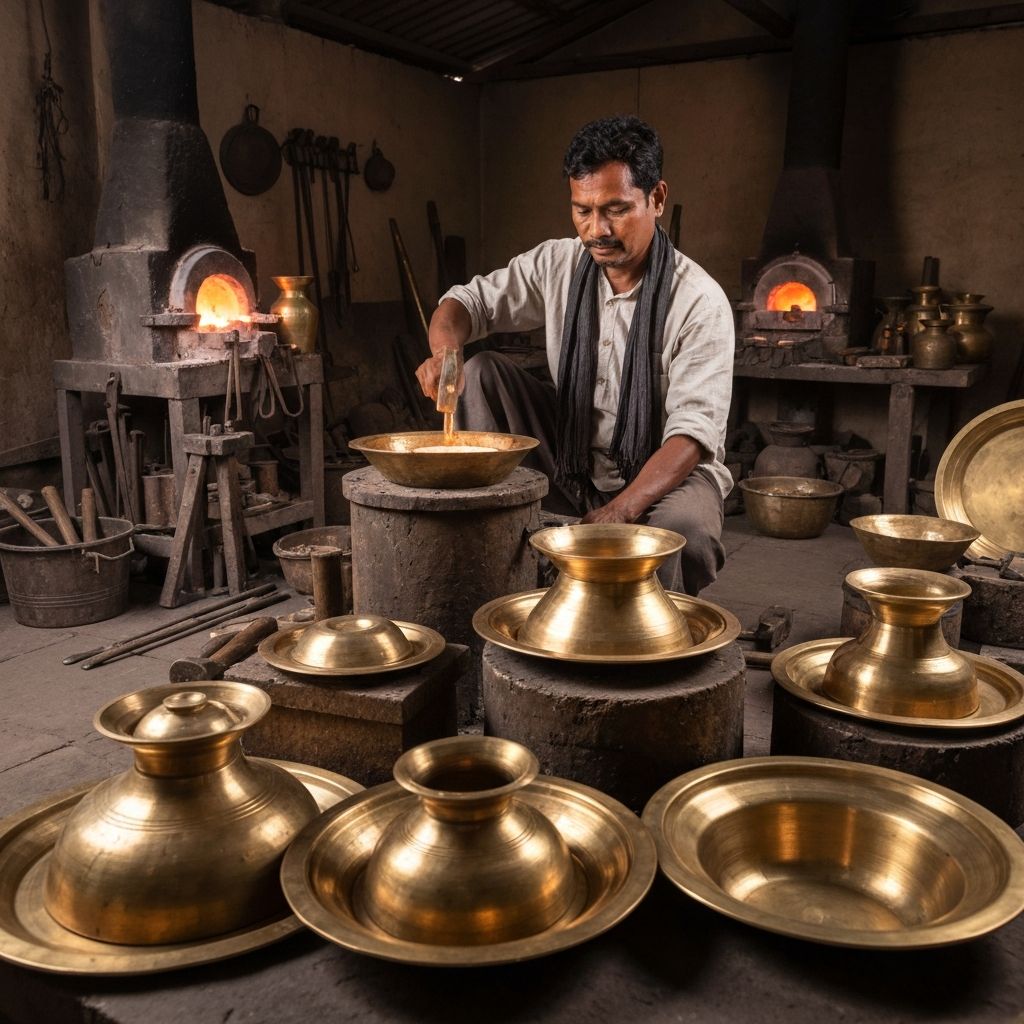
Bell Metal Work
Bronze heritage — the ancient art of Assam where copper and tin are transformed into sacred xorais, ritual vessels, and objects of timeless utility and beauty.
Origin
Sarthebari, Assam
History
Centuries Old
Material
Copper & Tin Alloy
Significance
Sacred Tradition
Bell metal, known locally as "kansa", is an ancient metalworking tradition of Assam that has been practiced for centuries, particularly in Sarthebari in Barpeta district and Hajo. The craft involves creating objects from an alloy of copper and tin, which produces a distinctive golden-bronze color and a resonant quality when struck.
The most iconic product of this craft is the xorai — a distinctive offering plate with a conical lid that is central to Assamese rituals and hospitality. No Bihu celebration, wedding, or religious ceremony in Assam is complete without the xorai. The craft is closely connected to the Vaishnavite sattra tradition, where bell metal objects are used in daily worship and rituals.
Distinctive Features
Bronze Alloy
Made from a mixture of copper and tin, creating the distinctive golden-bronze bell metal
Hand Casting
Traditional lost-wax and sand casting methods passed down through generations
Hammered Finish
Each piece is hand-beaten and polished to achieve the characteristic sheen
Sacred Objects
Used to create ritual items for Vaishnavite sattras and Assamese households
Traditional Items
Xorai
Iconic offering plates with conical lids, central to Assamese rituals and hospitality.
Bota
Betel nut containers used in traditional Assamese tamul-paan hospitality customs.
Cooking Utensils
Traditional kansa thalis, bowls, and vessels believed to have health benefits.
Lamps & Diyas
Ritual oil lamps and stands for temples, sattras, and household worship.