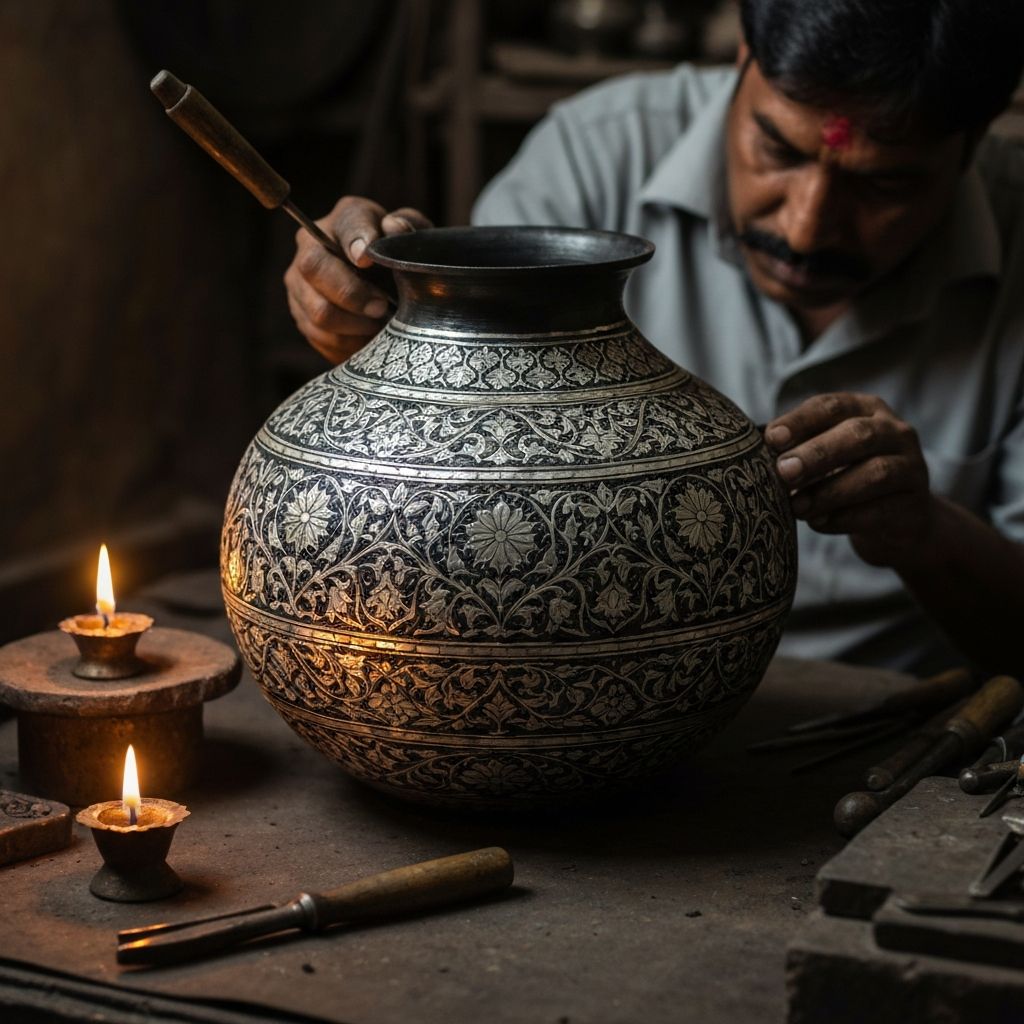
Bidriware
Silver on black — the exquisite Persian-influenced metal craft of Bidar, where silver threads transform dark alloy into objects of timeless elegance.
Origin
Bidar, Karnataka
History
14th Century
Material
Zinc Alloy & Silver
Recognition
GI Tagged
Bidriware is a distinctive metal handicraft that originated in Bidar, Karnataka during the rule of the Bahmani Sultanate in the 14th century. Named after the city of its origin, this craft involves inlaying silver or gold onto a blackened alloy of zinc and copper, creating a striking contrast that has made Bidriware famous worldwide.
The unique black patina of Bidriware is achieved using a special mixture of soil found only within the walls of Bidar Fort, combined with ammonium chloride. This mixture oxidizes the zinc-copper alloy to a deep black while leaving the inlaid silver untouched and gleaming. The craft was brought by Persian artisans and flourished under royal patronage, becoming a symbol of Deccan artistic excellence.
Distinctive Features
Zinc Alloy Base
Made from a unique alloy of zinc and copper, blackened using special soil found only in Bidar Fort
Silver Inlay
Pure silver wire and sheets are carefully inlaid into hand-engraved patterns
Persian Influence
Designs feature arabesque patterns, geometric motifs, and Persian floral elements
GI Protected
Awarded Geographical Indication tag recognizing its unique Bidar heritage
Traditional Items
Hookah Bases
Ornate bases featuring intricate silver inlay, historically favored by nobility and royalty.
Jewellery Boxes
Elegant storage boxes with detailed silver patterns, popular as luxury gifts.
Vases & Surahi
Decorative vessels showcasing the full range of Bidri artistry and craftsmanship.
Cufflinks & Accessories
Contemporary adaptations bringing Bidriware aesthetics to modern fashion.