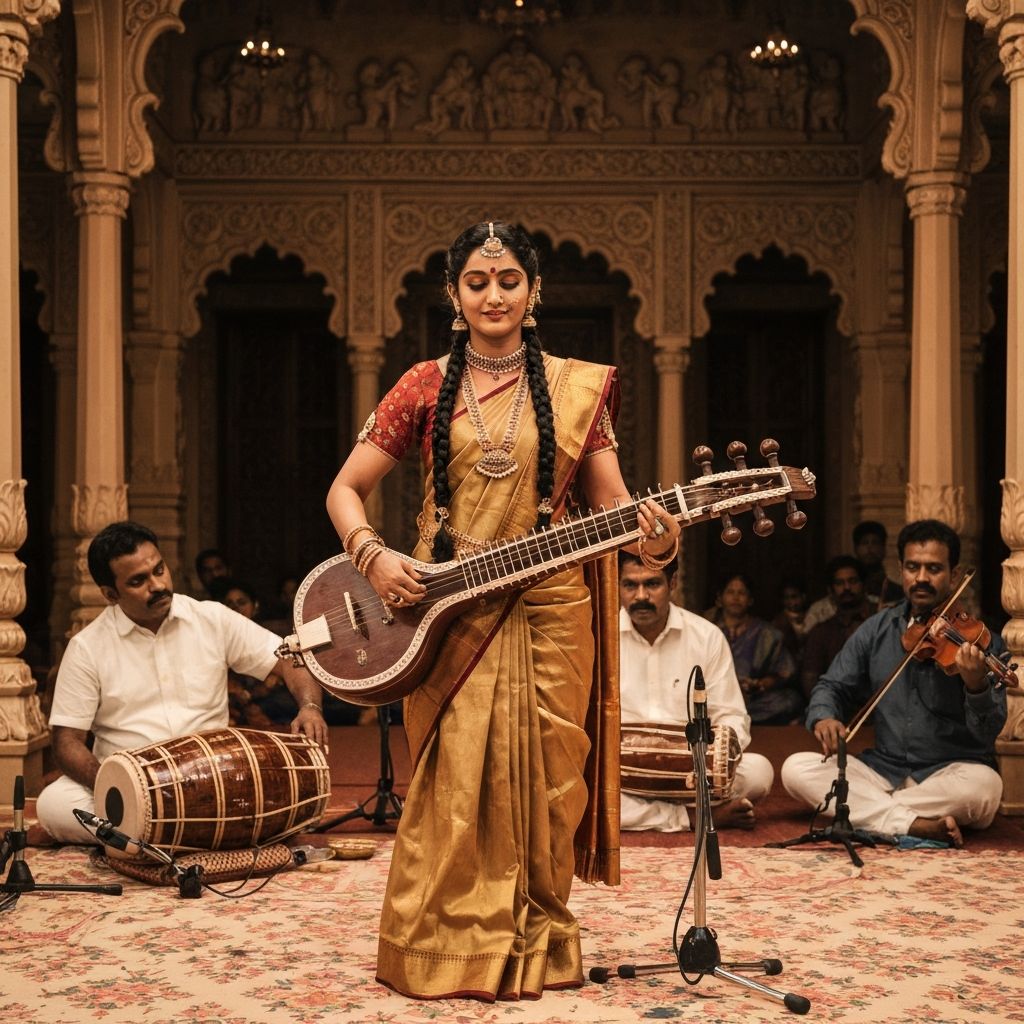
Carnatic Music
The devotional melody of South India, where ragas become prayers and rhythm becomes meditation.
Region
South India
Golden Age
18th-19th Century
Ragas
72 Melakarta System
Festival
December Music Season
Carnatic music is the classical music tradition of South India, distinguished from Hindustani music by its emphasis on vocal music, composition-centric approach, and devotional content. The tradition is rooted in the ancient texts and was codified by Purandara Dasa in the 16th century.
The system is built on 72 melakarta ragas (parent scales) from which hundreds of janya (derived) ragas emerge. Unlike Hindustani music which emphasizes improvisation, Carnatic music gives primacy to the kriti (composition) while allowing for improvisation within its framework.
The annual December Music Season in Chennai is the world's largest classical music festival, featuring hundreds of concerts over six weeks, drawing connoisseurs from across the globe.
The Trinity of Carnatic Music
Tyagaraja
1767-1847
Composed thousands of kritis, most in praise of Lord Rama
Muthuswami Dikshitar
1775-1835
Known for Sanskrit compositions with intricate ragas
Syama Sastri
1762-1827
Compositions dedicated to Goddess Kamakshi
Traditional Instruments
Veena
Ancient stringed instrument, queen of Carnatic music
Mridangam
Double-headed drum, primary percussion
Violin
Adapted for Carnatic music as melodic accompaniment
Ghatam
Clay pot percussion instrument
Kanjira
Frame drum with lizard skin membrane
Flute
Bamboo flute with distinct South Indian style