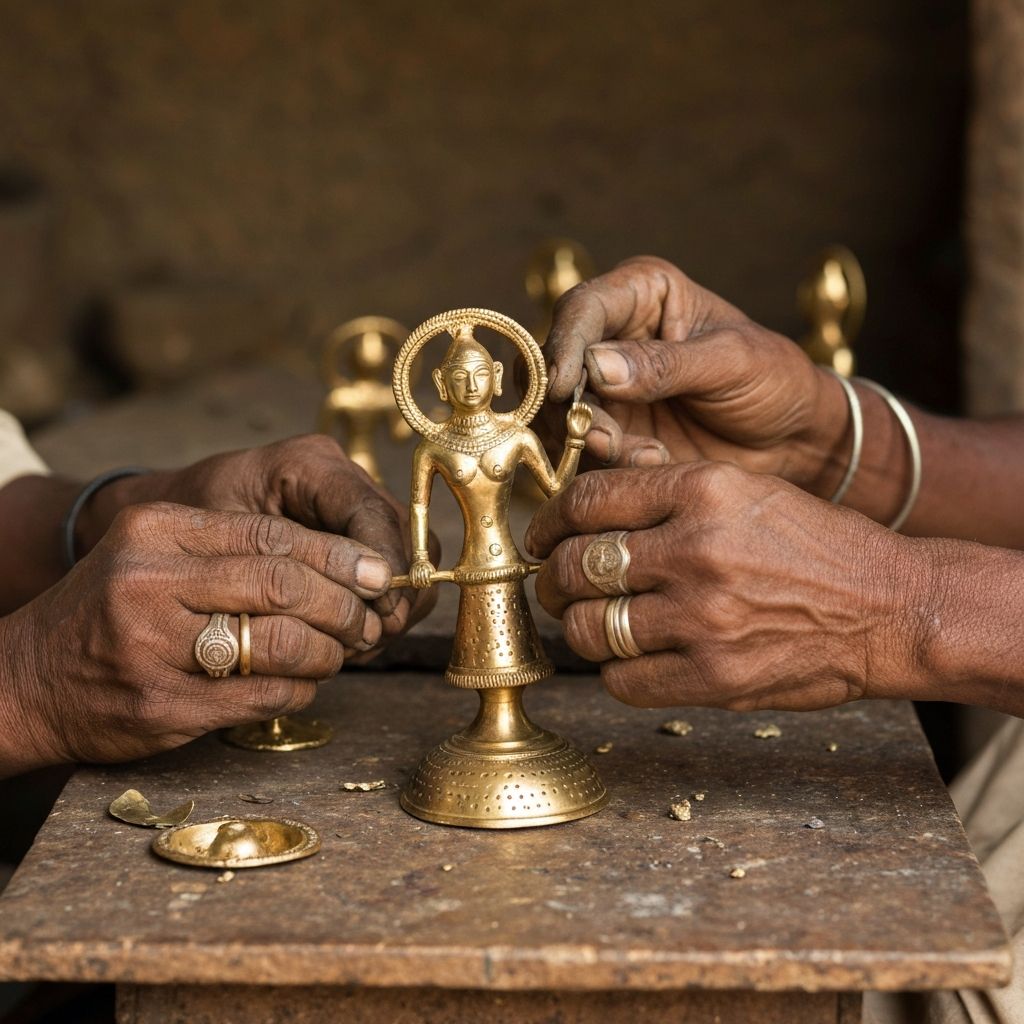
Dokra Art
Ancient metal magic - where molten brass captures tribal imagination.
Origin
Bastar, Chhattisgarh & Bengal
History
4000+ Years
Technique
Lost Wax Casting
Material
Brass & Bronze
Dokra (also spelled Dhokra) is one of the earliest known methods of non-ferrous metal casting, dating back over 4,000 years. The famous "Dancing Girl" of Mohenjo-daro, a masterpiece of Indus Valley Civilization, was created using this technique.
This ancient craft is practiced by the Dokra Damar tribes, primarily in Chhattisgarh, Jharkhand, Odisha, and West Bengal. The technique, known as cire perdue or lost-wax casting, creates one-of-a-kind pieces as the mold is destroyed in the process.
The rustic, tribal aesthetic of Dokra art - with its rough texture and simple forms - has gained international recognition. Each piece carries the fingerprints of its maker, making it truly unique and irreplaceable.
Traditional Products
Figurines
Tribal dancers, musicians, and daily life scenes
Deities
Tribal gods and goddesses, especially Dhokra Devi
Animals
Elephants, horses, owls, and tortoises
Jewelry
Necklaces, bangles, and earrings
Lamps
Traditional oil lamps and candle holders
Decorative Items
Wall hangings, boxes, and furniture accents
The Lost Wax Process
- Create a clay core in the rough shape of the object
- Cover with beeswax and carve detailed design
- Coat with clay and leave a small opening
- Heat to melt wax, then pour molten metal
- Break mold to reveal unique finished piece