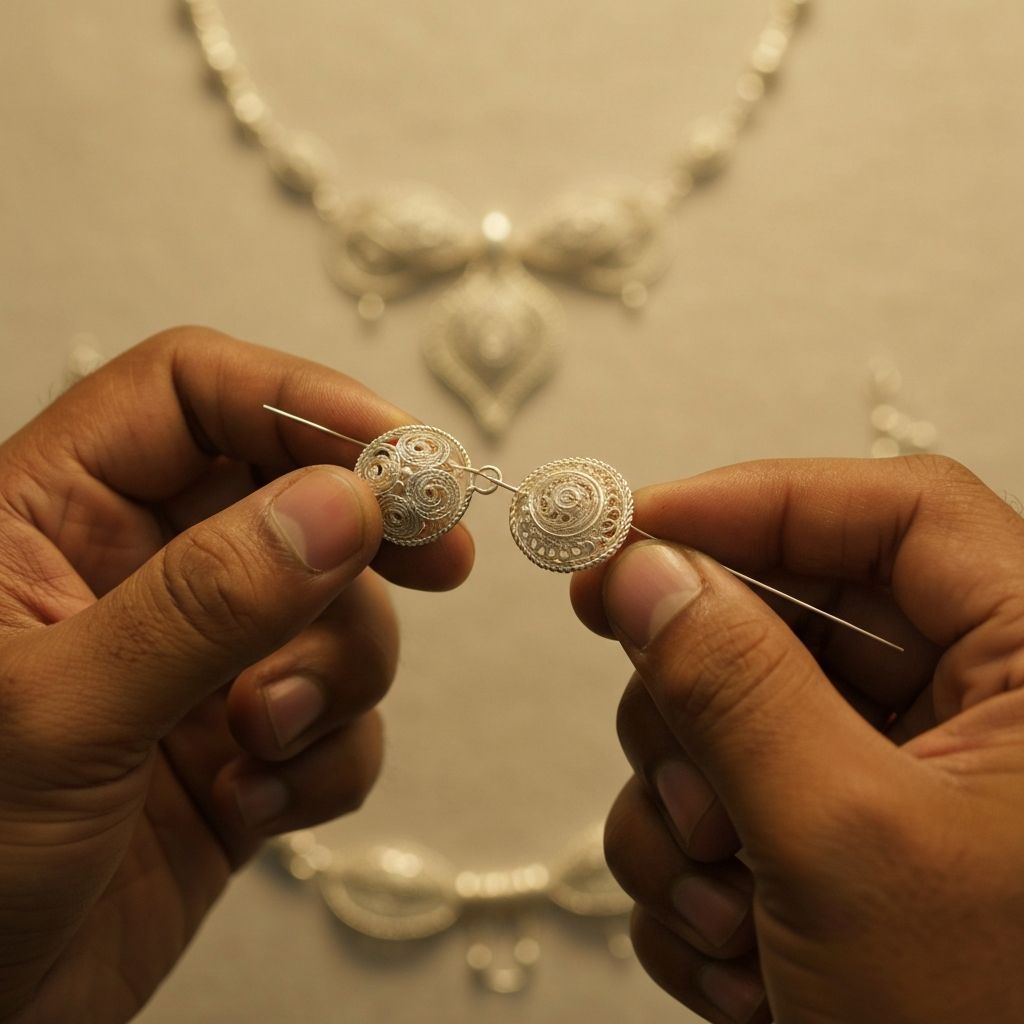
Filigree Work (Tarakasi)
Lace in silver — the ancient art of Cuttack where skilled artisans transform silver wire into gossamer-fine patterns of breathtaking delicacy.
Origin
Cuttack, Odisha
History
500+ Years
Material
Pure Silver Wire
Recognition
GI Tagged (2004)
Tarakasi, meaning "wire work" in Odia, is one of India's most exquisite metalcraft traditions. Practiced for over five centuries in Cuttack, Odisha, this art involves drawing silver into extremely fine wires — sometimes as thin as a human hair — and then twisting, curling, and soldering them into intricate patterns that resemble delicate lace.
The craft is believed to have developed under the patronage of the Keshari and Ganga dynasty rulers to create ornaments for the deities at the Jagannath Temple in Puri. The silver city of Cuttack became the centre of this tradition, with entire families dedicated to preserving and passing on the specialized skills required to create these masterpieces.
Distinctive Features
Silver Wire Work
Delicate silver wires as thin as human hair are twisted and soldered into intricate patterns
Lace-like Designs
Creates ethereal, openwork patterns resembling delicate lace in precious metal
Temple Heritage
Originally developed to create ornaments for Lord Jagannath temple in Puri
GI Protected
Awarded Geographical Indication tag in 2004, protecting this unique Odisha heritage
Traditional Items
Temple Jewellery
Elaborate ornaments for temple deities featuring sacred motifs and divine iconography.
Bridal Ornaments
Traditional Odisha bridal sets including necklaces, earrings, and head ornaments.
Decorative Boxes
Intricate filigree boxes used for storing precious items and as gifts.
Photo Frames
Contemporary adaptations featuring filigree borders for modern home decor.