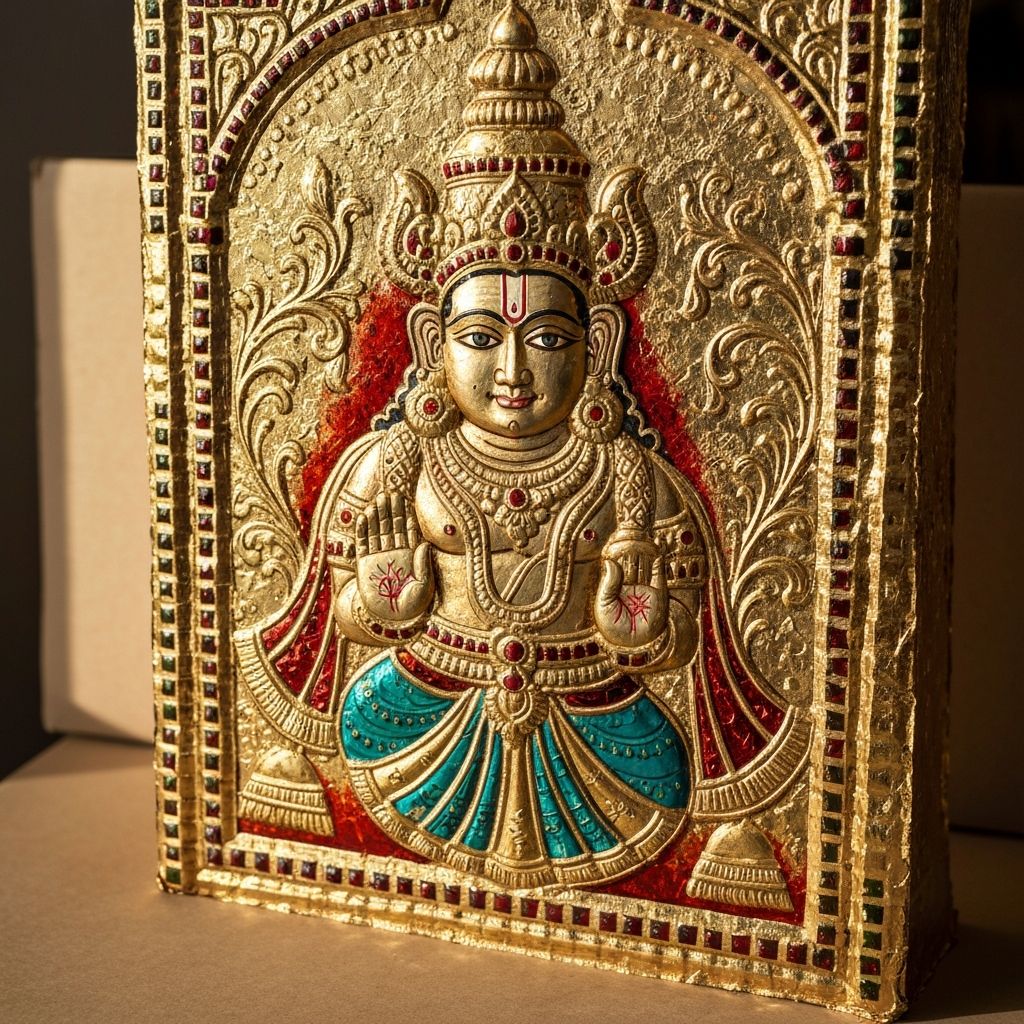
Glass Paintings (Tanjore)
Light through color — the luminous reverse glass painting tradition of Thanjavur, where gold leaf and gemstones bring divine images to radiant life.
Origin
Thanjavur, Tamil Nadu
History
16th Century
Material
Glass, Gold Leaf
Recognition
GI Tagged
Tanjore glass paintings are a distinctive art form that originated in Thanjavur, Tamil Nadu, during the Maratha rule in the 16th century. This unique technique involves painting on the reverse side of glass, requiring artists to work in the opposite order of traditional painting — starting with the finest details and finishing with the background.
What sets Tanjore glass paintings apart is the use of 22-carat gold foil for halos, crowns, and ornaments, combined with semi-precious stones and raised gesso work that gives the paintings a three-dimensional quality. The vibrant colors appear luminous when viewed through the glass, creating an effect of inner radiance that makes these paintings ideal for depicting divine figures.
Distinctive Features
Reverse Painting
Artists paint on the back of glass, working in reverse order from foreground to background
Gold Foil Work
22-carat gold leaf applied for halos, jewellery, and ornamental borders
Semi-precious Stones
Real and imitation gems embedded to create raised, textured embellishments
Divine Subjects
Primarily depicts Hindu deities, especially Lord Krishna, Ganesha, and Lakshmi
Traditional Items
Deity Portraits
Traditional paintings of Hindu gods and goddesses for home shrines and temple decor.
Krishna Series
Depictions of Lord Krishna in various forms — as butter thief, flute player, or with Radha.
Ganesha Paintings
Auspicious paintings of Lord Ganesha, popular for new homes and businesses.
Contemporary Themes
Modern adaptations featuring traditional techniques with non-religious subjects.