Kashmiri Karigari
The art of Kashmir — where papier-mâché, walnut wood, and copper transform under master hands into objects of extraordinary beauty.
Origin
Kashmir Valley
History
600+ Years
Craft Forms
Multiple Traditions
Recognition
Multiple GI Tags
Kashmir has been celebrated for centuries as a center of extraordinary craftsmanship. The term "Karigari" (from the Persian "kar" meaning work) encompasses the valley's diverse craft traditions — papier-mâché, walnut wood carving, copper engraving, and embroidery — each reflecting the region's unique cultural synthesis of Persian, Central Asian, and Indian influences.
These crafts flourished under royal patronage, particularly during the Mughal period when Emperor Jahangir famously declared Kashmir "paradise on earth." Today, thousands of artisan families continue these traditions, creating works that are collected worldwide for their exceptional beauty and craftsmanship. The long winters of Kashmir traditionally provided artisans time to perfect their intricate work, resulting in techniques of remarkable sophistication.
Distinctive Features
Persian Influence
Designs carry Central Asian and Persian aesthetic influences from centuries of Silk Road trade
Natural Materials
Crafts use locally sourced materials — walnut wood, wool, copper, and natural dyes
Family Tradition
Skills passed down through generations, with many families specializing in specific crafts
GI Protected
Several Kashmiri crafts hold Geographical Indication tags protecting their heritage
Major Traditions
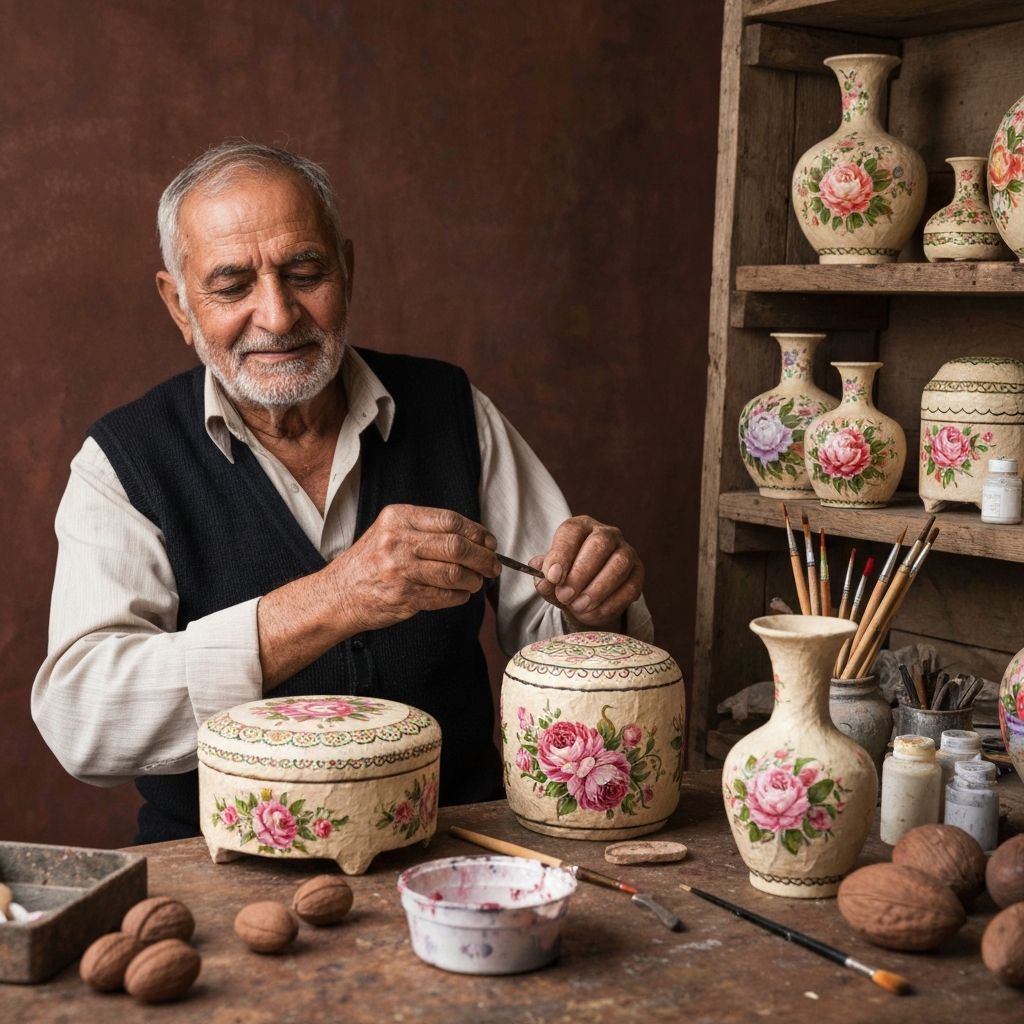
Papier-Mâché
Intricate hand-painted objects made from paper pulp, featuring Persian-influenced floral motifs in vibrant colors and gold leaf.
Walnut Wood Carving
Exquisite furniture and decorative items carved from Kashmiri walnut, known for deep relief work and naturalistic designs.
Copper Engraving (Naqashi)
Delicate patterns engraved on copper vessels, samovars, and plates — a craft dating back to the Sultanate period.
Crewel Embroidery
Chain stitch embroidery on fabric using wool thread, creating flowing floral patterns on curtains, cushions, and rugs.