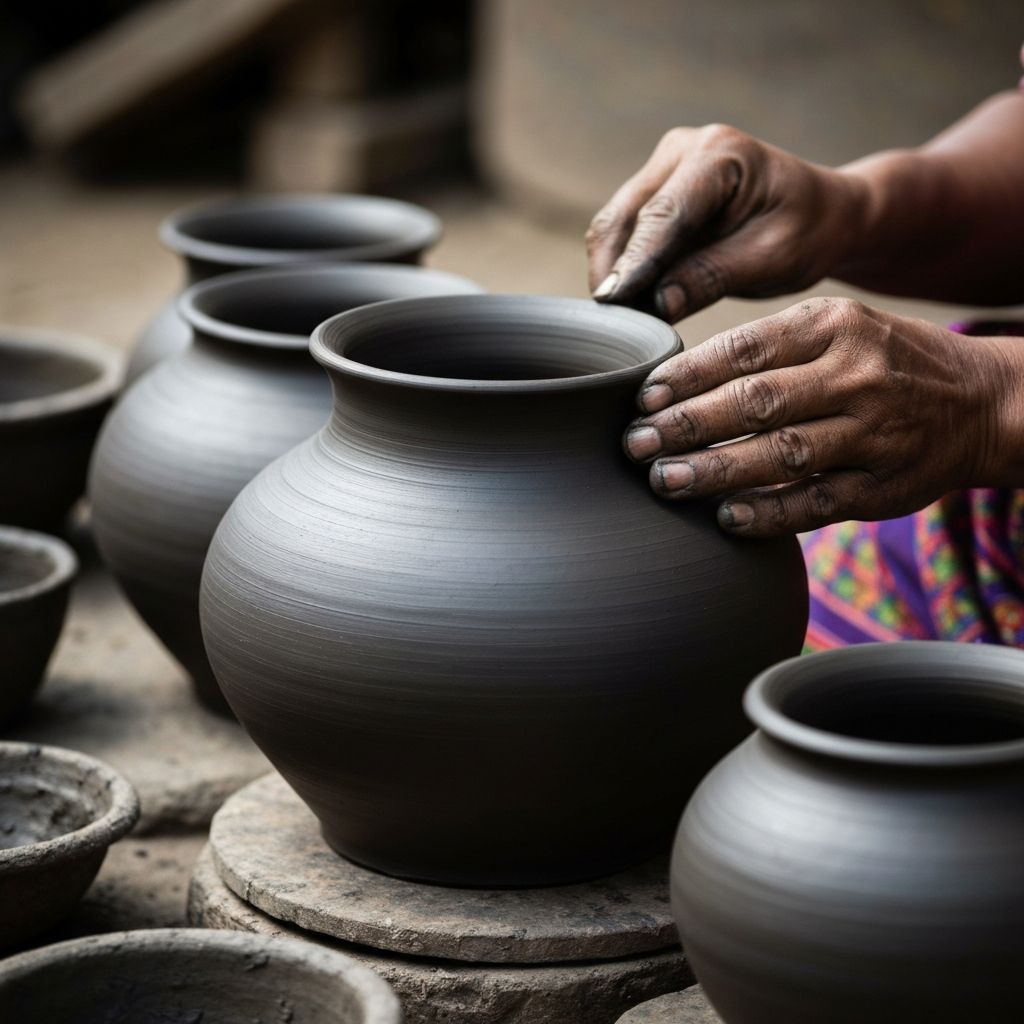
Longpi Pottery
Black stone pottery from the hills of Manipur — shaped without a wheel, fired without a kiln, a craft as ancient as the Tangkhul Naga tribe.
Origin
Longpi Village, Manipur
Community
Tangkhul Naga Tribe
Material
Serpentine Stone & Clay
Recognition
GI Tagged (2020)
Longpi pottery, also known as Nungbi pottery, is a unique craft tradition from the Longpi village in Ukhrul district of Manipur. Practiced by the Tangkhul Naga tribe for centuries, this pottery is remarkable for being made entirely without a potter's wheel — shaped purely by hand using a mixture of serpentine stone and a special clay found only in this region.
The distinctive black color comes from the serpentine rock, locally called "longpi stone," which is crushed and mixed with brown clay. The vessels are not fired in a kiln but baked in the open sun and then fire-treated. This ancient technique produces cookware with exceptional heat retention, making food cooked in Longpi pots distinctively flavorful. The craft is traditionally practiced by women of the community.
Distinctive Features
No Potter's Wheel
Entirely hand-built without using a potter's wheel, shaped by skilled hands alone
Stone & Clay Mix
Made from serpentine rock and special weathered clay found only in Longpi village
Heat Retention
Excellent heat retention properties, ideal for cooking and serving hot foods
GI Protected
Awarded Geographical Indication tag recognizing its unique tribal heritage
Traditional Items
Cooking Pots
Traditional cooking vessels that enhance flavor and retain heat, used for slow-cooking tribal delicacies.
Serving Bowls
Elegant black bowls for serving food, keeping dishes warm for extended periods.
Tea Sets
Contemporary adaptations including teapots and cups, popular among urban consumers.
Decorative Items
Vases, planters, and art pieces showcasing the distinctive matte black finish.