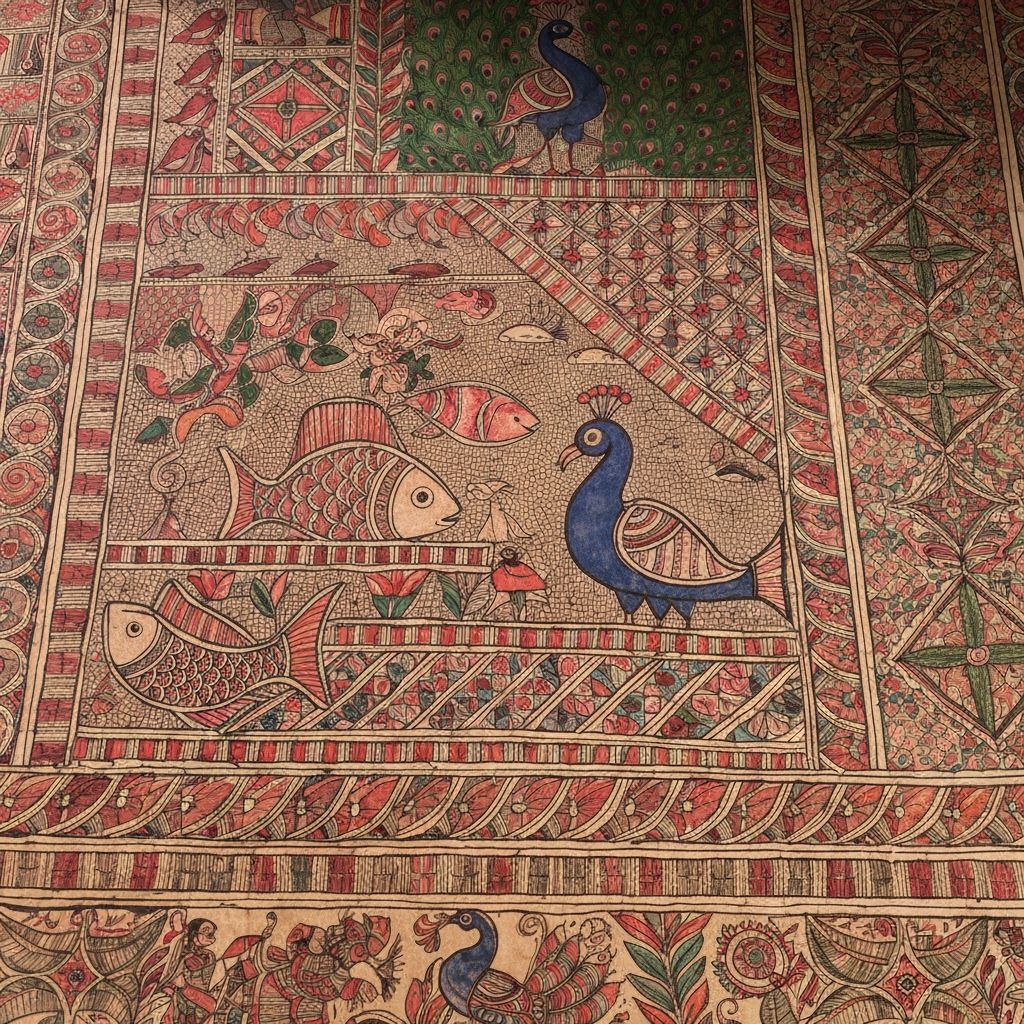
Madhubani Art
Sacred geometry meets folk imagination — the ancient Mithila painting tradition where every line tells a story of devotion, nature, and celebration.
Origin
Mithila, Bihar
History
2,500+ Years
Medium
Natural Pigments
Recognition
GI Tagged 2007
Madhubani painting, also known as Mithila art, originated in the Mithila region of Bihar over 2,500 years ago. Legend traces its origin to the time of the Ramayana, when King Janaka commissioned artists to create paintings for his daughter Sita's wedding to Lord Rama. For centuries, this art was practiced exclusively by women on the walls and floors of their homes.
The paintings are characterized by geometric patterns that fill every inch of the surface — a concept called 'horror vacui' or fear of empty space. Common motifs include the sun, moon, religious symbols, fish (fertility), peacocks, and scenes from Hindu mythology. The art gained international recognition in the 1960s when a severe drought led to government-sponsored programs encouraging artists to paint on paper for commercial sale.
Distinctive Features
Mithila Heritage
Ancient art form from the Mithila region, traditionally practiced by women to decorate homes during festivals and weddings
Natural Pigments
Colors derived from plants, minerals, and natural sources — indigo, turmeric, lamp soot, and flower extracts
Five Distinct Styles
Bharni, Kachni, Tantrik, Godna, and Kohbar — each with unique techniques and symbolic meanings
GI Protected
Awarded Geographical Indication tag in 2007, recognizing its unique Mithila origin
Traditional Expressions
Wall Paintings
Traditional paintings on walls and handmade paper depicting gods, nature, and auspicious symbols.
Kohbar Paintings
Sacred bridal chamber art featuring lotus, bamboo, fish, and fertility symbols for weddings.
Fabric & Sarees
Madhubani motifs on silk and cotton textiles, creating wearable art pieces.
Contemporary Art
Modern adaptations on canvas, paper, and various media for galleries and collectors.