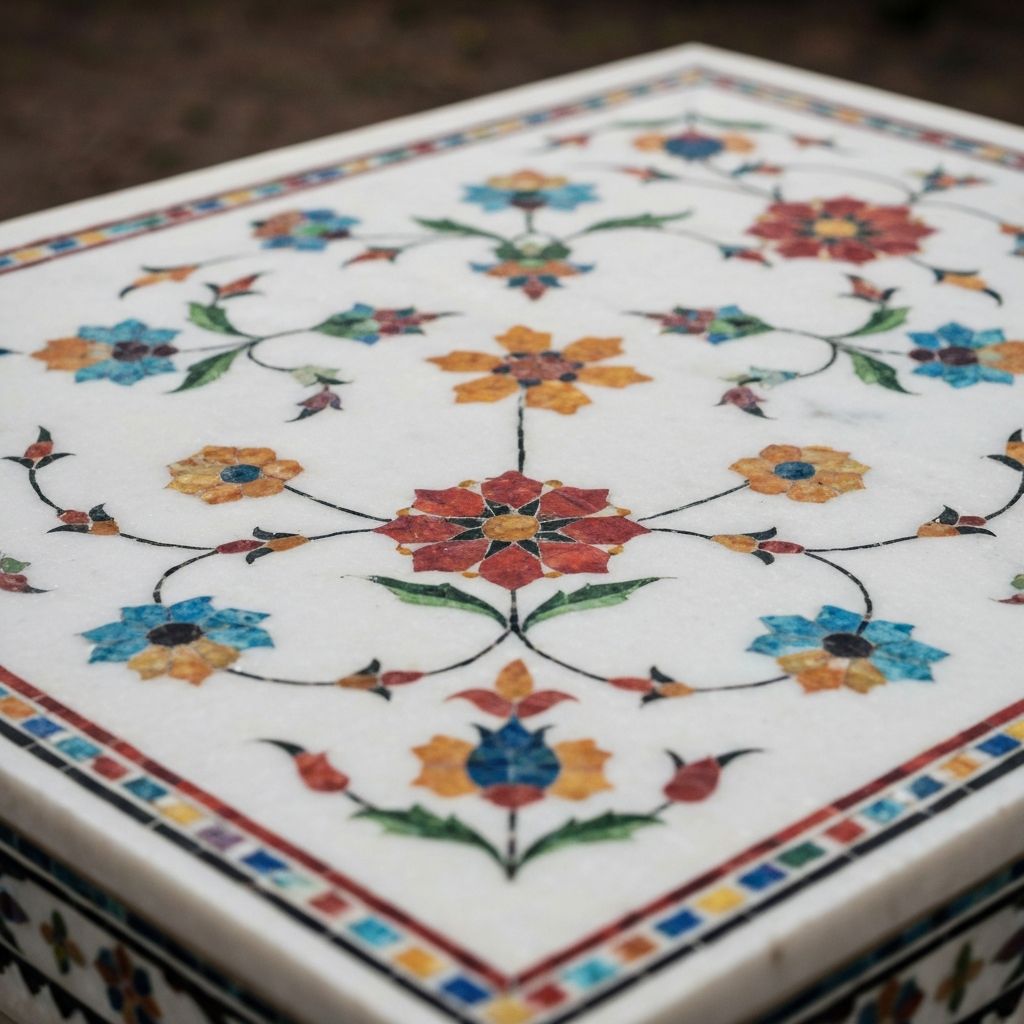
Marble Inlay (Pietra Dura)
Flowers in stone — the Mughal art of inlaying semi-precious gems into white marble, perfected for the Taj Mahal and kept alive by Agra's master craftsmen.
Origin
Agra, Uttar Pradesh
History
17th Century
Material
Marble & Gemstones
Recognition
Mughal Heritage
Pietra Dura, meaning "hard stone" in Italian, is the art of inlaying cut and shaped semi-precious stones into marble to create intricate decorative patterns. Though the technique originated in Florence, it reached its highest expression in Mughal India, particularly in Agra under the patronage of Emperor Shah Jahan who used it extensively in the Taj Mahal.
Agra's artisans, known as "parchin kari" masters, continue this 400-year-old tradition using the same techniques and materials — Makrana marble, lapis lazuli from Afghanistan, malachite from Russia, carnelian from Yemen, and mother-of-pearl from the Indian Ocean. Each piece takes weeks or months to complete, with artisans hand-cutting stones to fit perfectly into marble cavities.
Distinctive Features
Makrana Marble
Uses the same luminous white marble from Rajasthan that built the Taj Mahal
Semi-precious Stones
Lapis lazuli, carnelian, jade, malachite, and mother-of-pearl inlaid into marble
Mughal Heritage
Art form perfected under Mughal patronage, reaching its zenith in Shah Jahan's era
Precision Craft
Each stone is hand-cut and fitted so perfectly that no gap or adhesive is visible
Traditional Items
Table Tops
Circular and rectangular marble table tops featuring intricate floral and geometric designs.
Decorative Plates
Wall plates and display pieces showcasing traditional Taj Mahal patterns.
Jewellery Boxes
Small marble boxes with inlaid stone work, perfect for storing precious items.
Flooring & Tiles
Custom marble flooring and tiles for luxury architectural applications.