Miniature Paintings of India
Worlds within worlds — intricate masterpieces painted with single-hair brushes and real gold, telling timeless stories across centuries of courts and kingdoms.
Tradition
6th Century CE
Major Schools
15+ Distinct Styles
Golden Era
16th – 18th Century
Key Centres
Mughal, Rajput, Pahari
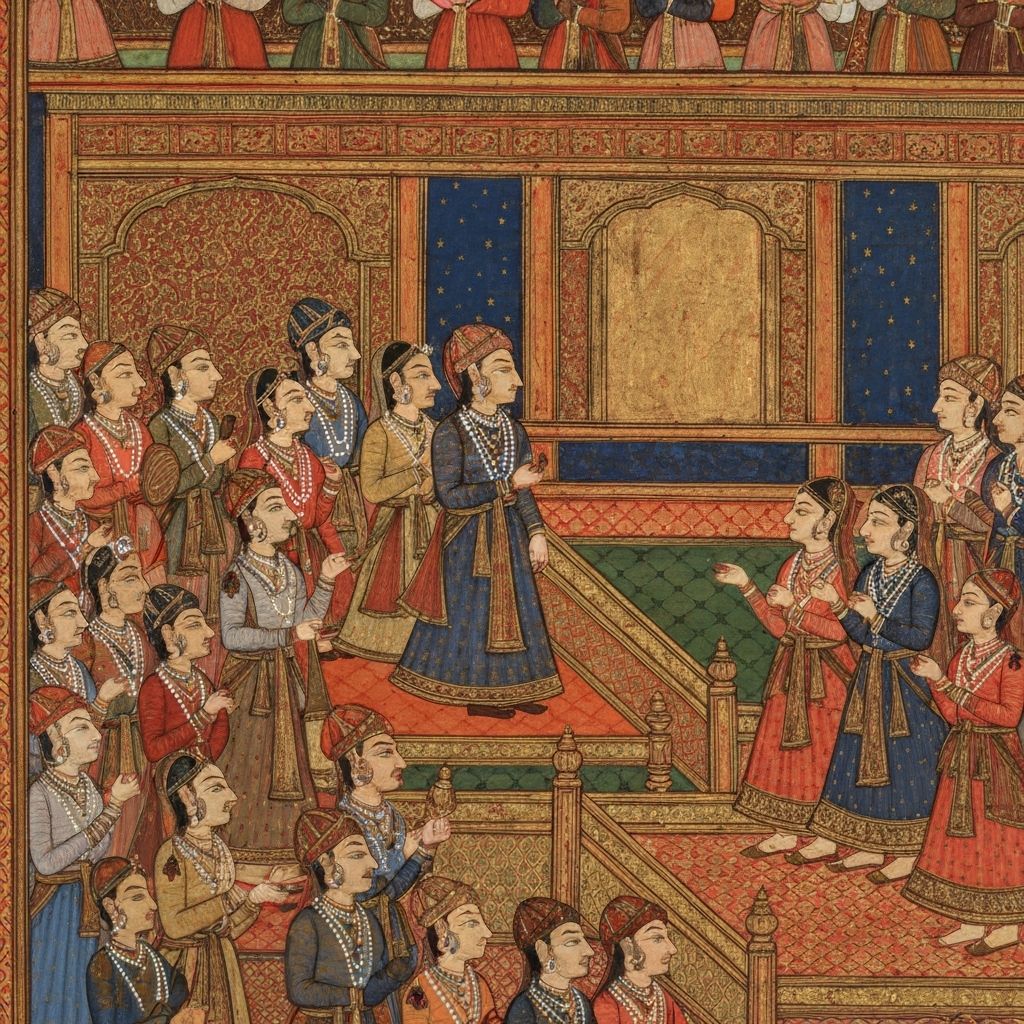
Indian miniature painting is one of the world's great artistic traditions, spanning over a thousand years and dozens of distinct regional schools. These small-format works — typically painted on paper, palm leaf or cloth — reveal a universe of detail: courtly portraits, devotional narratives, ragamala sequences and scenes of everyday life, all rendered with extraordinary precision.
The tradition reached its zenith in the Mughal era (16th–18th centuries), when imperial ateliers employed hundreds of artists who blended Persian, Central Asian and indigenous Indian styles into something entirely new. Simultaneously, regional schools — Rajput, Pahari, Deccan — developed parallel traditions with their own distinctive aesthetics, subjects and techniques.
Major Painting Schools
Rajput School
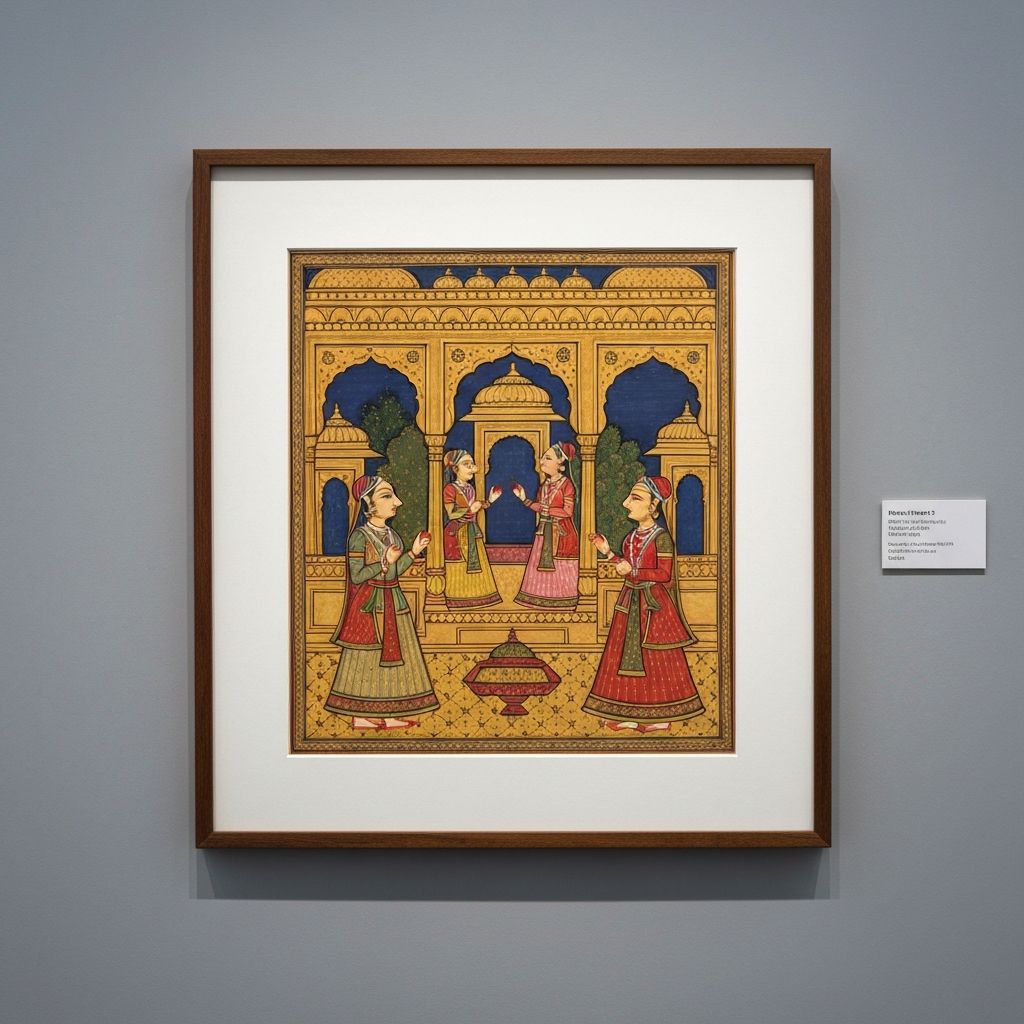
Distinct from the Mughal tradition, Rajput paintings are bold, lyrical and deeply devotional. Flat areas of brilliant colour, stylised figures and expressive emotion characterise this school. Subjects include the Raas Leela of Krishna, ragamala musical modes, and epic battle scenes from the Ramayana and Mahabharata.
Pahari School
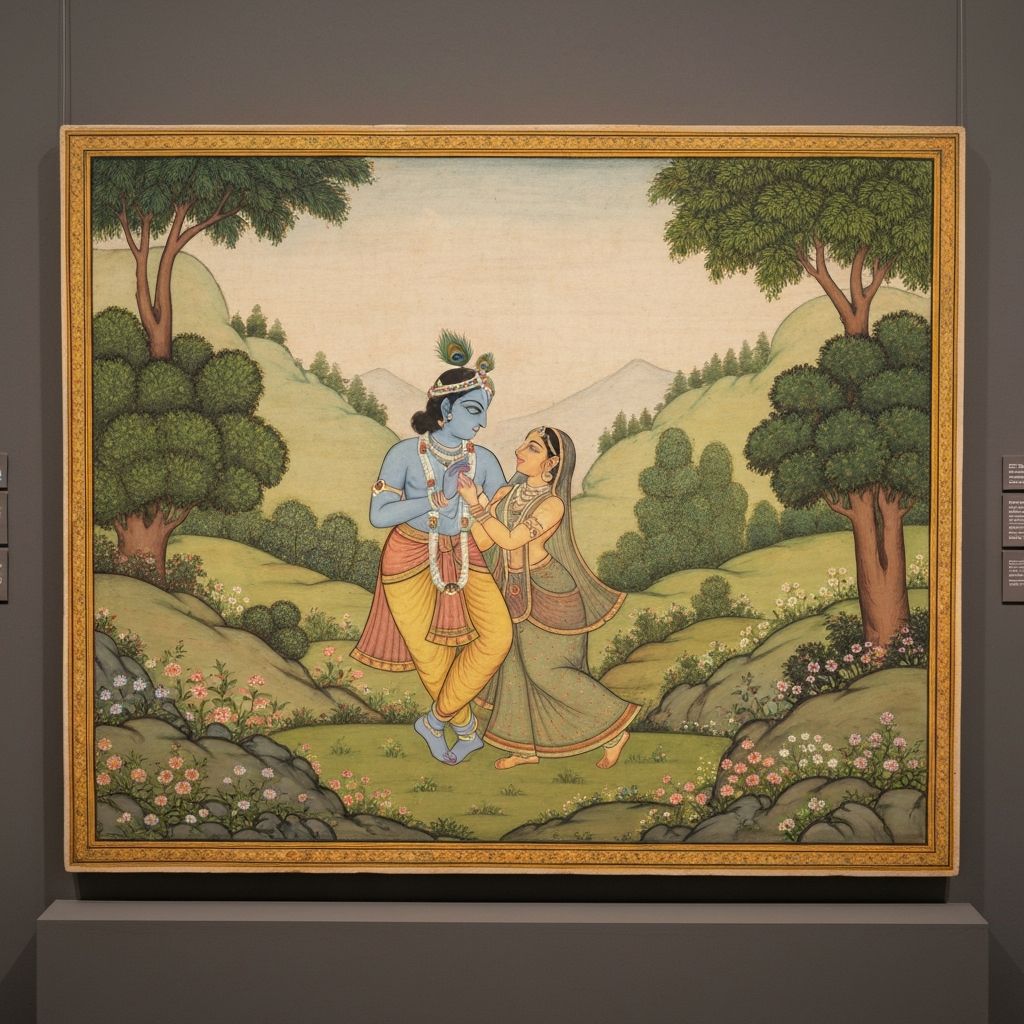
Emerging from the hill courts of the Himalayas, Pahari paintings are lyrical and romantic. The Basohli and Kangra sub-styles are most celebrated — Basohli for its bold colours and intense emotion, and Kangra for its delicate lines, soft palette and poetic depictions of Krishna-Radha love.
Mughal School
Founded under Emperor Akbar, the Mughal school blended Persian, Central Asian and Indian traditions into a refined court art. Characterised by realistic portraiture, naturalistic landscapes and meticulous detail, Mughal miniatures documented royal life, hunts, battles and literary subjects with unparalleled precision.
Other Regional Styles
Mughal School
Blended Persian and Indian traditions with realistic portraiture and naturalistic landscapes. The imperial atelier set standards for Indian painting.
Rajput School
Bold, lyrical and devotional paintings with vibrant colours and flat perspectives. Subjects include Krishna Leela and Ragamala series.
Pahari School
Lyrical and romantic hill paintings. Kangra for delicate lines, Basohli for bold colors and intense emotion.
Deccan School
Blended Persian, European and Indian elements with a distinctive palette. Known for bold outlines and rich jewel-toned backgrounds.
Malwa School
An early Rajput sub-style characterised by simple flat compositions and warm earthy tones, depicting devotional subjects.
Mewar School
Known for its bold lines and vivid colours. The Chawand Ragamala series (1605) is among its finest achievements.
Bundi-Kota School
Celebrated for hunting scenes and lush natural settings. Depictions of elephants, deer and flora show remarkable skill.
Kishangarh School
Famous for its elongated figures with distinctive arched eyebrows and lotus-petal eyes, centred on the legend of Bani Thani.
Techniques & Materials
Natural Pigments
Colours extracted from minerals, plants and insects — lapis lazuli for blue, cinnabar for red, orpiment for yellow, malachite for green.
Squirrel Hair Brushes
Ultra-fine brushes made from squirrel tail hair, sometimes with a single-hair tip for the finest details.
Gold & Silver Leaf
Real gold and silver were applied as flat areas or tooled with fine patterns to create royal costumes, jewellery and architectural elements.
Burnishing
Finished paintings were burnished with an agate stone to create a smooth, luminous surface and fix the pigments.
Paper & Cloth Ground
Wasli (laminated paper) was the standard ground, while Pattachitra used cloth sized with chalk and tamarind paste.
Outline Drawing
Compositions began with charcoal or red ink outlines, transferred to the final surface before colour was applied in multiple layers.
Notable Miniature Painters
Mir Sayyid Ali
Mughal School
One of the founding masters of the Mughal atelier under Humayun
Abdus Samad
Mughal School
Trained Akbar in painting; supervised the Hamzanama project
Bichitr
Mughal School
Court painter to Jehangir and Shah Jahan, known for allegorical portraits
Manaku
Pahari (Guler) School
Created the celebrated Gita Govinda series around 1730
Nainsukh
Pahari (Guler) School
Master of intimate portraiture; documented the life of Raja Balwant Singh
Nihal Chand
Kishangarh School
Created the iconic Bani Thani portrait, India's 'Mona Lisa'
Living Tradition
Though the great court ateliers are gone, the tradition of miniature painting lives on. Cities like Jaipur, Udaipur and Nathdwara in Rajasthan remain active centres where artists continue to produce work in classical styles, while contemporary painters blend traditional techniques with modern themes.
Jaipur, Udaipur, Nathdwara
Active Centres
National Museum, Victoria & Albert
Collections
Phad, Pattachitra
GI Protected