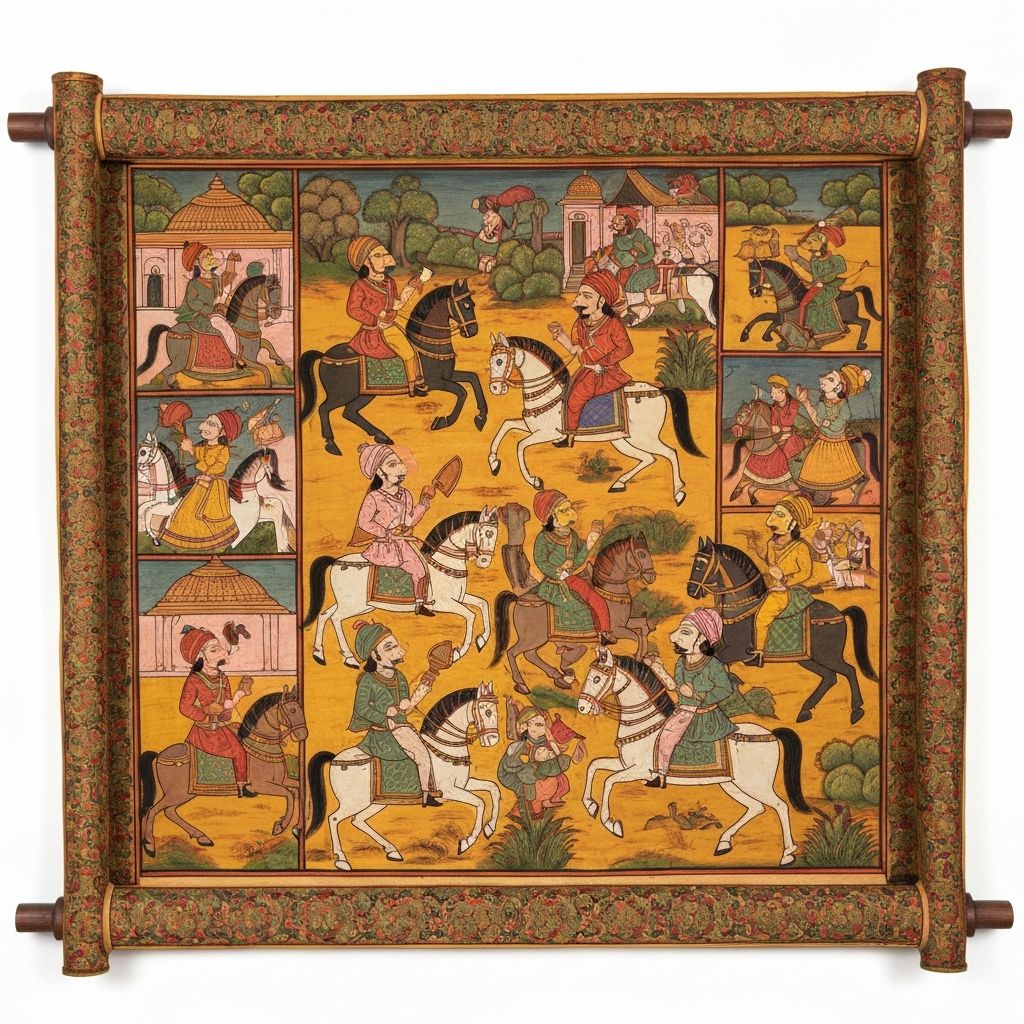
Phad Painting
Epic tales on cloth — Rajasthan's narrative scroll tradition where folk heroes ride eternally through bold colors and heroic legends.
Origin
Shahpura, Rajasthan
History
700+ Years
Medium
Cloth & Natural Dyes
Recognition
GI Tagged
Phad painting is a religious scroll painting tradition from Rajasthan, primarily practiced by the Joshi families of Shahpura in Bhilwara district. The word 'Phad' refers to the large cloth on which these epic narratives are painted. For over 700 years, these scrolls have served as portable temples, carried by Bhopa priest-singers who travel from village to village performing the legends of folk deities.
The creation of a Phad is a sacred act — the scroll is only considered complete when the eyes of the main deity are painted in a ritual ceremony. Traditional Phads can be up to 30 feet long, depicting hundreds of scenes from the hero's life. The Bhopa uses an oil lamp to illuminate different portions of the scroll as he sings through the night, creating an immersive theatrical experience that predates cinema by centuries.
Distinctive Features
Epic Narratives
Large cloth scrolls narrating the legends of folk heroes Pabuji and Devnarayan through panoramic visual storytelling
Ritual Performance
Traditionally used by Bhopa priest-singers who unfold and perform the epic tales through song and dance
Bold Colors
Vibrant palette of red, yellow, green, and orange using natural vegetable dyes on hand-woven cotton cloth
GI Protected
Awarded Geographical Indication tag recognizing its unique Shahpura, Bhilwara heritage
Traditional & Contemporary
Pabuji Ki Phad
Scrolls depicting the life and battles of Pabuji, the 14th-century Rajput folk hero and protector of cattle.
Devnarayan Ki Phad
Scrolls narrating the story of Devnarayan, incarnation of Vishnu, worshipped by the Gurjar community.
Contemporary Phad
Modern adaptations depicting Rajasthani folk life, festivals, and local legends on smaller canvases.
Decorative Art
Phad motifs on wall hangings, cushions, and home decor items for contemporary interiors.