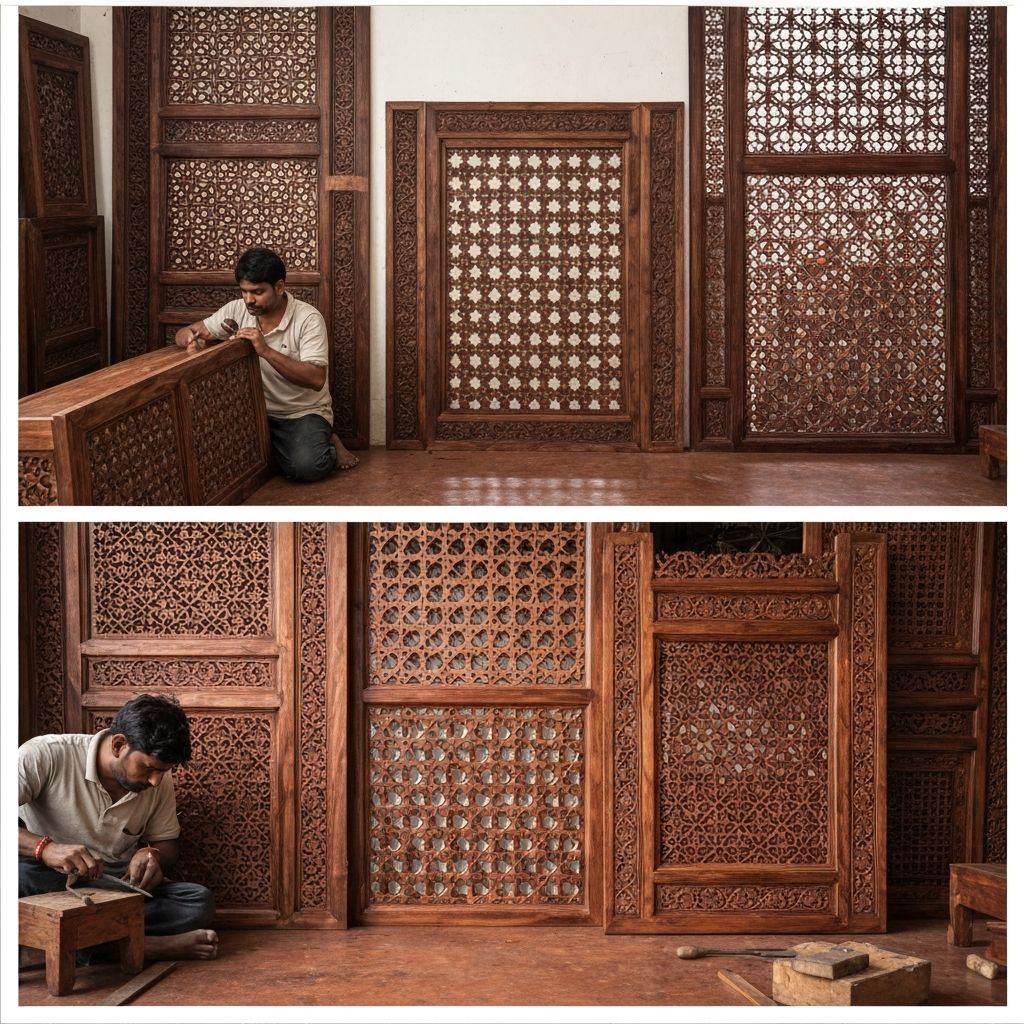
Saharanpur Woodwork
The wood carving capital of India — where Mughal-era craftsmanship lives on in intricate jali screens and ornate furniture.
Origin
Saharanpur, UP
History
400+ Years
Material
Sheesham & Teak
Recognition
GI Tagged
Saharanpur in western Uttar Pradesh has been India's wood carving capital since the Mughal era. The craft flourished under royal patronage, with artisans creating intricate furnishings for palaces, havelis, and mosques. Today, the district houses over 50,000 wood carving units employing hundreds of thousands of craftspeople.
The hallmark of Saharanpur woodwork is the jali — delicate lattice screens carved from single blocks of wood. These geometric patterns, inspired by Mughal and Persian architecture, require extraordinary precision. Master craftsmen (known as "karigars") use simple hand tools to create designs that seem impossibly intricate. The primary wood used is sheesham (Indian rosewood), valued for its strength, rich color, and resistance to termites.
Distinctive Features
Jali Work
Intricate lattice screens with geometric patterns allowing light and air to pass through
Sheesham Wood
Made primarily from Indian rosewood (Dalbergia sissoo), prized for durability and grain
Mughal Influence
Designs draw from Persian and Mughal architectural motifs including arabesques and florals
GI Protected
Awarded Geographical Indication tag recognizing its unique Saharanpur heritage
Traditional Items
Jali Screens
Intricate lattice panels used as room dividers, window covers, and decorative installations.
Furniture
Carved beds, chairs, tables, and almirahs featuring traditional motifs and patterns.
Decorative Items
Photo frames, mirror frames, boxes, and wall hangings with detailed carving.
Religious Articles
Carved temple pieces, deity stands, and ceremonial items for home shrines.