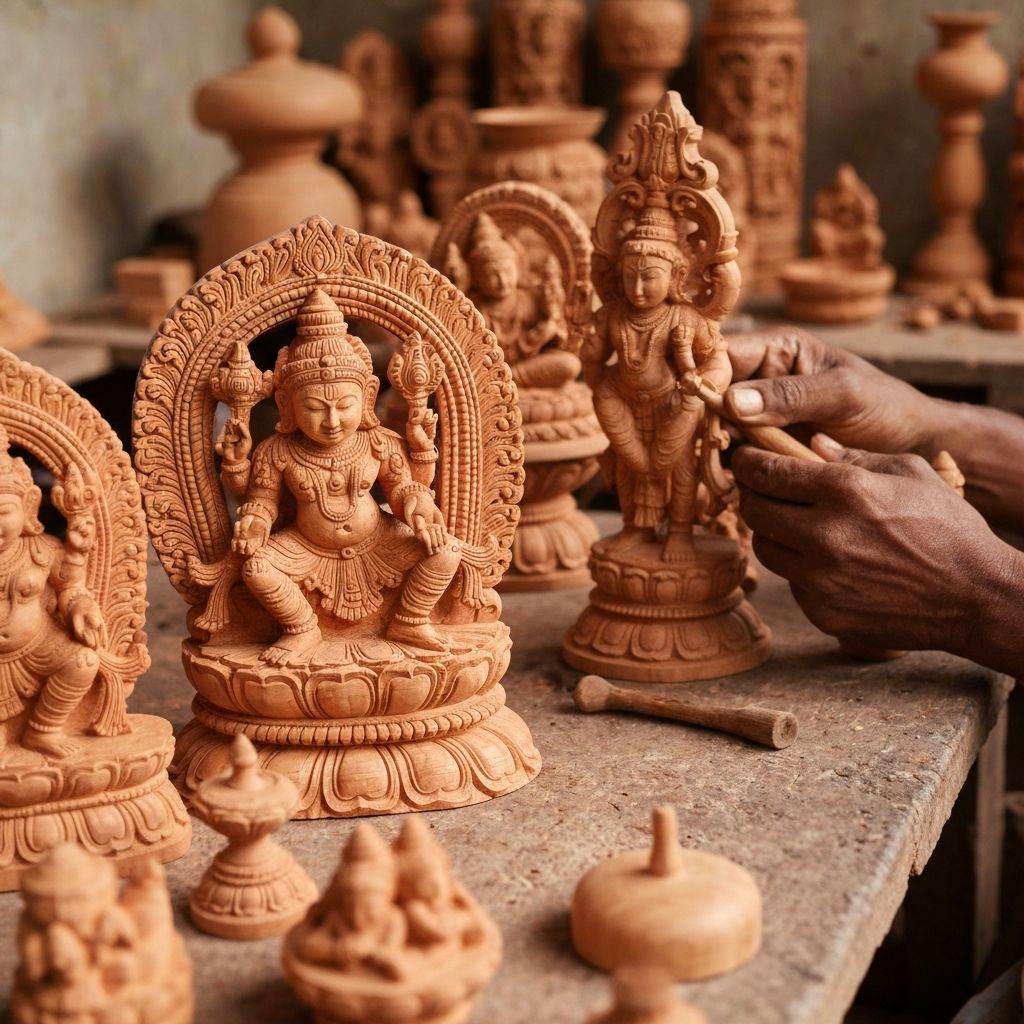
Sandalwood Carving
The fragrant art of Mysuru — where centuries-old craftsmanship transforms precious sandalwood into objects of divine beauty and lasting aroma.
Origin
Mysuru, Karnataka
History
400+ Years
Material
Santalum Album
Recognition
GI Tagged
Mysuru sandalwood carving is one of India's most refined craft traditions, flourishing under the patronage of the Wodeyar rulers of Mysore from the 17th century onwards. The craft reached its zenith during the reign of Krishnaraja Wodeyar III, who established state workshops employing hundreds of skilled carvers.
Sandalwood (Santalum album) from the forests of Karnataka is prized for its fine grain, creamy color, and distinctive fragrance that persists for decades. The wood's density allows for extraordinarily fine carving, enabling artisans to create intricate details that would be impossible in other woods. Today, strict regulations govern sandalwood harvesting, making authentic Mysuru sandalwood carvings both precious and relatively rare.
Distinctive Features
Fragrant Wood
Sandalwood retains its distinctive sweet fragrance for decades, making each piece aromatic as well as beautiful
Intricate Detailing
Master craftsmen create incredibly fine details using specialized chisels and carving tools
Religious Motifs
Deities, temple replicas, and mythological scenes are the most prized subjects
GI Protected
Mysore Sandalwood is protected under Geographical Indication recognizing its unique heritage
Traditional Items
Deity Figurines
Exquisitely carved representations of Hindu deities including Ganesha, Lakshmi, and Krishna.
Decorative Boxes
Ornate jewellery boxes and keepsake containers with intricate carved patterns.
Temple Replicas
Miniature replicas of famous South Indian temples, showcasing architectural detail.
Elephant Figurines
Traditional elephant carvings symbolizing prosperity and good fortune.