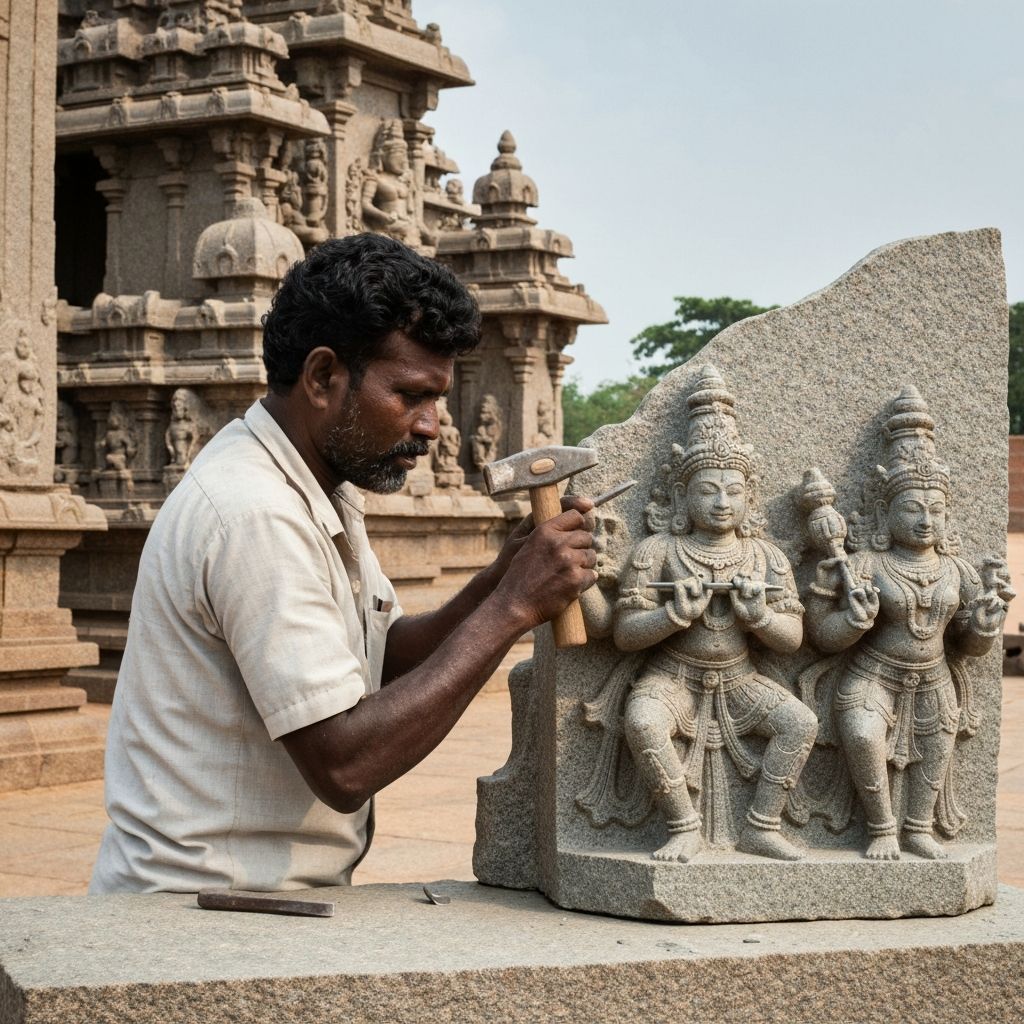
Stone Craft of Mahabalipuram
Where granite becomes divine — the ancient Pallava stone carving tradition that gave India some of its most magnificent temple sculptures.
Origin
Mahabalipuram, Tamil Nadu
History
7th Century CE
Material
Granite & Sandstone
Recognition
UNESCO Heritage
Mahabalipuram, known locally as Mamallapuram, has been a center of stone carving excellence for over 1,300 years. The Pallava dynasty kings, particularly Narasimhavarman I (630-668 CE), established this coastal town as a major sculptural workshop, creating the magnificent rock-cut temples and monolithic sculptures that still draw visitors today.
The artisans of Mahabalipuram work primarily with hard granite, using traditional tools like iron chisels and wooden mallets. The craft requires years of apprenticeship to master — from reading the stone's grain to executing the fine details of deity faces and ornaments. Today, over 500 families continue this tradition, creating everything from small decorative pieces to massive temple sculptures exported worldwide.
Distinctive Features
Pallava Heritage
Tradition dating back to 7th century Pallava dynasty, creators of the famous Shore Temple and rock-cut monuments
Granite Mastery
Artisans work with hard granite using traditional chisels and hammers, creating intricate temple sculptures
UNESCO Site
Mahabalipuram's Group of Monuments is a UNESCO World Heritage Site, showcasing ancient stone craft
Living Tradition
Over 500 artisan families continue the craft today, passing skills through generations
Traditional Items
Temple Sculptures
Deities, mythological figures, and architectural elements for temples across India and abroad.
Garden Statues
Large decorative sculptures of gods, Buddha figures, and animals for gardens and homes.
Decorative Panels
Intricate relief panels depicting scenes from Hindu epics and traditional motifs.
Lamps & Urlis
Functional stone items including oil lamps, flower bowls, and ritual vessels.