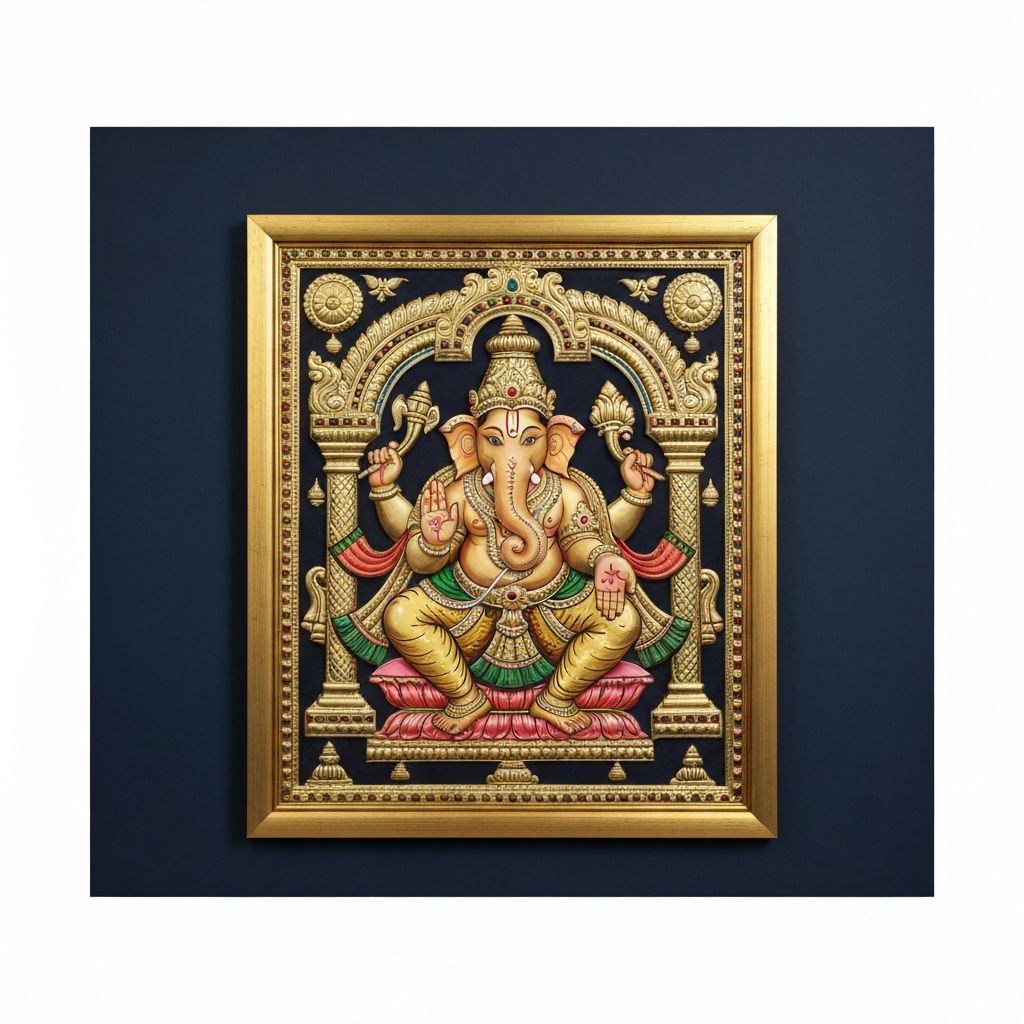
Tanjore Painting
Where gold meets divinity - the luminous art tradition of South India.
Origin
Thanjavur, Tamil Nadu
Period
16th Century (Nayak Era)
Medium
Gold Leaf & Gesso
Recognition
GI Tagged
Tanjore Painting is a classical South Indian art form that originated in Thanjavur during the Nayak dynasty. Known for its surface richness, vivid colors, and compact composition, these paintings are distinguished by their use of gold foil and inlay of semi-precious stones.
The paintings predominantly depict Hindu gods and goddesses, with Lord Krishna as an infant being the most popular subject. The art form flourished under the patronage of the Marathas of Thanjavur and later spread to neighboring regions.
Creating a Tanjore painting is a meticulous process involving multiple stages - from preparing the base with cloth pasted on wood, to applying the gesso work, setting gold foil, adding stones, and finally painting the figures with natural dyes.
Distinctive Features
Gold Foil Work
Genuine gold leaf creating luminous surfaces
Gesso Work
Raised relief giving 3D effect to jewelry and ornaments
Rich Colors
Vibrant palette dominated by red, blue, and green
Stone Setting
Semi-precious stones and glass beads for embellishment
Divine Subjects
Hindu deities, especially Krishna and Lakshmi
Iconic Frames
Traditional wooden frames with gilded borders
Creating a Tanjore Painting
- Base preparation with wooden plank and cloth
- Sketch drawing and gesso (chalk powder + binding medium) application
- Gold foil placement on raised areas
- Setting of semi-precious stones and glass beads
- Final painting with natural and mineral colors