Theatre & Drama of India
From ancient Sanskrit plays to vibrant folk theatre — India's dramatic tradition spans three millennia and hundreds of regional forms.
Tradition
3000+ Years
Sanskrit Drama
From 200 BCE
Regional Forms
50+ Traditions
UNESCO Heritage
Koodiyattam & Chhau
India's theatrical heritage is one of the oldest in the world. The Natyashastra, attributed to the sage Bharata Muni (200 BCE–200 CE), is considered the world's earliest and most comprehensive treatise on performing arts, codifying everything from stagecraft and dramaturgy to music, dance and the theory of Rasa (aesthetic emotions).
Indian theatre has always been a total art form — combining poetry, music, dance, makeup and costume into a unified performance. Whether it's the elaborate Kathakali of Kerala or the boisterous Tamasha of Maharashtra, each form carries within it centuries of community memory, mythology and social commentary.
Major Theatre Forms
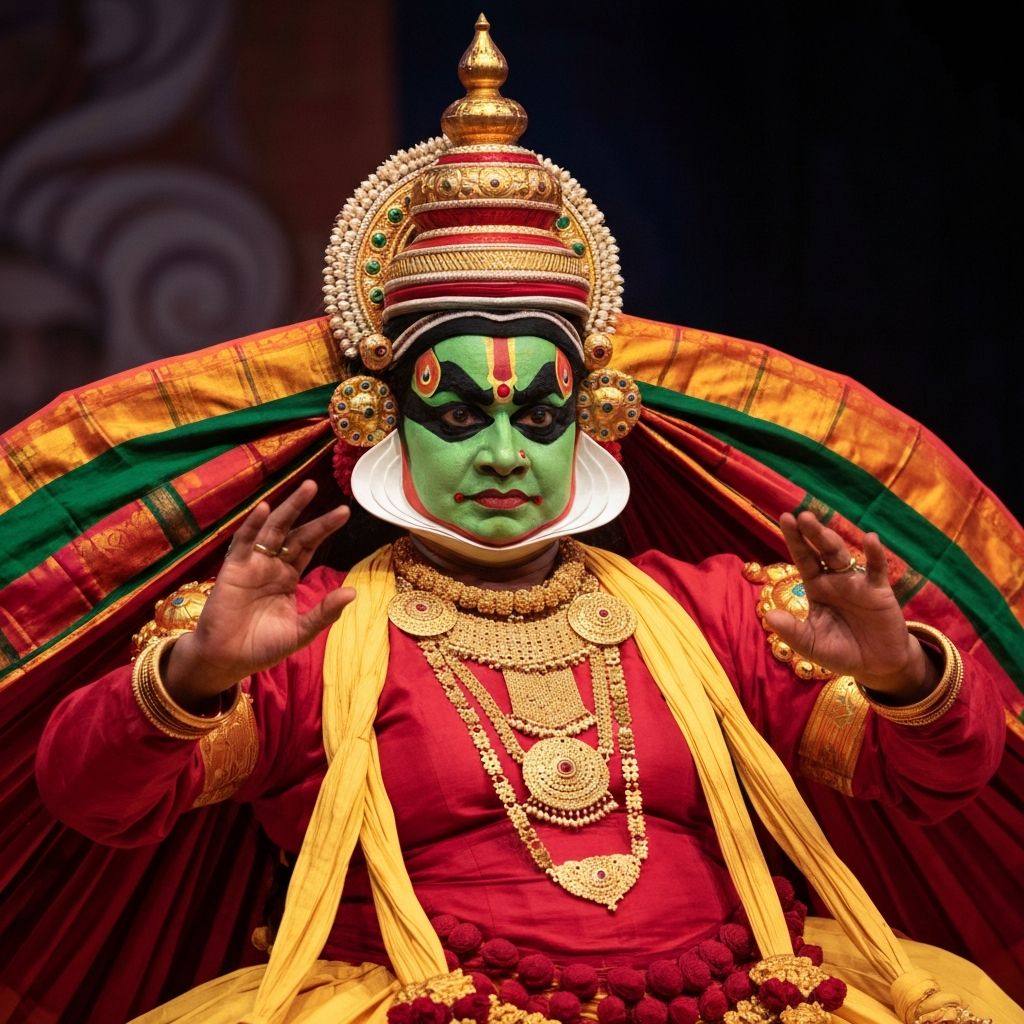
Kathakali
One of India's most spectacular theatre forms, Kathakali combines dance, drama, music and elaborate makeup to enact stories from the Ramayana and Mahabharata. The distinctive make-up (chutti) takes hours to apply and each colour and design carries symbolic meaning — green for heroic characters, red for villains.
Yakshagana
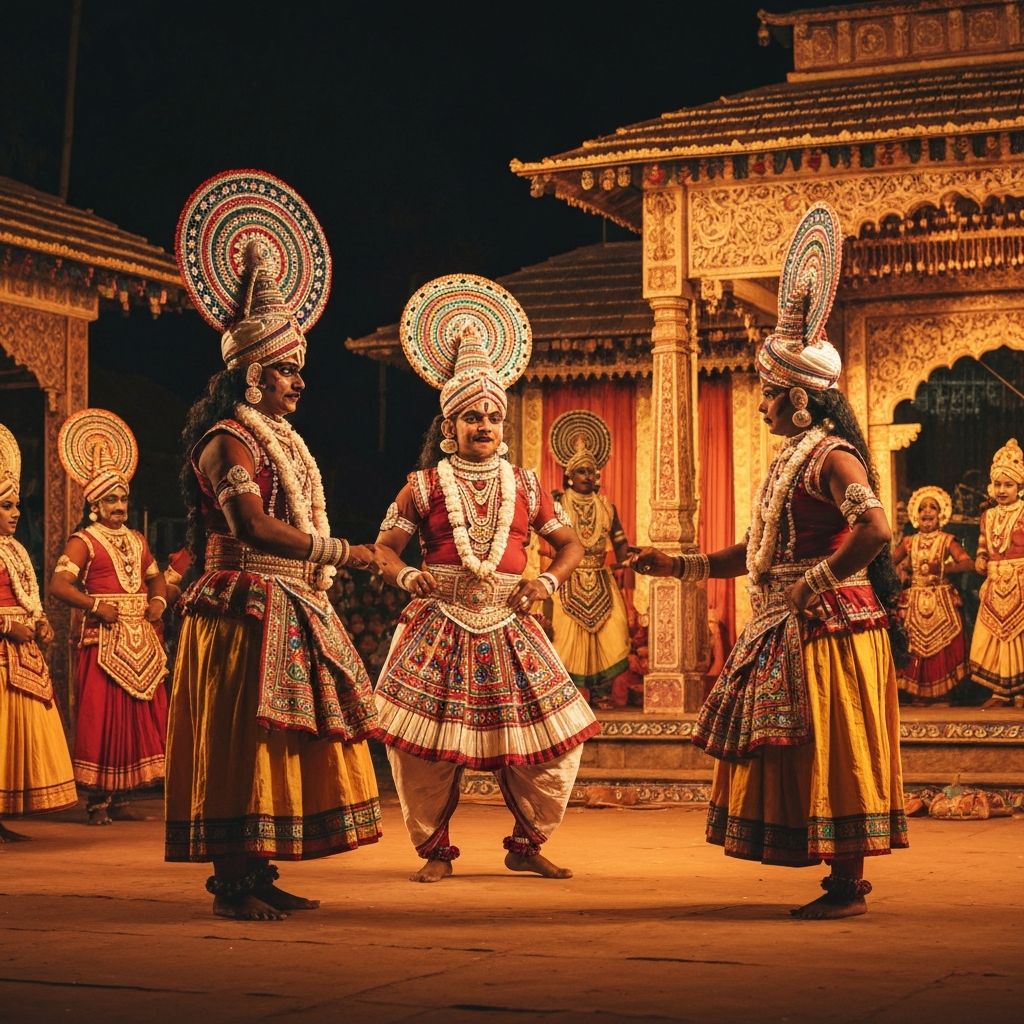
A traditional theatre form from coastal Karnataka that blends dance, music, dialogue and elaborate costumes to stage mythological stories. Performances traditionally begin at dusk and continue through the night. The towering headgear (kireethas) and face makeup are instantly recognisable.
Chhau Dance Theatre
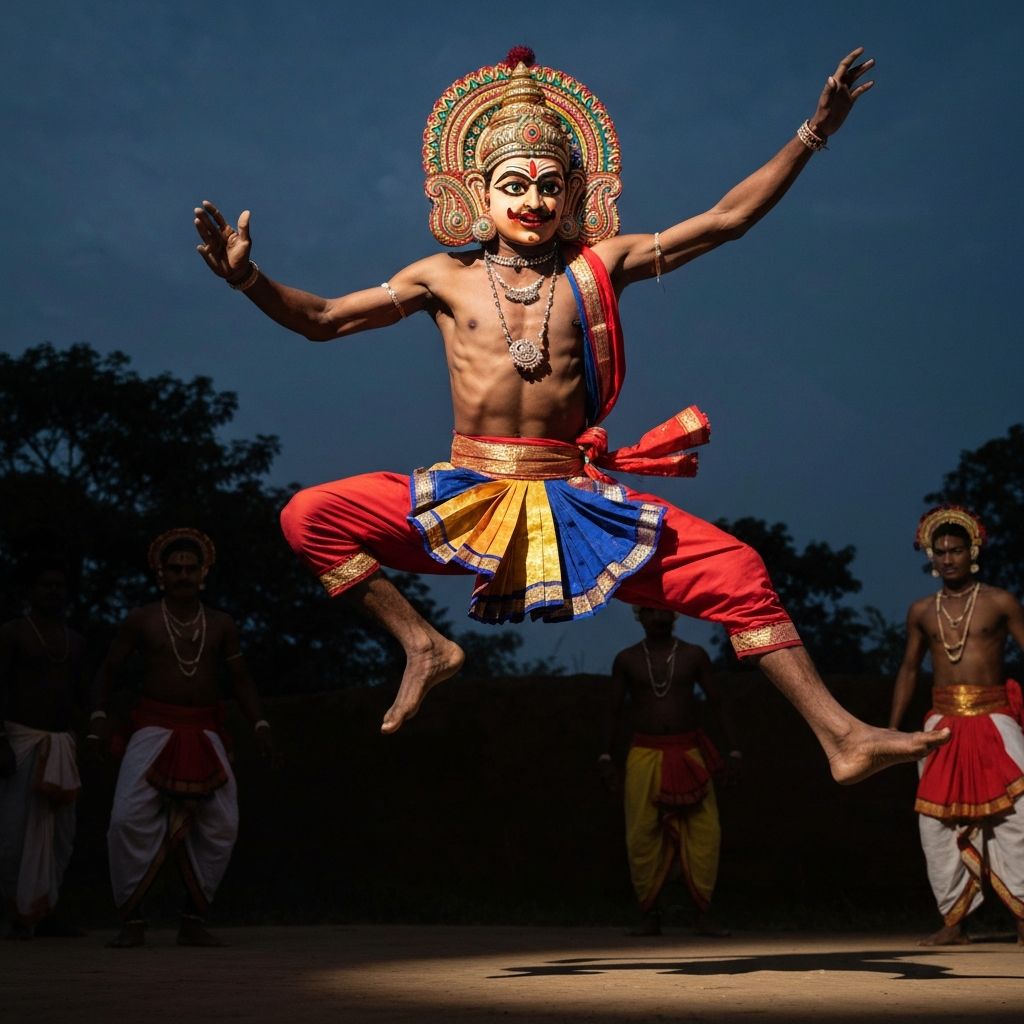
Chhau is a semi-classical Indian dance with martial, tribal and folk traditions, performed in three distinct styles — Seraikella, Purulia and Mayurbhanj. Performers wear elaborate masks depicting deities, demons and animals. The Purulia style is known for its spectacular leaps and energetic movements.
Folk Theatre of India
Every state of India has its own folk theatre tradition, performed at temples, harvest festivals, and community gatherings.
Tamasha
Lively folk theatre combining song, dance and drama with social commentary. Known for its energetic lavani dance performances.
Jatra
Open-air theatre tradition featuring highly dramatic acting, live music and mythological or historical themes performed across rural Bengal.
Nautanki
Traditional street theatre with operatic singing style, depicting stories of legendary folk heroes and romantic tales.
Therukoothu
Street theatre tradition performed at temples and festivals, enacting scenes from the Mahabharata over multiple nights.
Bhand Pather
Satirical folk theatre combining comedy, music and dance to critique social norms and traditions, performed by the Bhand community.
Bhavai
Outdoor folk drama performed by the Thakar community, involving acrobatics, social satire and devotional themes.
Ankiya Bhaona
One-act plays composed by Sankaradeva, performed in sattras (monasteries), depicting stories from Vaishnava tradition.
Koodiyattam
The oldest surviving form of Sanskrit theatre, recognised by UNESCO, performed exclusively in specially built theatre halls (Koothambalam).
Puppetry Traditions
Tholpavakoothu
Kerala
Shadow puppet theatre performed during temple festivals, depicting the Ramayana over 41 nights.
String PuppetryGombeyatta
Karnataka
String puppets used to enact stories from mythological epics, with intricate carving and costume.
Shadow PuppetryRavana Chhaya
Odisha
Translucent shadow puppets made from deer skin, depicting scenes from the Ramayana.
String PuppetryKathputli
Rajasthan
Brightly costumed string puppets depicting folk heroes and royalty, performed by the Bhat community.
Notable Playwrights & Dramatists
Bhasa
2nd–3rd century CE
Wrote 13 surviving Sanskrit plays including Svapnavasavadattam
Kalidasa
4th–5th century CE
Author of Abhijnanashakuntalam, the jewel of Sanskrit drama
Bhavabhuti
8th century CE
Known for Uttararamacharita and Malatimadhava
Visakhadatta
4th–5th century CE
Wrote the political drama Mudrarakshasa
Girish Karnad
1938–2019
Modern playwright who revived mythological themes in Tughlaq and Taledanda
Habib Tanvir
1923–2009
Founded Naya Theatre and merged classical Chhattisgarh folk art with modern theatre
The Natyashastra — World's First Theatre Manual
Composed between 200 BCE and 200 CE, the Natyashastra by Bharata Muni is a monumental treatise covering all aspects of performing arts. Its 36 chapters detail dramaturgy, stagecraft, character types, aesthetics, music, dance, costume and makeup.
36
Chapters
6,000+
Verses
8 → 9
Rasas Defined