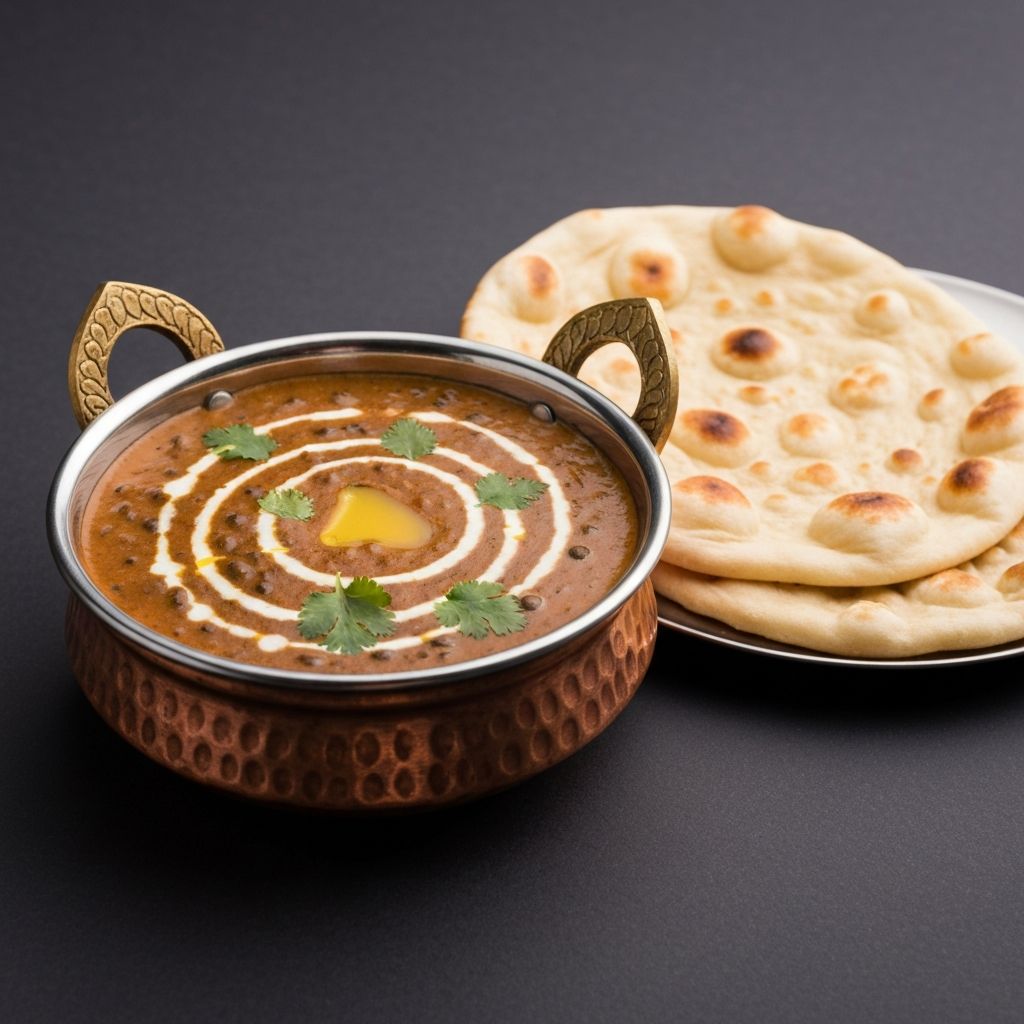
Dal Makhani
Punjab's legendary creamy black lentils, slow-cooked with butter and cream to velvety perfection.
Prep Time
20 mins + soaking
Cook Time
2-3 hours
Servings
4-6 people
Difficulty
Medium
Ingredients
For the Dal
For the Tempering
For Finishing
Instructions
Soak the Lentils
8+ hoursWash urad dal and rajma thoroughly. Soak them together in plenty of water for at least 8 hours or overnight. This is essential for proper cooking and creamy texture.
Pressure Cook
45 minsDrain soaked lentils and add to a pressure cooker with 4 cups fresh water and salt. Cook for 20-25 whistles on medium heat until completely soft and mushy. You can also use a slow cooker for 6-8 hours.
Prepare the Tempering
12 minsIn a heavy-bottomed pan, heat butter and ghee. Add cumin seeds and let them splutter. Add chopped onions and sauté until golden brown, about 8-10 minutes.
Add Aromatics and Tomatoes
15 minsAdd ginger-garlic paste and green chilies, sauté for 2 minutes. Add tomato puree, red chili powder, turmeric, and salt. Cook until oil separates, about 10 minutes.
Combine and Simmer
1-2 hoursAdd the cooked dal to the tempering. Mix well, add water to adjust consistency. Simmer on the lowest heat for 1-2 hours, stirring occasionally. The longer it simmers, the better the flavor.
Finish and Serve
10 minsAdd cream, garam masala, and kasuri methi (crush between palms). Stir in remaining butter. Garnish with a swirl of cream and fresh coriander. Serve hot with naan or rice.
Chef's Tips
- Never skip the long soaking - it's essential for the creamy texture
- Low and slow cooking is the secret to authentic restaurant-style dal
- Use whole urad dal, not split - whole gives the characteristic texture
- The dal tastes even better the next day after flavors meld
- Don't skimp on butter and cream - they're what makes it 'makhani'
The Story Behind Dal Makhani
Dal Makhani was created in the 1950s by Kundan Lal Gujral at his legendary Moti Mahal restaurant in Delhi - the same kitchen that gave us Butter Chicken and Tandoori Chicken. The dish was born from the Punjabi tradition of slow-cooking dal overnight on dying embers.
The name "makhani" comes from "makhan" meaning butter, and the dish lives up to its name with generous amounts of butter and cream. What started as a humble lentil dish has become a cornerstone of North Indian cuisine, beloved in restaurants and homes worldwide.