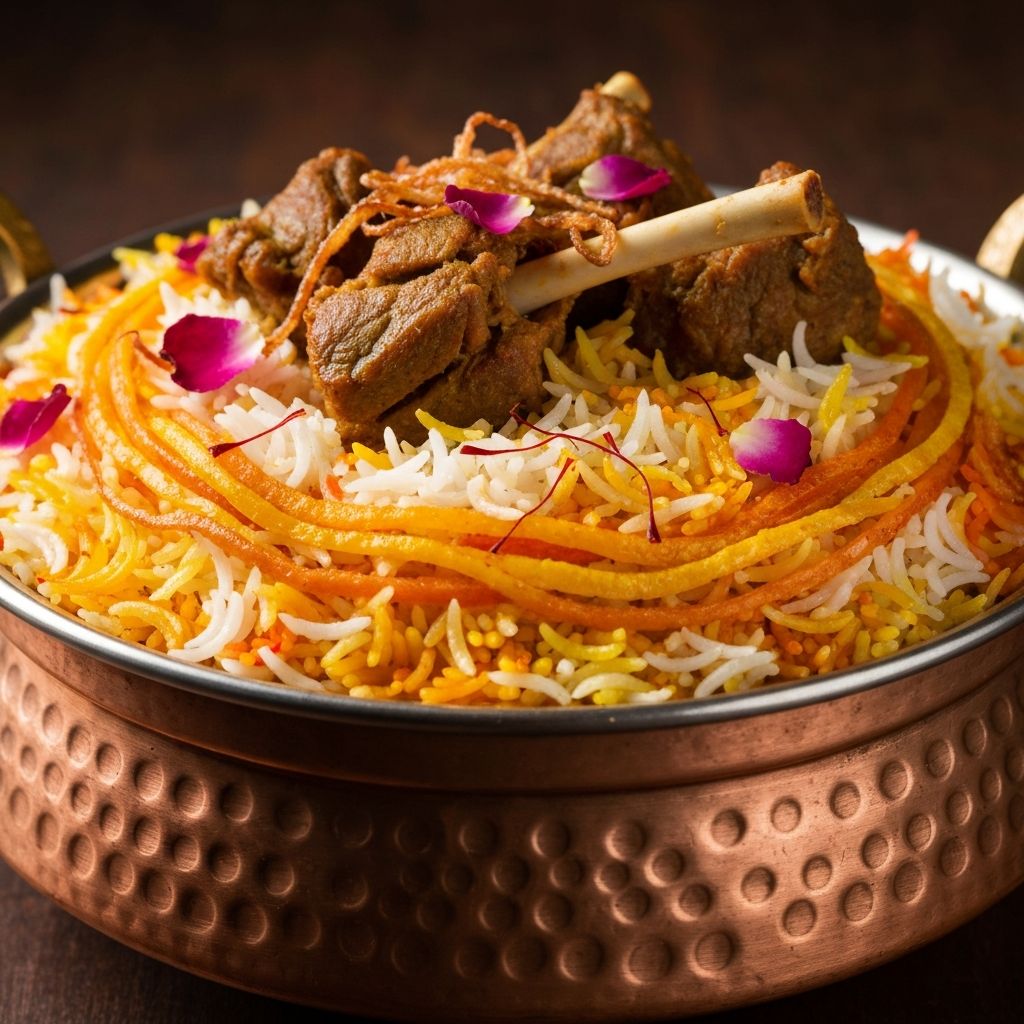
Lucknowi Biryani
The refined Awadhi biryani - subtle, aromatic, and cooked in the royal pukki style with fragrant rose and kewra essence.
Prep Time
45 mins + marinating
Cook Time
2 hours
Servings
6-8 people
Difficulty
Advanced
Ingredients
For the Rice
For the Meat
Instructions
Marinate the Meat
2+ hoursMix mutton with yogurt, half the fried onions, ginger-garlic paste, white pepper, mace, nutmeg, and salt. Marinate for at least 2 hours or overnight for best results.
Par-Cook the Rice
8 minsBring water to boil with whole spices and salt. Add soaked rice and cook until 70% done - rice should have a bite in the center. Drain immediately and spread to cool.
Cook the Meat
45 minsIn a heavy-bottomed pot (handi), heat ghee. Add marinated meat and cook on medium heat until meat is 80% done. The gravy should be minimal. Add half the mint and coriander.
Layer the Biryani
5 minsLayer par-cooked rice over the meat. Top with remaining fried onions, saffron milk, rose water, kewra water, and remaining herbs. Dot with ghee.
Dum Cooking
55 minsSeal the pot with dough or tight-fitting lid. Cook on high heat for 3 minutes, then on lowest heat for 40-45 minutes. Let it rest for 10 minutes before opening.
Serve
5 minsGently mix the layers while serving, being careful not to break the rice grains. Serve hot with raita, korma, and salad. Garnish with more fried onions.
Chef's Tips
- Use aged basmati rice for the longest, most fragrant grains
- Pukki biryani method cooks meat separately before layering
- Saffron must be soaked in warm milk to release its color
- Dum cooking on low heat is essential for perfect absorption
- Rose and kewra water give Lucknowi biryani its signature aroma
The Story Behind Lucknowi Biryani
Lucknowi Biryani, also known as Awadhi Biryani, traces its origins to the royal kitchens of the Nawabs of Awadh (Lucknow). Unlike its Hyderabadi counterpart, Lucknowi biryani uses the pukki (cooked) method, where meat is pre-cooked before layering with par-boiled rice.
The emphasis is on subtlety and fragrance rather than spice. The use of aromatic essences like rose water and kewra (screw pine), along with delicate spices like mace and nutmeg, creates a refined dish that reflects the sophisticated palate of the Nawabi courts.