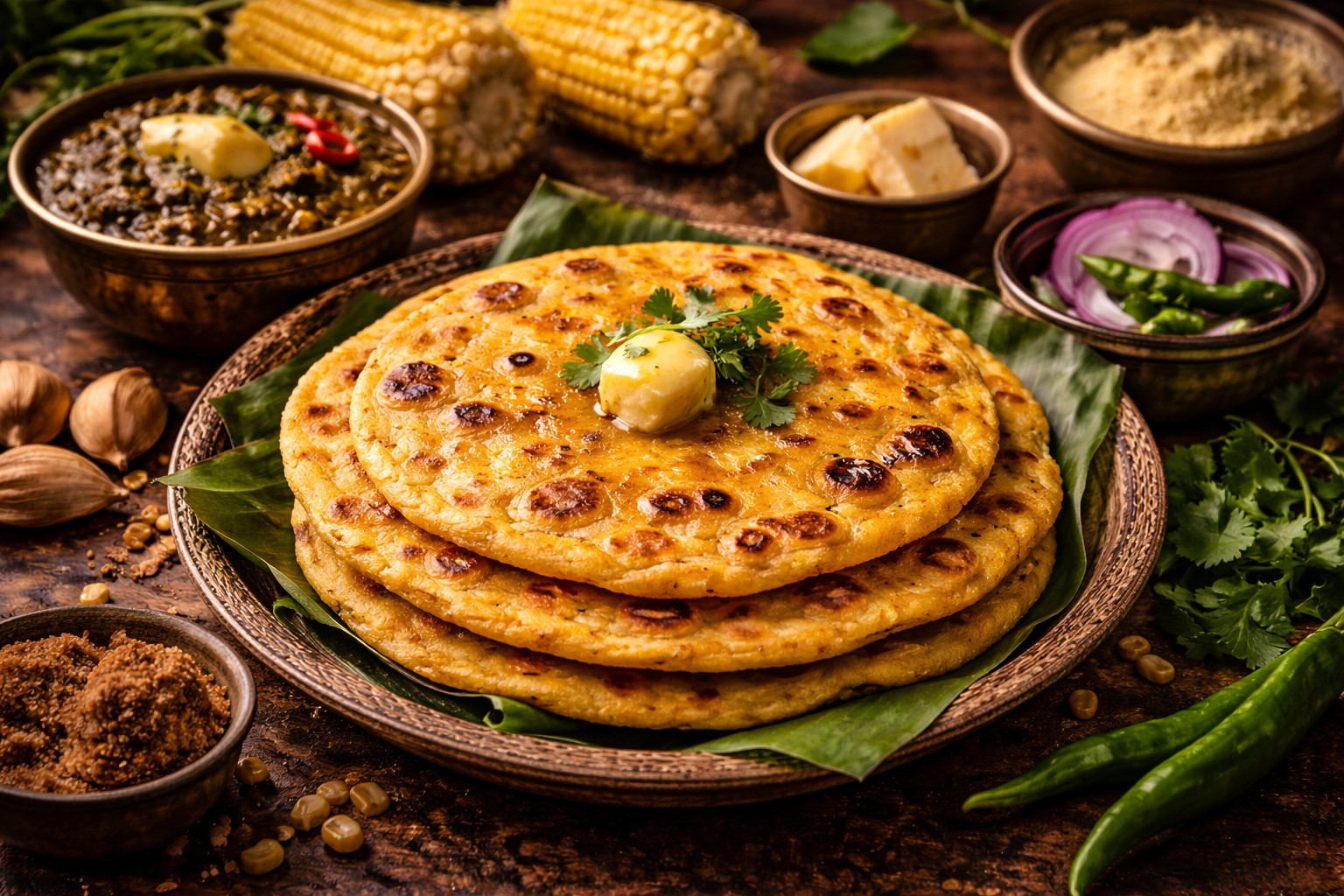
Makki di Roti
Golden cornmeal flatbread from Punjab - rustic, hearty, and the perfect partner for sarson da saag dripping with butter.
Prep Time
20 mins
Cook Time
5 mins/roti
Servings
6-8 rotis
Difficulty
Medium
Ingredients
For Dough
For Serving
Instructions
Prepare the Flour
5 minsSieve makki ka atta to remove any lumps. Add salt and ajwain. The flour has no gluten, so the dough will be crumbly - this is normal.
Knead the Dough
10 minsAdd warm water gradually and knead into a soft, pliable dough. Use warm water as it helps bind the gluten-free flour. The dough should be smooth but may crack at edges - that's okay.
Rest the Dough
15 minsCover the dough with a damp cloth and let it rest for 10-15 minutes. This makes it easier to shape. Keep remaining dough covered while working with portions.
Shape the Roti
3 mins eachTake a lemon-sized ball. Pat it between greased palms or on a plastic sheet. You cannot roll makki roti with a rolling pin - it must be patted into shape. Make it thick (about 5mm).
Cook on Tawa
3-4 mins eachHeat a tawa (flat griddle) on medium-high heat. Place the roti carefully (it's fragile). Cook on one side until light brown spots appear. Flip and cook the other side.
Apply Ghee and Serve
1 minApply generous ghee or white butter while still hot. The roti should be golden with slight charring. Serve immediately with sarson da saag, extra butter, and jaggery.
Chef's Tips
- Use warm water only - cold water won't bind the flour
- Pat, don't roll - makki flour has no gluten
- Keep rotis thick - thin ones will crack
- Work quickly as the dough dries out fast
- More butter = better taste (this is not a diet food!)
The Story Behind Makki di Roti
Makki di Roti is intrinsically linked to Punjab's agricultural heritage. Corn (makki) was introduced to India in the 16th century and quickly became a winter staple crop in Punjab. The roti made from its flour became the natural partner for sarson da saag.
Making makki di roti is an art that Punjabi women master over years. The technique of patting the dough between palms or on a plastic sheet, without using a rolling pin, requires skill and practice. A perfectly made makki di roti - golden, slightly charred, and loaded with butter - is a thing of beauty.