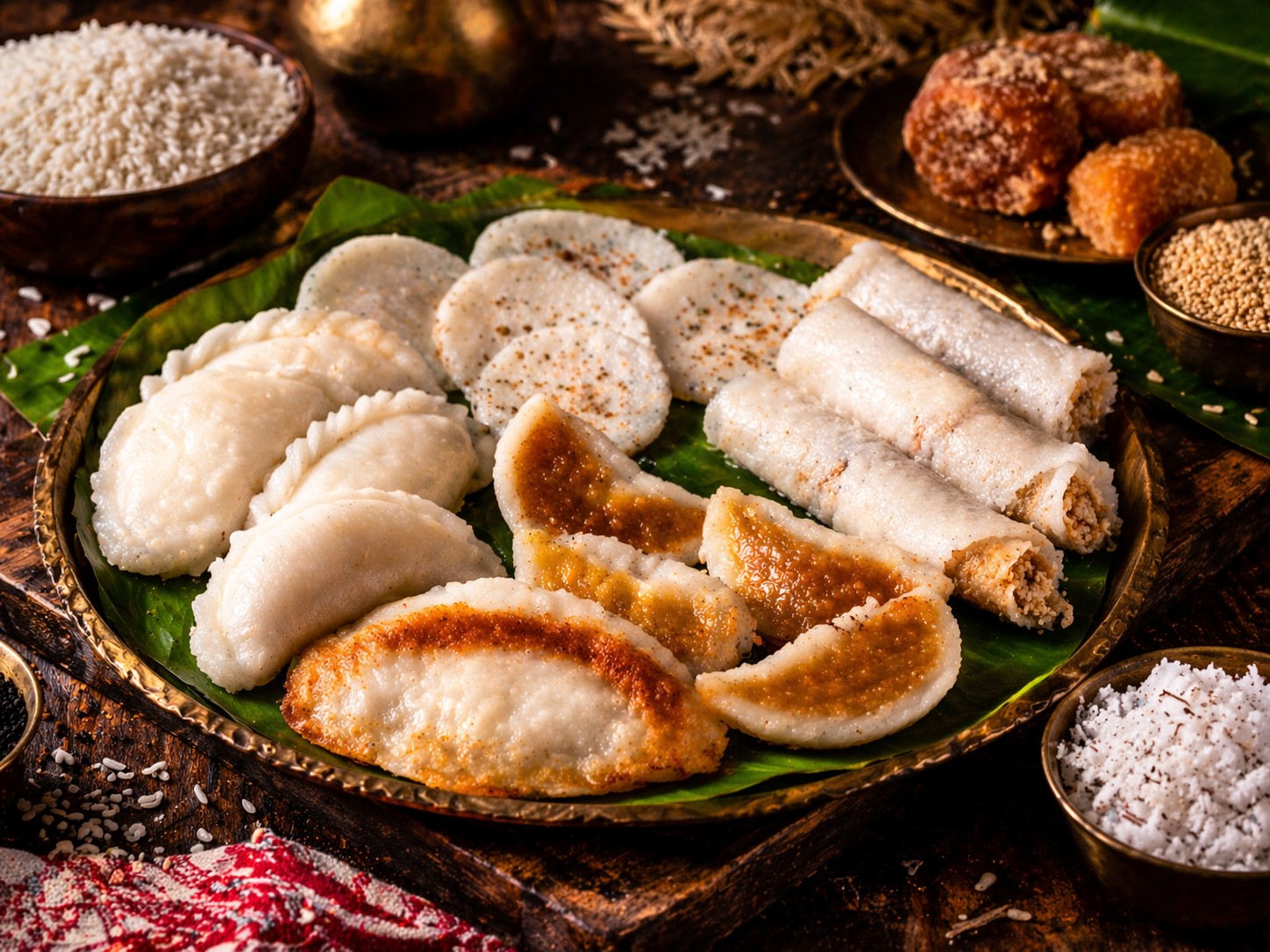
Pitha
Traditional rice cakes of Assam and Bengal — delicate crepes or steamed dumplings filled with sweet coconut and jaggery.
Prep Time
20 mins
Cook Time
30 mins
Servings
10-12
Difficulty
Medium
Ingredients
shell
filling
Instructions
Make the Filling
10 minsDry roast sesame seeds. Mix grated coconut, jaggery, cardamom, and toasted sesame in a pan on low heat until jaggery melts and mixture binds. Cool completely.
Prepare the Batter
15 minsMix rice flour with warm coconut milk and salt to make a thick, smooth batter — similar to thick pancake batter. Rest for 10 minutes.
Make Pati Saapta (Crepe Style)
5 minsHeat a flat pan and grease lightly. Pour a thin round of batter, spreading into a thin crepe. Cook on low-medium heat until edges dry. Place filling in the center.
Roll and Serve
3 minsRoll the crepe around the filling into a cylinder. Serve warm with a drizzle of fresh coconut milk or date palm jaggery syrup.
Chef's Tips
- Rice flour should be very fine for smooth crepes
- Coconut milk adds richness vs plain water
- Keep heat low — rice flour crepes tear easily on high heat
- Filling must be cool and dry before rolling
- Date palm jaggery (nolen gur) is the most authentic sweetener
The Story Behind Pitha
Pitha is made across Northeast India and Bengal, each state with its own varieties. In Assam, Bihu festival (particularly Magh Bihu and Poha Bihu) is synonymous with pitha-making. Dozens of varieties exist — Til Pitha (sesame rice rolls), Sunga Pitha (bamboo tube pitha), and Kholat Pitha are among the most beloved.
In Bengal, Pati Saapta is the equivalent — a crepe-like pitha served during Makar Sankranti. The use of nolen gur (date palm jaggery, available only in winter) makes this a deeply seasonal treat that marks the harvest festival.