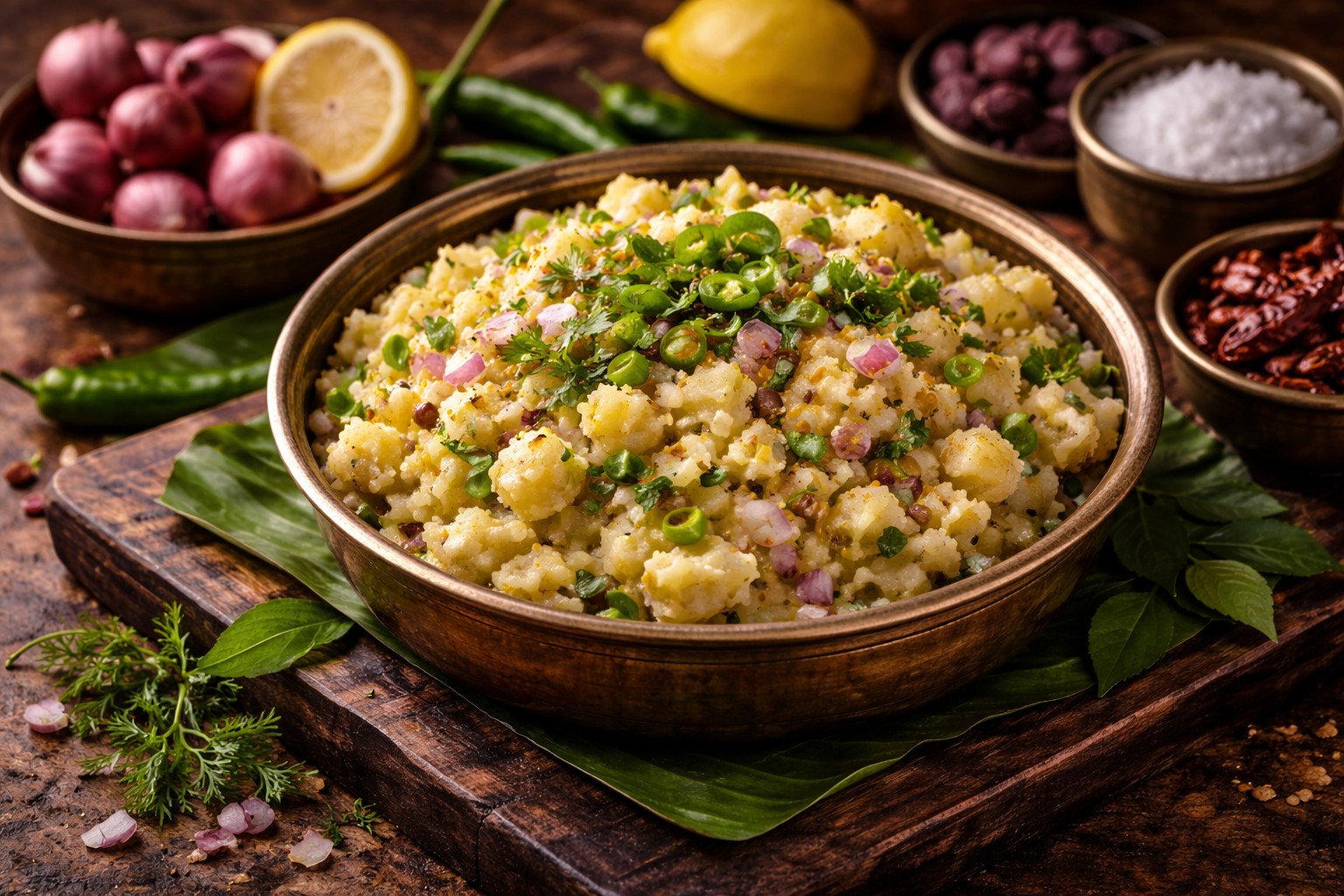
Pitika
Assam's beloved mashed vegetable preparation — simple, honest, and packed with the punch of raw mustard oil and fresh chilies.
Prep Time
5 mins
Cook Time
15 mins
Servings
4
Difficulty
Easy
Ingredients
aluPitika
optional
Instructions
Boil Potatoes
15 minsBoil potatoes until completely soft. Peel while still warm. This makes mashing easier and gives a better texture.
Mash
5 minsMash potatoes well with a fork or your hands. Assamese-style pitika is mashed by hand for a slightly rustic, chunky texture.
Add Raw Ingredients
3 minsAdd finely chopped onion, green chilies, and fresh coriander to the mashed potato. Mix well.
Season with Mustard Oil
2 minsDrizzle raw mustard oil over the mixture. This is the signature flavor of Assamese pitika — the pungency of raw mustard oil is essential.
Mix and Adjust
3 minsAdd salt, lemon juice if using, and mix everything together. Taste and adjust. Serve immediately as a side dish with rice and dal.
Chef's Tips
- Raw mustard oil is non-negotiable for authentic flavor
- Do not over-mash — slight chunks add texture
- Serve fresh — tastes best immediately
- Smoked eggplant makes Bengena Pitika (roasted version)
- Pair with plain steamed rice and Masor Tenga
The Story Behind Pitika
Pitika is the soul food of Assam — a simple, no-fuss mash that has sustained Assamese households for generations. "Pitika" simply means "mashed" in Assamese, and the variety of things that get the pitika treatment is remarkable: potatoes (Alu Pitika), roasted eggplant (Bengena Pitika), boiled mustard greens (Xaak Pitika), and even boiled fish.
The defining ingredient is always raw mustard oil — added after cooking, never before. This preserves its pungent aroma and is considered essential to Assamese food identity.