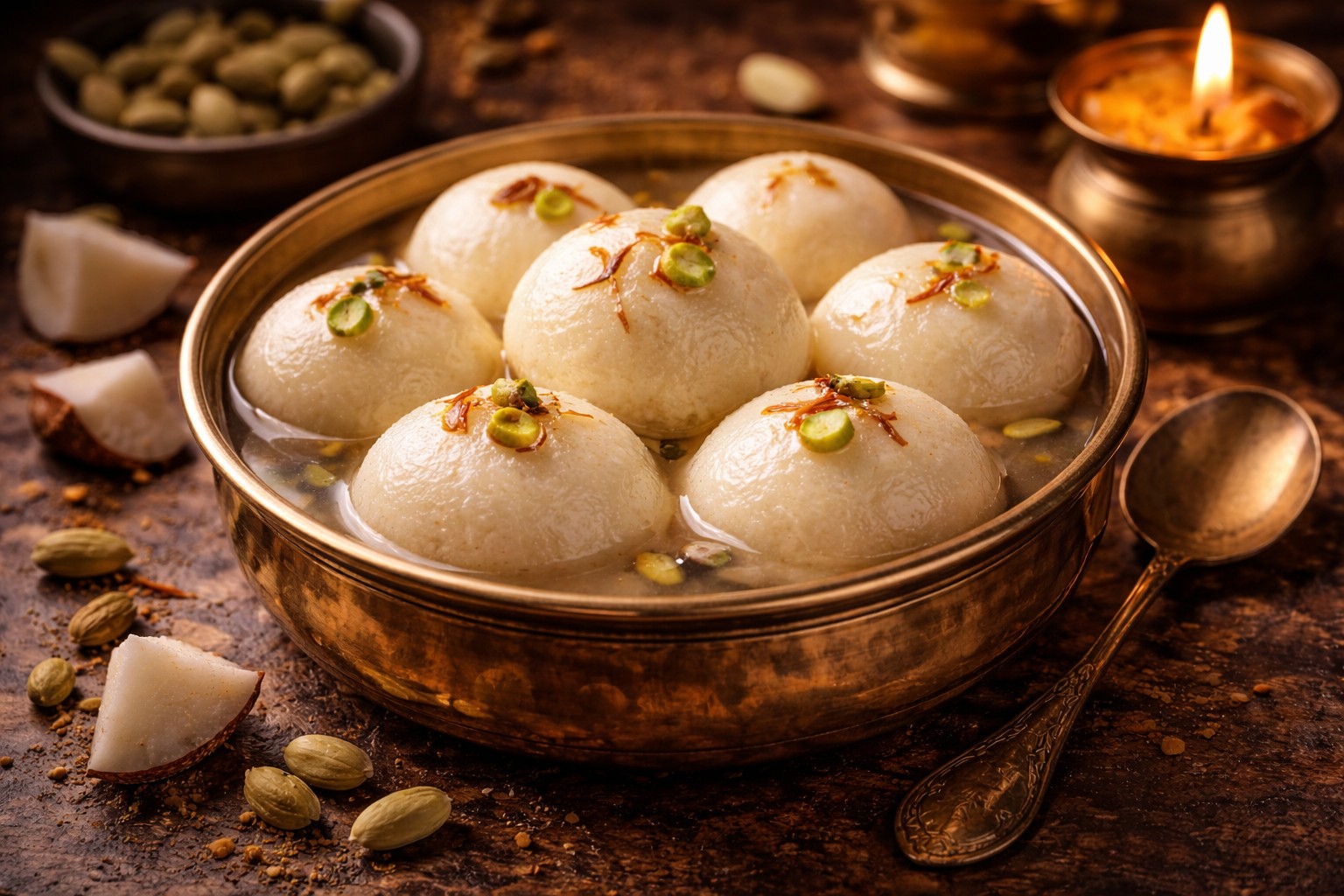
Rasgulla
Soft, spongy cheese balls soaked in light sugar syrup - India's most iconic sweet that melts in your mouth.
Prep Time
30 mins
Cook Time
20 mins
Servings
12-15 pieces
Difficulty
Medium
Ingredients
For Chenna
For Sugar Syrup
Instructions
Make the Chenna
15 minsBring milk to a boil. Lower the heat and add lemon juice gradually while stirring. The milk will curdle and whey will separate. Turn off the heat when curds form completely.
Drain and Wash
5 minsLine a colander with muslin cloth. Pour the curdled milk through it. Rinse the chenna under cold water to remove any lemony taste. Gather the cloth and squeeze out excess water.
Knead the Chenna
10 minsTransfer chenna to a plate. Add semolina and knead for 8-10 minutes until smooth and no grains remain. The texture should be like soft playdough. This step is crucial for spongy rasgullas.
Shape the Balls
5 minsDivide the dough into 12-15 equal portions. Roll each into smooth balls without any cracks. The balls will double in size when cooked, so keep them small.
Prepare the Syrup
5 minsIn a wide, deep pan, dissolve sugar in water. Add crushed cardamom. Bring to a rolling boil. The syrup should be thin, not thick like one-string consistency.
Cook the Rasgullas
15 mins + coolingGently slide the balls into boiling syrup. Cover with a lid and cook on high heat for 15 minutes. They will expand and become spongy. Add rose water. Let cool in the syrup for several hours.
Chef's Tips
- Use full-fat milk for the softest rasgullas
- Knead the chenna until completely smooth - no grains should remain
- Don't overcrowd the pan while cooking
- Keep the flame high and maintain a rolling boil
- Rasgullas taste best when chilled in syrup overnight
The Story Behind Rasgulla
The origin of Rasgulla is a matter of sweet controversy between Bengal and Odisha. While Bengal credits Nabin Chandra Das with inventing Rasgulla in Kolkata in 1868, Odisha claims its "Pahala Rasgulla" dates back centuries as a temple offering.
Regardless of its origin, Rasgulla has become synonymous with celebration across India. Its pillowy texture and delicate sweetness make it a universal favorite, offered at festivals, weddings, and as a gesture of hospitality in Bengali homes.