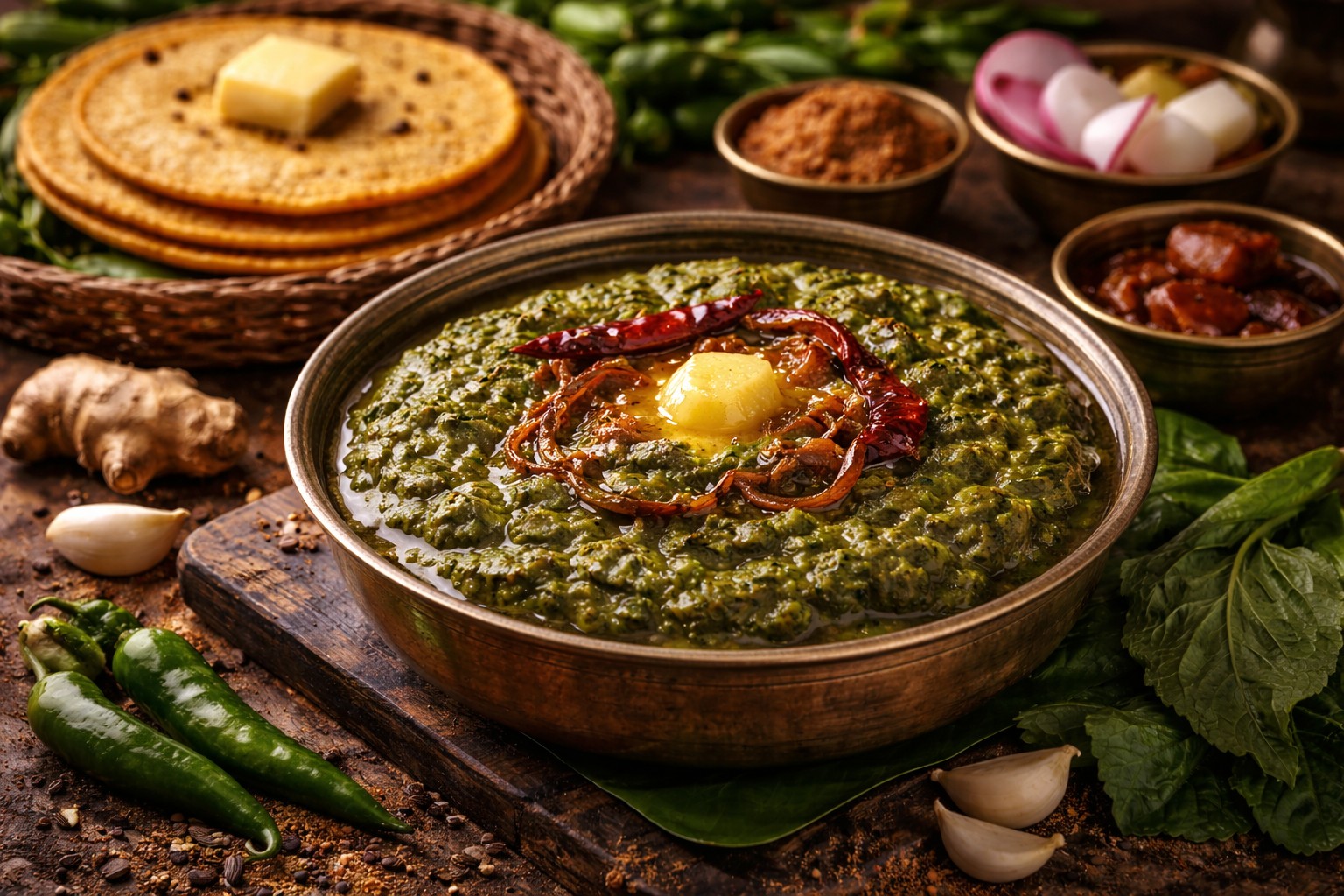
Sarson da Saag
Punjab's iconic winter dish - slow-cooked mustard greens with ghee, best enjoyed with makki di roti and a dollop of white butter.
Prep Time
20 mins
Cook Time
1.5 hours
Servings
4-6 people
Difficulty
Medium
Ingredients
Greens & Spices
For Tempering
Instructions
Prepare the Greens
15 minsWash all greens thoroughly. Roughly chop them - no need to be precise. Remove any tough stems from sarson. Keep all greens separate until cooking.
Cook the Greens
40 minsIn a large pot, add all greens, green chilies, ginger, garlic, and 1 cup water. Cover and cook on medium heat for 30-40 minutes until greens are completely wilted and tender.
Mash or Blend
10 minsTraditionally, saag is mashed with a wooden hand churner (madhani). For convenience, blend roughly - it should be coarse, not smooth. Return to pot.
Add Makki Atta
20 minsMix makki ka atta with a little water to make a slurry. Add to the saag and cook on low heat for 15-20 minutes, stirring frequently. This thickens and adds earthiness.
Prepare Tadka
10 minsHeat ghee in a pan. Add sliced garlic and fry until golden. Add onion and cook until caramelized. Add red chilies and ginger. Fry until fragrant.
Finish and Serve
5 minsPour the tadka over the saag. Add a generous dollop of white butter on top. Serve hot with makki di roti, jaggery, and a glass of lassi.
Chef's Tips
- Fresh sarson is essential - frozen won't give authentic taste
- The longer you cook, the better the flavor develops
- Don't skip the makki atta - it's crucial for texture
- Use desi ghee liberally - this is not a low-fat dish
- Leftovers taste even better the next day
The Story Behind Sarson da Saag
Sarson da Saag is deeply woven into Punjab's agricultural heritage. When winter arrives and the mustard fields turn into seas of yellow flowers, it's time for this beloved dish. The sight of women cooking saag over traditional chulhas while men work the fields is quintessentially Punjabi.
The dish celebrates the farmer's life - hearty, nutritious, and made from what the land provides. The combination with makki di roti (cornmeal bread), jaggery, and white butter creates a meal that sustained generations of hardworking farmers through cold Punjab winters.