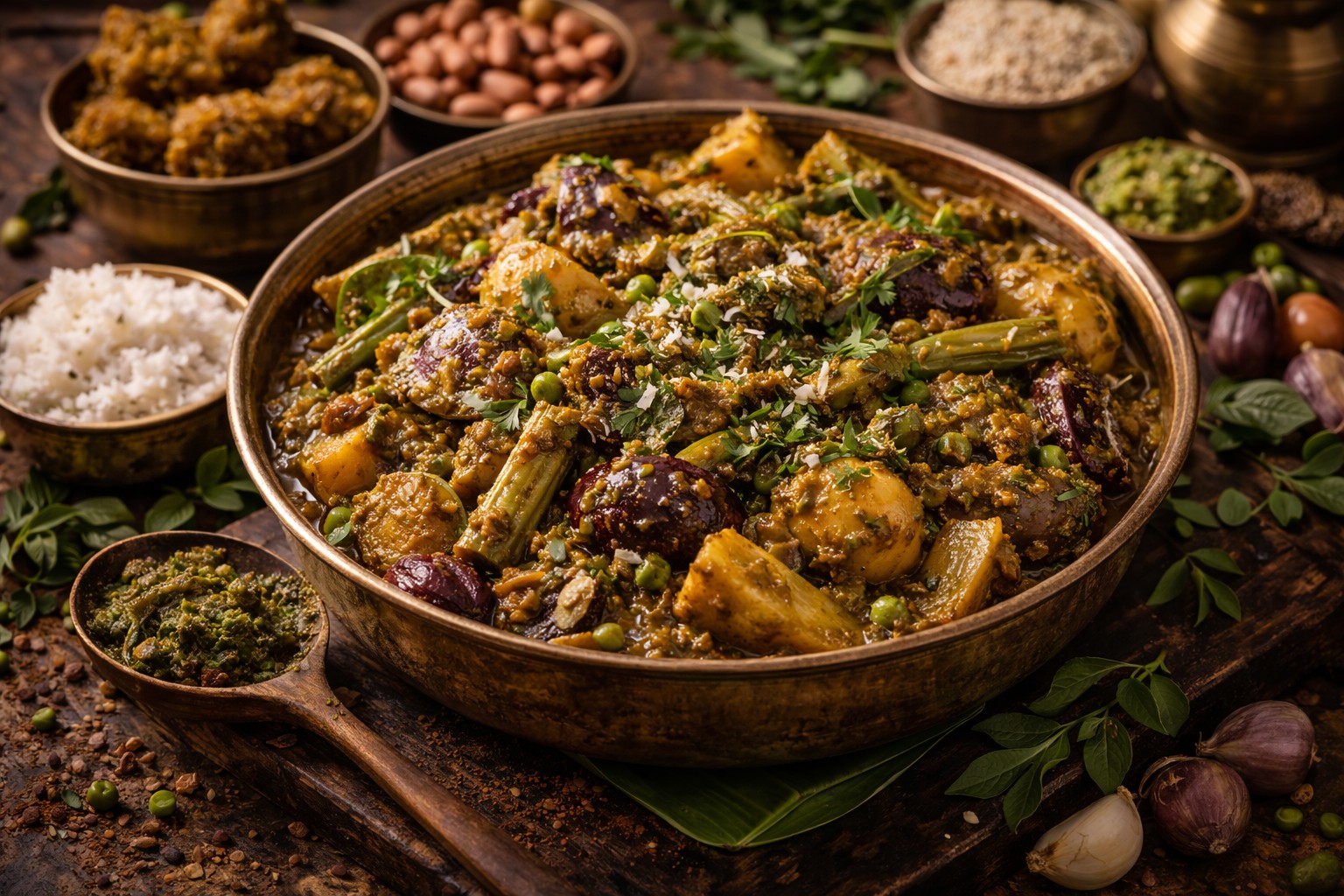
Surti Undhiyu
The legendary winter delicacy from Surat - a medley of vegetables and dumplings slow-cooked to perfection.
Prep Time
45 mins
Cook Time
1 hr
Servings
6-8 people
Difficulty
Advanced
Ingredients
Vegetables
For Muthiya
Masala
Instructions
Prepare Muthiya
25 minsMix fenugreek leaves with flours, spices, and enough oil to make a stiff dough. Shape into small dumplings and steam for 15 minutes.
Make the Masala Paste
10 minsGrind coconut, sesame seeds, coriander seeds, green chilies, and ginger to a coarse paste with minimal water.
Prepare Vegetables
15 minsCut all vegetables to similar sizes. Make slits in brinjals. Wash and drain tuvar dana and valor.
Layer in Pot
10 minsIn a heavy pot, heat oil with ajwain and asafoetida. Layer vegetables starting with yam, then sweet potato, banana, beans, and brinjals.
Add Masala
5 minsSpread the coconut-sesame paste over vegetables. Add salt, sugar, and a splash of water. Place muthiya on top.
Slow Cook
50 minsCover tightly and cook on very low heat for 45-50 minutes. Shake pot occasionally but don't stir. Let vegetables cook in their own steam.
Serve
5 minsGently mix before serving. Serve hot with puri or rotli. Traditionally enjoyed during Uttarayan.
Chef's Tips
- Authentic Surti Undhiyu is cooked upside down (undhu) in an earthen pot buried in the ground
- The key is slow cooking - don't rush this dish
- Use fresh winter vegetables for the best flavor
- The muthiya should be placed on top so they steam rather than boil
- A touch of jaggery enhances the sweetness of vegetables
The Story Behind Surti Undhiyu
Undhiyu gets its name from "undhu" meaning upside down in Gujarati. Traditionally, this dish was cooked in earthen pots buried upside down in the ground, with hot coals placed on top - a unique slow-cooking method that infused incredible flavors.
Surat, the diamond city of Gujarat, is famous for its version - richer in oil and with a distinctive sesame-coconut paste. It's an essential part of Uttarayan (Makar Sankranti) celebrations when fresh winter vegetables are at their peak.