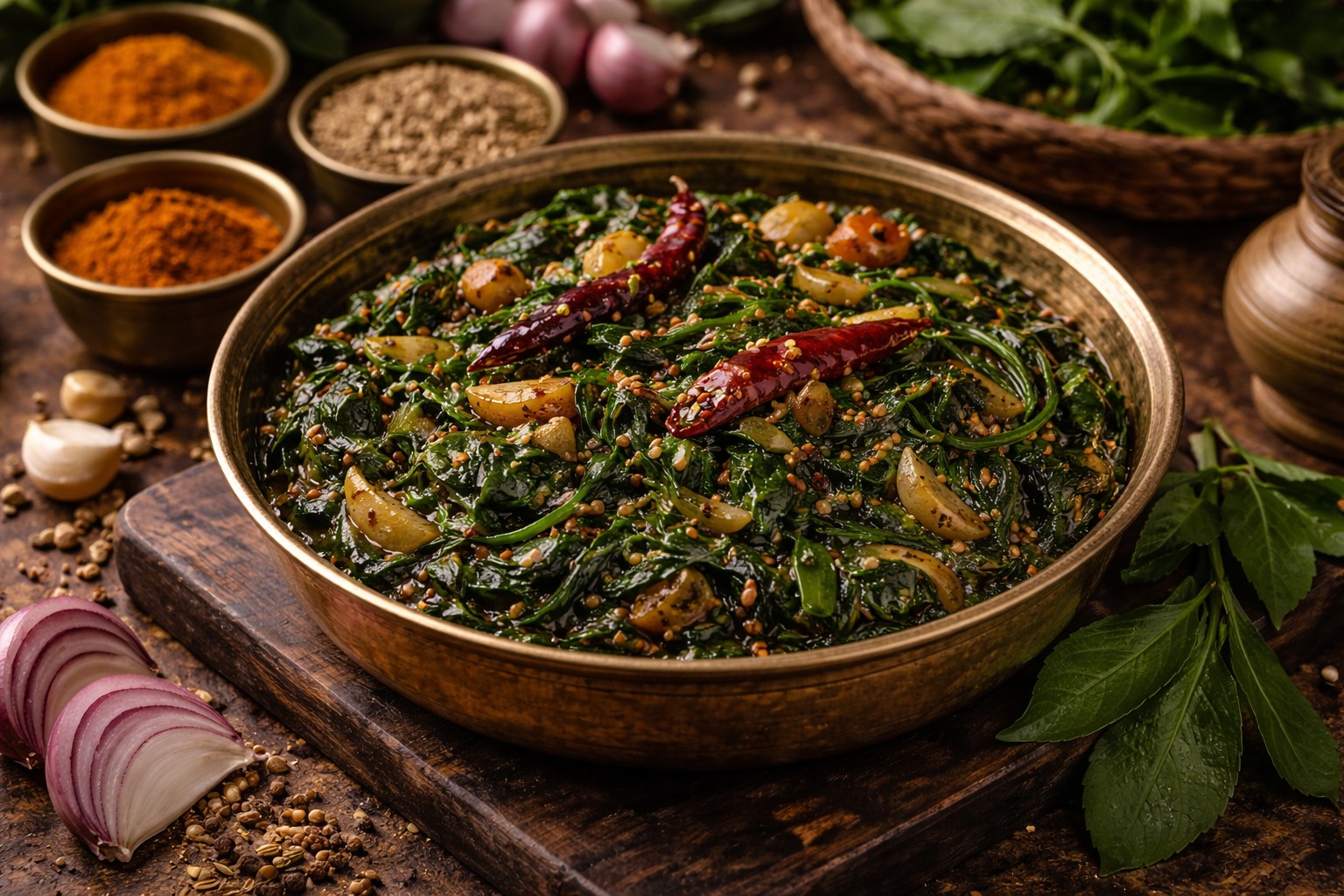
Xaak Bhaji
Assam's everyday stir-fried leafy greens — cooked simply with mustard oil and panch phoron, celebrating the season's freshest leaves.
Prep Time
10 mins
Cook Time
15 mins
Servings
4
Difficulty
Easy
Ingredients
main
tempering
Instructions
Clean the Greens
10 minsWash leaves thoroughly in multiple changes of water. Shake off excess water. Roughly chop if leaves are large. Tender leaves can be kept whole.
Heat Oil
3 minsHeat mustard oil in a kadhai or wok until it just begins to smoke — this removes its raw pungency. Reduce heat to medium.
Temper Spices
3 minsAdd panch phoron and dried red chilies. Let them splutter for 30 seconds. Add sliced garlic and fry until light golden.
Add Greens
2 minsAdd the washed greens to the hot pan. They will sizzle and wilt dramatically. Stir well to coat with oil and spices.
Season and Cook
8 minsAdd turmeric, salt, and asafoetida. Cook on medium heat, stirring occasionally, until greens are tender and any excess moisture has evaporated.
Serve
2 minsServe immediately as a side dish with steamed rice, dal, and pitika. A few drops of extra mustard oil on top before serving is traditional.
Chef's Tips
- Mustard oil must be heated to smoking point first
- Panch phoron adds the characteristic Assamese flavor
- Do not cover while cooking — it turns the greens yellow
- Slightly bitter greens like fenugreek are especially prized
- Serve immediately — wilted greens don't reheat well
The Story Behind Xaak Bhaji
In Assamese, "Xaak" means leafy greens, and "Bhaji" means stir-fried. Assam's fertile Brahmaputra valley produces an enormous variety of edible greens — over 100 varieties are traditionally consumed, many of them wild foraged. Each variety has its own season, flavor, and culinary application.
The Assamese meal structure — rice, dal, pitika, fish curry, and xaak bhaji — reflects a deep understanding of nutrition and balance. The slightly bitter greens balance the richness of fish and the starchiness of rice in a way that has sustained the people of the Brahmaputra valley for millennia.