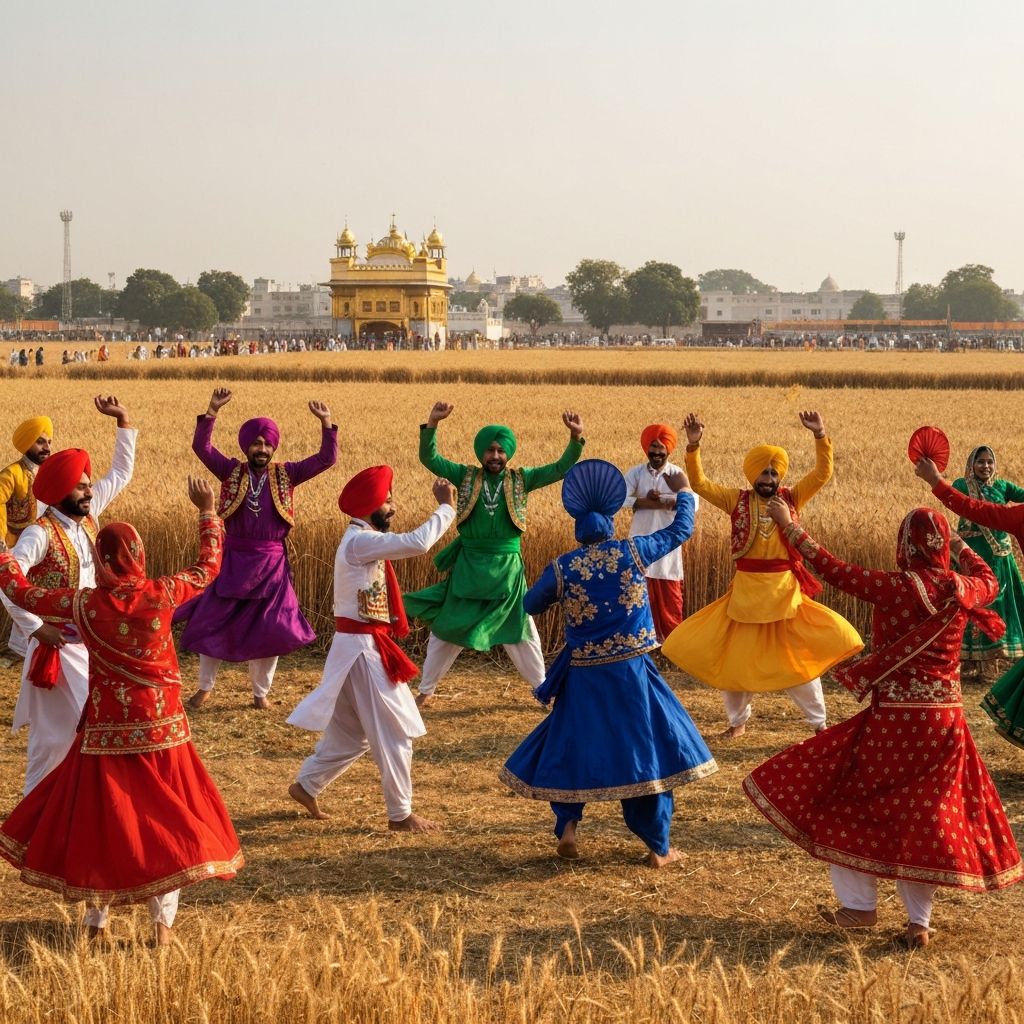
Baisakhi
A festival of golden harvests, joyful bhangra, and the enduring spirit of the Khalsa — celebrated across India as the spring new year.
When
13–14 April
Duration
2–3 Days
Primary Region
Punjab, Haryana & Pan-India
Significance
Harvest & Khalsa Founding
Traditions
Why Baisakhi Matters
Harvest Festival
Marks the wheat harvest in Punjab and the end of the Rabi crop season across North India.
Sikh New Year
The first day of the Sikh Nanakshahi calendar, observed with prayer and devotional celebration.
Khalsa Founding
Commemorates Guru Gobind Singh's establishment of the Khalsa on Baisakhi 1699 CE at Anandpur Sahib.
Solar New Year
Coincides with the solar new year across multiple Indian traditions — Bengali, Tamil, Assamese, and Malayalam calendars.
How Baisakhi Unfolds
Holika & Prayer Night
EveOn the eve of Baisakhi, families gather for evening prayers at gurdwaras. Akhand Path (continuous reading of the Guru Granth Sahib) concludes, and the air fills with devotional hymns and the fragrance of incense.
Main Baisakhi Celebrations
Day 1The heart of the festival. Devotees take an early morning bath, dress in new clothes, and visit gurdwaras. Bhangra and Gidda performances fill the streets. Farmers begin the symbolic first cut of the wheat harvest with joy and gratitude.
Khalsa Sajna Diwas
Day 2On this day in 1699, Guru Gobind Singh Ji founded the Khalsa Panth at Anandpur Sahib. Communities re-enact the historic Amrit Sanchar ceremony and hold processions celebrating the Khalsa legacy.
Regional Celebrations
Punjab & Haryana
The most vibrant celebrations with mass bhangra and gidda performances, grand Nagar Kirtans, and kisan (farmer) processions through towns and villages.
Anandpur Sahib
The birthplace of the Khalsa witnesses the largest gathering, with hundreds of thousands attending the Hola Mohalla and Amrit Sanchar ceremonies.
Bengal (Naba Barsha)
Celebrated as the Bengali New Year (Pohela Boishakh) with music, cultural programs, and the iconic processions in Kolkata and across West Bengal.
Assam (Rongali Bihu)
The spring Bihu marks the Assamese new year with bihu dances, feast, and the exchange of gamosa (traditional cloth) as a symbol of prosperity.
Tamil Nadu (Puthandu)
The Tamil New Year coincides with Baisakhi and is marked by the Kani ritual — viewing auspicious items first thing in the morning for a blessed year ahead.
Kerala (Vishu)
Celebrated with the Vishukkani (first sight of gold, flowers, and rice), Vishu Kaineetam (gift-giving), and fireworks throughout the night.
The History of Baisakhi
Baisakhi has been celebrated as a harvest festival in the Punjab region for centuries, marking the time when the winter wheat crop ripens under the April sun. Farmers would thank God for a bountiful harvest and pray for prosperity in the coming year — a tradition that continues in villages across Punjab and Haryana today.
The festival gained immense spiritual significance for Sikhs in 1699 CE, when the tenth Sikh Guru, Guru Gobind Singh Ji, chose Baisakhi to establish the Khalsa Panth at Anandpur Sahib. He called upon Sikhs from across the subcontinent, and from the assembled thousands, selected five volunteers — the Panj Pyare (Five Beloved Ones) — who offered their lives for their faith. They were initiated through the Amrit Sanchar ceremony, forming the cornerstone of the Khalsa brotherhood.
Baisakhi also holds a painful historical memory: on 13 April 1919, British colonial troops under General Dyer opened fire on a peaceful gathering of thousands at Jallianwala Bagh in Amritsar, massacring hundreds who had assembled for Baisakhi. This tragedy became a turning point in India's independence movement and is solemnly remembered every year.
Celebrating Baisakhi
- Visit a local gurdwara for morning prayers and langar
- Wear traditional Punjabi attire — phulkari dupatta or kurta pajama
- Learn the basic steps of bhangra or gidda
- Prepare makki di roti and sarson da saag for a festive meal
- Share pinni, gajak, or kheer with family and neighbours
- Attend a Nagar Kirtan or local mela if possible
- Listen to shabad kirtan and devotional music
- Reflect on the legacy of the Khalsa and Guru Gobind Singh Ji