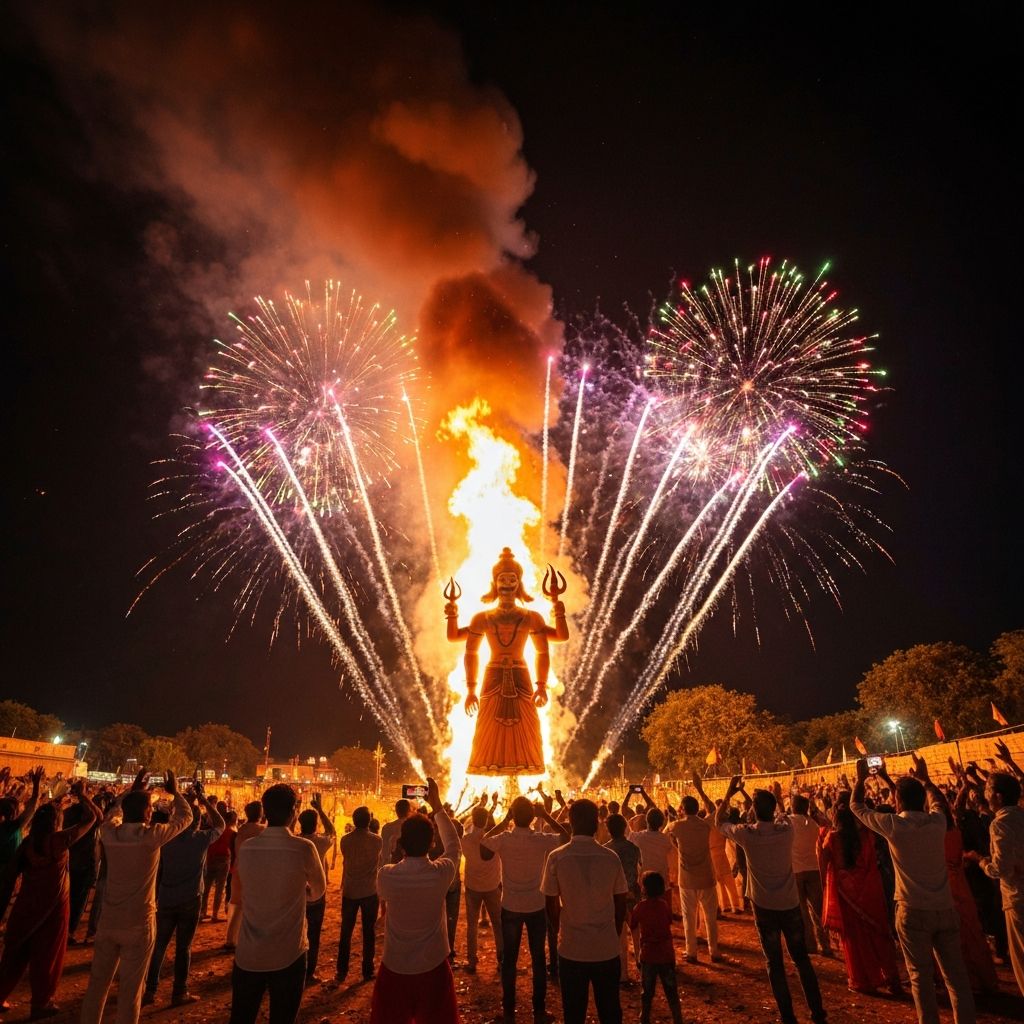
Dussehra
The spectacular ten-day celebration of victory—burning of Ravana\'s effigy, Ramlila performances, and the triumph of good over evil, Lord Rama\'s sacred return.
When
September - October
Duration
10 Days
Celebrated In
Pan-India
Significance
Good Over Evil
Traditions
Celebration of Victory
Vijayadashami
Day of victory and auspiciousness; marks the completion of Durga Puja in eastern India.
Celebrates victory of Goddess Durga over Mahishasura, representing triumph of divine power.
Ramayana Completion
Celebrates the end of Ramayana recitation (Ramcharitmanas Path) that occurs over nine days.
Marks the culmination of Rama's victory and his return from exile to Ayodhya.
Shamipatri Exchange
Golden leaves from Shami tree exchanged between people as tokens of goodwill and prosperity.
Traditional gesture wishing longevity and victory upon loved ones.
Festival Timeline
Ramlila Performances
Dramatic reenactments of key episodes from Ramayana depicting Rama's journey.
Ashtami & Navami
Last performances of Ramlila, special prayers to Goddess Durga or Rama.
Ravana Dahan Preparations
Preparation of massive effigies and gathering of communities for evening ceremony.
Effigy Burning
Dramatic burning of Ravana, Kumbhakarna, Meghnad effigies with fireworks and celebrations.
Regional Celebrations
North India
Focus on Rama's victory with Ramlila performances in Delhi and surrounding areas, grand processions and effigy burning.
Eastern India
Durga Puja celebrations with elaborate pandals, Devi worship, and Vijayadashami marking festival's conclusion.
South India
Golu celebrations with Devi worship, Ayodhya puja, and exchange of Shamipatri leaves and sweets.
Western India
Dussehra observed with Ramlila, dandiya raas, and community gatherings celebrating victory of good over evil.
The Epic of Good Triumphing Over Evil
Dussehra celebrates the victory of Lord Rama over the demon king Ravana, as narrated in the ancient epic Ramayana. After fourteen years of exile, Rama fought Ravana to rescue his beloved wife Sita and rescue her from the demon\'s captivity.
The festival also celebrates the victory of Goddess Durga over the buffalo demon Mahishasura, representing the triumph of divine power over evil. These mythological narratives teach profound spiritual lessons about dharma (righteousness), duty, and the eternal battle between good and evil.
The burning of Ravana\'s effigy symbolizes the destruction of negativity, ego, and evil tendencies within ourselves. Dussehra inspires people to embody virtue, courage, and righteousness, celebrating the victory within and around us.
Preparing for Dussehra
- Plan visits to Ramlila performances in your city
- Prepare or buy Lord Rama idols for home
- Gather flowers and puja materials
- Decorate home with rangoli and lights
- Prepare for Shamipatri leaf exchange
- Arrange special festive meals
- Join community effigy burning events
- Plan social gatherings with family and friends