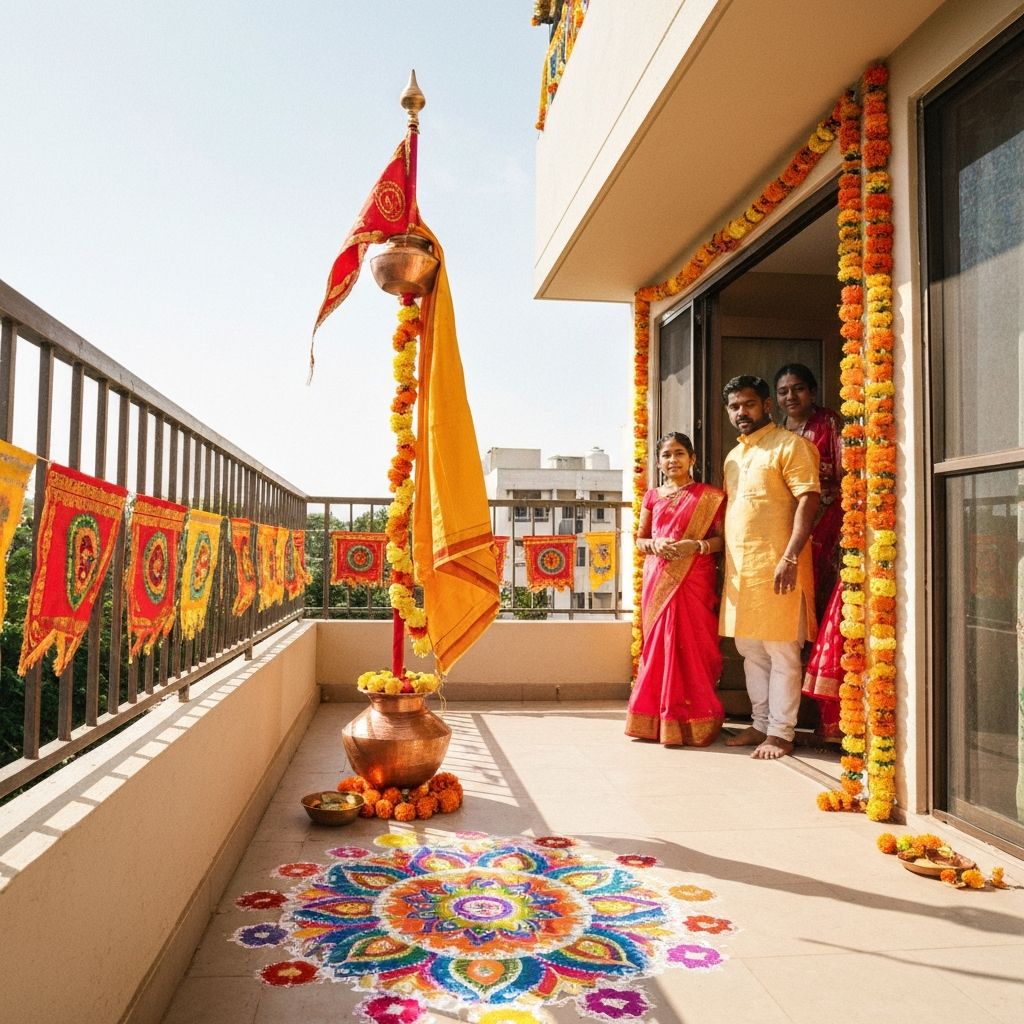
Gudi Padwa
The vibrant Marathi new year marked by the raising of the Gudi - a symbol of victory, prosperity, and the triumph of good over evil.
When
March - April
Duration
1 Day
Region
Maharashtra, Goa, Konkan
Significance
Victory & New Year
Traditions
The Sacred Gudi
The Gudi is a decorated pole hoisted outside homes, facing the street. Each element has deep symbolic meaning:
Bamboo Stick
Victory and honor
Silk Cloth
Prosperity and wealth
Neem Leaves
Health and protection from evil
Mango Leaves
Auspiciousness and fertility
Garland
Beauty and celebration
Copper Kalash
Brahma, the creator
Why We Celebrate
Brahma's Creation
Lord Brahma is believed to have created the universe on this day.
Rama's Victory
Marks Lord Rama's coronation after defeating Ravana.
Shalivahana Era
Commemorates King Shalivahana's victory over the Shakas.
Spring Harvest
Celebrates the spring harvest and nature's renewal.
The Meaning of Gudi Padwa
"Gudi" refers to the decorated pole or flag, while "Padwa" comes from "Pratipada" meaning the first day of the lunar fortnight. Together, Gudi Padwa marks the first day of the Chaitra month in the Hindu calendar and the beginning of the Marathi new year.
The tradition of raising the Gudi is believed to have started during the reign of Chhatrapati Shivaji Maharaj, when soldiers would hoist flags to celebrate victories. The practice became a household tradition symbolizing prosperity and good fortune.
Gudi Padwa is also considered an auspicious time for new beginnings - starting new ventures, buying gold, moving into new homes, and making important decisions. The festival falls on the same day as Ugadi, celebrated in Karnataka, Andhra Pradesh, and Telangana.
Celebrating Gudi Padwa
- Prepare and raise the Gudi at sunrise
- Decorate entrance with rangoli
- Wear new traditional Marathi attire
- Eat neem leaves with jaggery
- Prepare Shrikhand and Puran Poli
- Visit temples for special prayers
- Exchange greetings with family
- Start new ventures or purchases