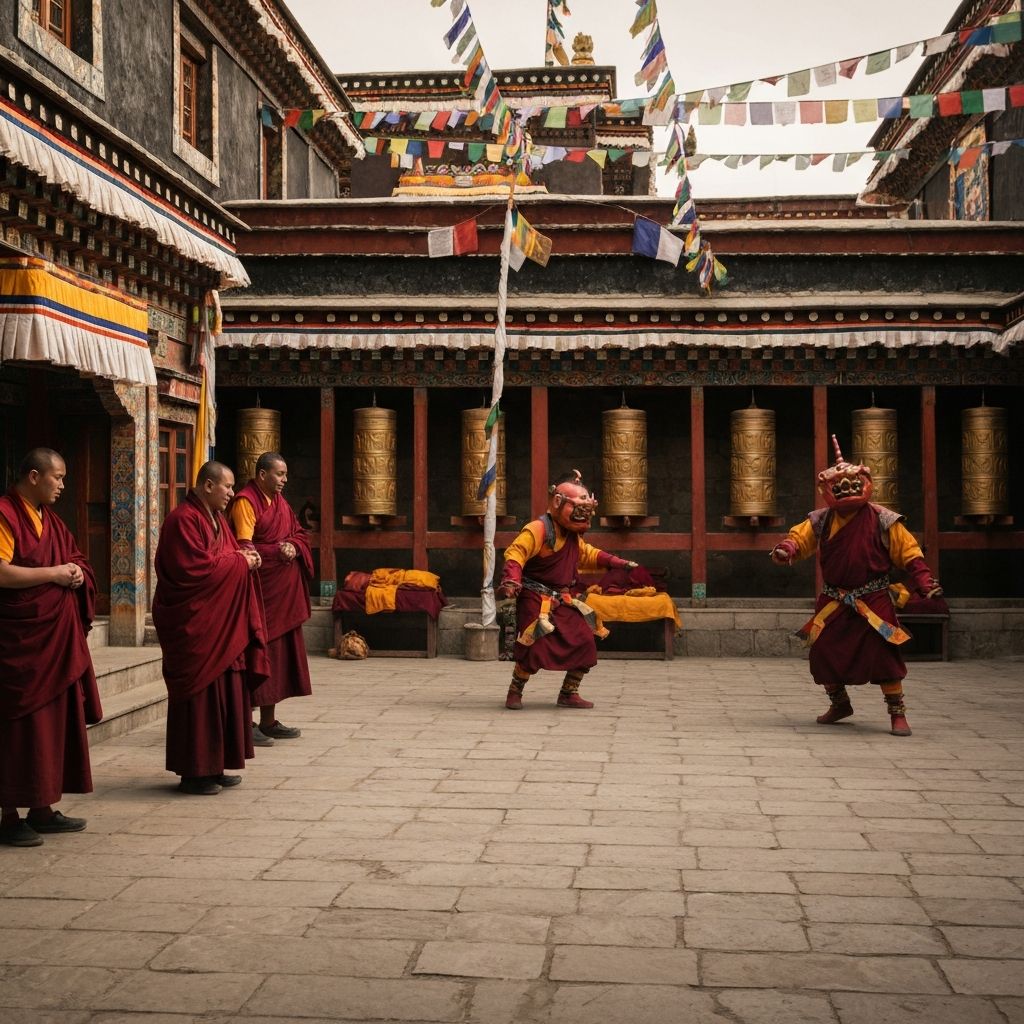
Losar
The Tibetan and Himalayan Buddhist New Year celebration, marked with sacred rituals, colorful dances, and joyous festivities.
When
February - March
Duration
15 Days
Celebrated In
Himalayan Regions
Significance
New Beginnings
Traditions
The Days of Losar
Gutor
Day BeforeExtensive cleaning of homes and monasteries, preparation of special foods, and evening rituals to expel negative energies.
Lama Losar
Day 1The first day is dedicated to religious observances with monastery visits and offerings to monks and lamas.
Gyalpo Losar
Day 2King's Losar - historically when the Tibetan king received new year greetings. Now a day for community gatherings.
Choekyor Losar
Day 3Dedicated to making offerings to dharma protectors and local deities. New prayer flags are raised.
Losar Across the Himalayas
Ladakh
Month-long celebrations with cham dances at Hemis, Thiksey, and other monasteries, and traditional archery competitions.
Sikkim
Vibrant celebrations at Rumtek and other monasteries, traditional Sikkimese food, and cultural performances.
Arunachal Pradesh
Monpa and other Tibetan Buddhist communities celebrate with elaborate rituals and traditional dances.
Dharamsala
Grand celebrations led by His Holiness the Dalai Lama with prayers, blessings, and cultural programs.
The Origins of Losar
Losar, meaning "new year" in Tibetan, has origins dating back to the pre-Buddhist Bon religion of Tibet. The festival was originally celebrated during winter with burning incense to appease spirits and protector deities.
With the arrival of Buddhism in Tibet in the 7th century, the festival incorporated Buddhist elements. The current form of Losar, celebrated on the first day of the Tibetan lunar calendar, was established during the reign of the 9th Tibetan King.
Today, Losar is celebrated not just in Tibet but throughout the Himalayan Buddhist world, including Ladakh, Nepal, Bhutan, Sikkim, and parts of Arunachal Pradesh. Each region adds its own unique traditions while maintaining the core spiritual significance of the celebration.
Preparing for Losar
- Thoroughly clean home and altar
- Prepare traditional khapse cookies
- Make guthuk soup for Gutor eve
- Hang new prayer flags
- Visit monastery for blessings
- Prepare offerings for the altar
- Buy new clothes for the family
- Arrange family reunion gathering