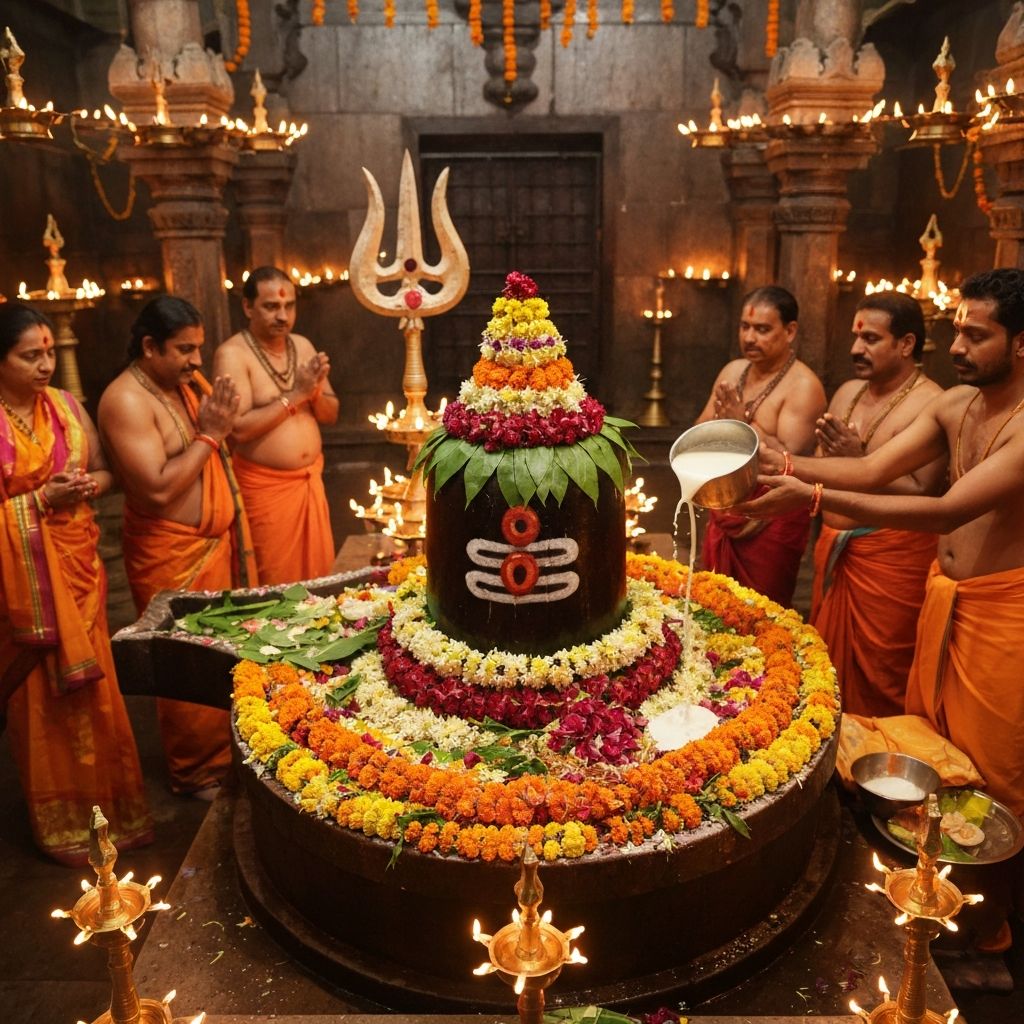
Maha Shivaratri
The Great Night of Lord Shiva, when devotees observe fasting and all-night vigils in honor of the cosmic dancer and destroyer of evil.
When
February - March
Duration
1 Night
Celebrated In
All of India, Nepal
Deity
Lord Shiva
Sacred Rituals
The Four Prahars (Watches)
6 PM - 9 PM
First PraharFirst abhishekam with milk. Devotees begin their prayers and meditation.
9 PM - 12 AM
Second PraharAbhishekam with curd. Chanting of Shiva mantras intensifies.
12 AM - 3 AM
Third PraharAbhishekam with ghee. The most auspicious time for worship.
3 AM - 6 AM
Fourth PraharFinal abhishekam with honey. Breaking of fast at sunrise after final prayers.
Sacred Destinations
Varanasi
Millions gather at Kashi Vishwanath Temple for the most grand Shivaratri celebrations in India.
Kashmir
Celebrated as Herath with unique rituals spanning multiple days, especially sacred to Kashmiri Pandits.
Nepal
Pashupatinath Temple sees massive gatherings including Naga Sadhus from across the subcontinent.
South India
Grand celebrations at Chidambaram, Tiruvannamalai, and Srisailam with elaborate abhishekams.
Legends of Shivaratri
Multiple legends surround Maha Shivaratri. One tells of the cosmic dance of creation, preservation, and destruction that Shiva performed on this night. Another describes it as the night when Shiva and Parvati were married.
The most popular legend tells of a hunter who, while waiting for prey in a tree, unknowingly dropped leaves onto a Shiva Lingam below. His inadvertent worship pleased Lord Shiva, who blessed him with spiritual awakening, demonstrating that sincere devotion transcends ritual perfection.
For Shaivites, this is the most sacred night of the year when the formless cosmic energy of Shiva is closest to the earthly plane, making meditation and worship especially powerful for spiritual progress.
Observing Shivaratri
- Begin fasting from sunrise
- Gather bilva leaves for offering
- Prepare for the night vigil
- Learn Om Namah Shivaya mantra
- Visit a Shiva temple if possible
- Arrange items for abhishekam
- Meditate during the four prahars
- Break fast next morning after puja