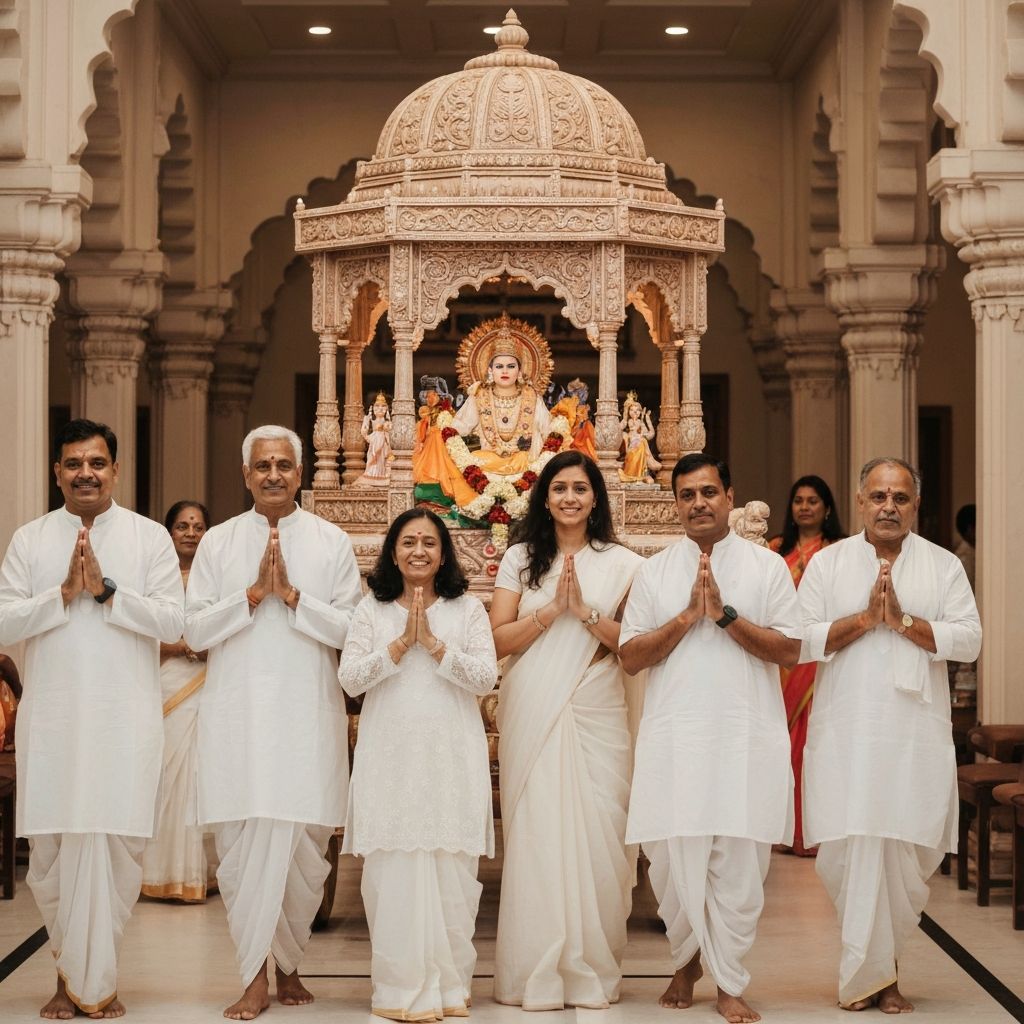
Mahavir Jayanti
The most important Jain festival celebrating the birth of Lord Mahavira, the last Tirthankara and founder of modern Jainism.
When
March - April
Duration
1 Day
Celebrated In
All of India
Significance
Ahimsa & Liberation
Traditions
The Five Great Vows (Mahavratas)
Non-Violence
AhimsaThe supreme principle of causing no harm to any living being through action, speech, or thought.
Truthfulness
SatyaSpeaking the truth and living authentically in all aspects of life.
Non-Stealing
AsteyaNot taking anything that is not freely given, including time and resources.
Chastity
BrahmacharyaPracticing celibacy and restraint in sensual pleasures and attachments.
Non-Possessiveness
AparigrahaLimiting possessions to bare necessities and detaching from material wealth.
Sacred Jain Sites
Shravanabelagola
Home to the 57-foot Bahubali statue; major celebrations with thousands of devotees.
Palitana
Over 900 temples on Shatrunjaya Hill; elaborate rituals and community gatherings.
Ranakpur
Stunning marble temple hosts special prayers and architectural tours.
Pawapuri
Where Mahavira attained nirvana; peaceful commemorations and meditation.
The Life of Lord Mahavira
Vardhamana Mahavira was born in 599 BCE in Kundalpur (present-day Bihar) to King Siddhartha and Queen Trishala of the Kshatriya clan. He was the 24th and last Tirthankara of Jainism, meaning "ford-maker" or one who shows the way.
At age 30, Mahavira renounced his royal life and spent 12 years in deep meditation and severe austerities. He attained Kevala Jnana (omniscience) and spent the next 30 years spreading his teachings of non-violence and spiritual liberation.
Mahavira's core teaching emphasized that every soul can achieve liberation through the practice of right faith, right knowledge, and right conduct. His principle of ahimsa (non-violence) influenced many leaders, including Mahatma Gandhi.
Observing Mahavir Jayanti
- Visit a Jain temple early morning
- Participate in the Rath Yatra procession
- Observe a strict vegetarian fast
- Listen to discourses on Mahavira's life
- Practice ahimsa consciously all day
- Give charity to those in need
- Recite the Namokar Mantra
- Reflect on the five great vows