Makar Sankranti
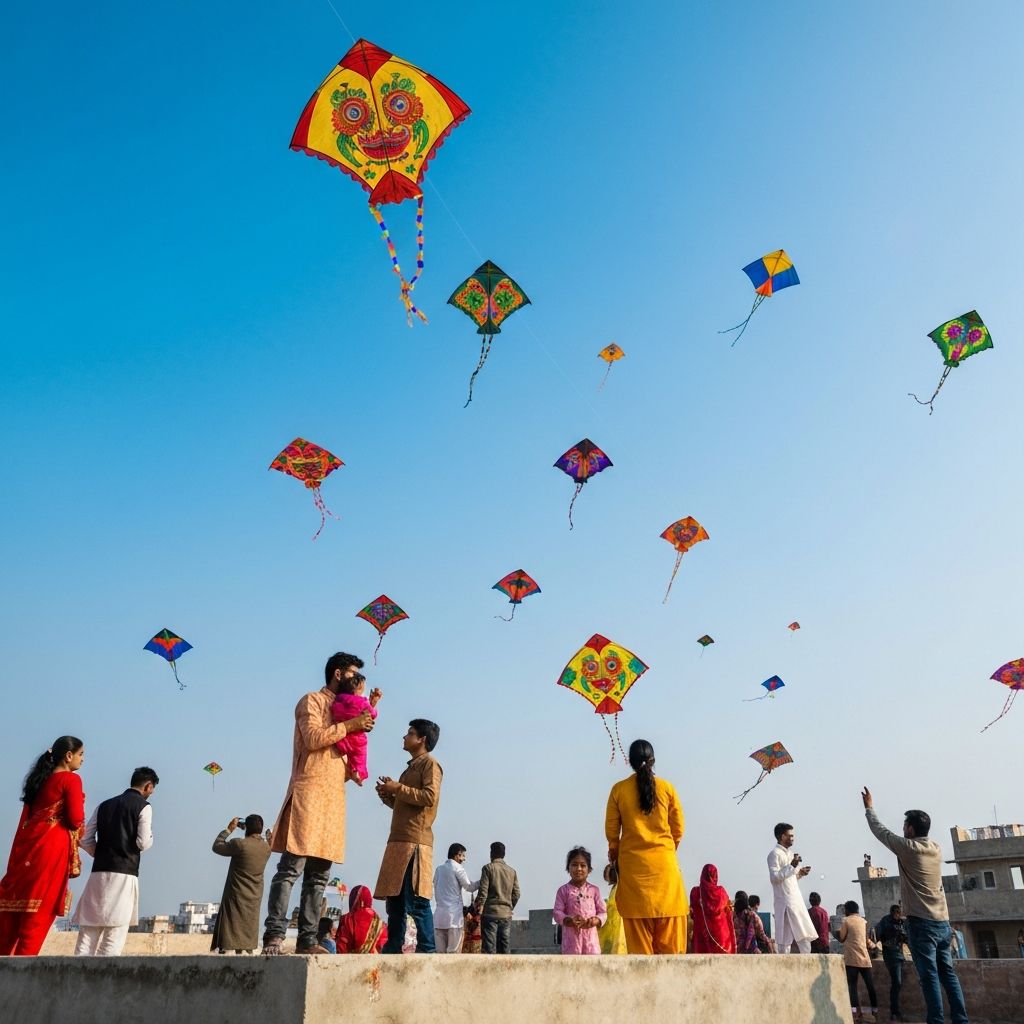
India's joyous harvest festival celebrating the sun's journey northward, marked by colorful kites, sweet sesame treats, and holy river dips.
When
January 14
Duration
1-4 Days
Celebrated In
All of India
Significance
Sun's Northward Journey
Traditions
Many Names, One Celebration
Makar Sankranti / Khichdi
North IndiaHoly dips in Ganges, kite flying, and khichdi feasts mark this harvest celebration.
Uttarayan
GujaratThe international kite festival transforms the sky into a canvas of colors.
Maghi
PunjabFollowing Lohri, marked by fairs, kheer, and community gatherings.
Pongal
Tamil NaduFour-day harvest festival with the iconic overflowing Pongal pot.
Magh Bihu / Bhogali
AssamFeasting festival with meji bonfires and traditional Assamese delicacies.
Regional Celebrations
Maharashtra
Til-gul ladoo exchange, black clothing tradition, and married women's Haldi-Kumkum ceremony.
Karnataka
Ellu Bella exchange of sesame mix, sugarcane, and display of Yellu (sesame) rangoli.
Andhra & Telangana
Three-day Sankranti with Bhogi bonfires, Makara Sankranti puja, and Kanuma cattle worship.
West Bengal
Poush Mela fair, Pithe Puli rice cakes, and Ganga Sagar pilgrimage.
The Astronomical Significance
Makar Sankranti is one of the few Hindu festivals based on the solar calendar rather than the lunar calendar, which is why it falls on the same date (January 14 or 15) each year. The word "Makar" refers to the zodiac sign Capricorn, and "Sankranti" means transition or movement.
This festival marks the sun's transition into the northern hemisphere, known as Uttarayan, ending the winter solstice period. In Hindu tradition, this marks the beginning of an auspicious phase when gods are believed to awaken from their sleep.
The tradition of kite flying symbolizes reaching out to the gods, while the sesame and jaggery sweets represent warmth and energy needed during winter. The holy dips in sacred rivers are believed to wash away sins and bring spiritual merit.
Celebrating Makar Sankranti
- Buy colorful kites and manjha (string)
- Prepare til-gul laddoos at home
- Wear black clothes (in Maharashtra)
- Visit a holy river for a sacred dip
- Exchange sweets with neighbors
- Fly kites from your rooftop
- Prepare khichdi with ghee
- Donate to the needy (daan)