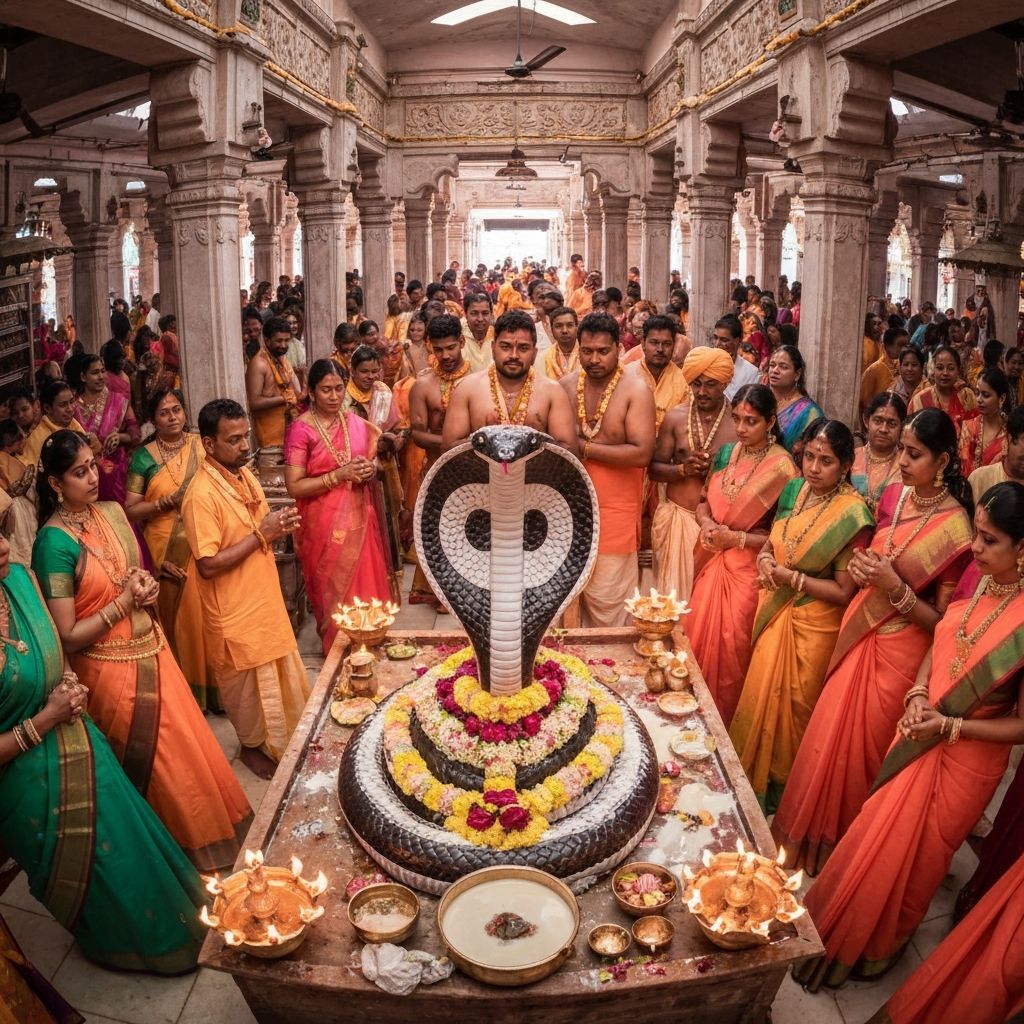
Nag Panchami
An ancient festival honoring serpent deities, celebrating the sacred relationship between humans and snakes in Indian mythology.
When
July - August (Shravan)
Duration
1 Day
Celebrated In
All of India, Nepal
Significance
Naga Devata Worship
Traditions
The Sacred Serpent Deities
Ananta (Shesha)
AnantaThe infinite serpent on whom Lord Vishnu rests, representing eternity.
Vasuki
VasukiKing of serpents who was used as the rope during Samudra Manthan (ocean churning).
Takshaka
TakshakaA powerful Naga king featured prominently in the Mahabharata.
Kaliya
KaliyaThe serpent subdued by Lord Krishna in the Yamuna river.
Regional Celebrations
Maharashtra
One of the most celebrated regions with elaborate pujas, fairs, and processions of live snakes.
Gujarat
Special celebrations at Nag temples with devotees offering milk and prayers.
Punjab & Haryana
Guga Naumi celebrations honoring the serpent deity Guga alongside Nag Panchami.
South India
Worship at ancient Nag temples with special abhishekams and serpent deity processions.
Serpents in Hindu Mythology
Snakes hold a revered position in Hindu mythology. Lord Shiva wears the serpent Vasuki around his neck, Lord Vishnu reclines on the cosmic serpent Shesha, and Lord Ganesha uses a snake as his sacred thread.
The Nagas are believed to be protectors of the underworld and guardians of treasures. They control rainfall and fertility of the land. Worshiping them is believed to bring protection from snake bites and ensure prosperity.
The festival falls during the monsoon when snakes emerge from their flooded burrows. This worship serves both as reverence and as a prayer for protection during this time when human-snake encounters are more frequent.
Observing Nag Panchami
- Clean and prepare your puja area
- Get a Nag idol or image for worship
- Arrange milk and flowers for offering
- Visit a Nag temple if possible
- Avoid digging earth on this day
- Draw snake patterns with turmeric
- Offer prayers for family protection
- Observe a vegetarian diet