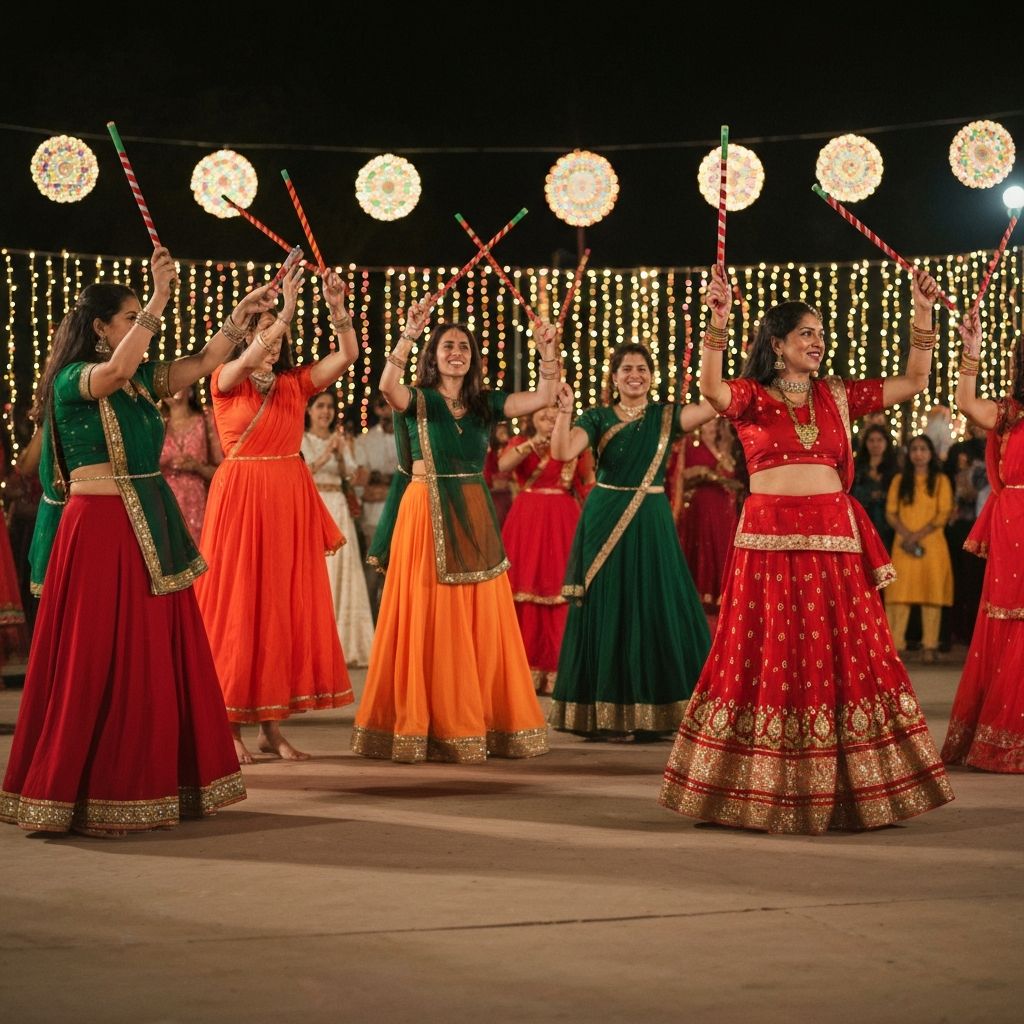
Navratri
Nine nights of worship, dance, and devotion celebrating the divine feminine energy and the triumph of good over evil.
When
September - October
Duration
9 Nights + Dussehra
Celebrated In
All of India
Significance
Divine Feminine Power
Traditions
The Nine Nights of Navratri
Shailaputri
Daughter of the mountains, embodiment of nature.
Brahmacharini
The goddess of penance and devotion.
Chandraghanta
Bearer of the crescent moon, symbol of bravery.
Kushmanda
Creator of the universe with her divine smile.
Skandamata
Mother of Skanda (Kartikeya), goddess of motherhood.
Katyayani
The warrior goddess, born to sage Katyayana.
Kaalratri
The fiercest form, destroyer of darkness.
Mahagauri
The goddess of purity and serenity.
Siddhidatri
Bestower of all supernatural powers.
Regional Celebrations
Gujarat
The heart of Navratri with massive Garba and Dandiya events, lasting all night with thousands of participants.
West Bengal
Celebrated as Durga Puja with elaborate pandals, artistic idols, and cultural performances.
South India
Golu/Bommai Kolu displays, Saraswati Puja on Ayudha Puja day, and Vijayadashami celebrations.
North India
Ram Lila performances depicting the life of Lord Rama, culminating in Dussehra.
The Story of Navratri
Navratri celebrates the victory of Goddess Durga over the buffalo demon Mahishasura. According to Hindu mythology, Mahishasura had obtained a boon that made him invincible to all gods and men. The gods combined their divine energies to create Durga, who battled the demon for nine nights and finally slayed him on the tenth day, known as Vijayadashami.
The festival also celebrates the triumph of Lord Rama over Ravana in North India. After nine days of fierce battle, Rama defeated Ravana on the tenth day, hence the name Dussehra (meaning "ten heads" referring to Ravana's ten heads).
The word Navratri is derived from Sanskrit: "nava" meaning nine and "ratri" meaning nights. It represents the eternal fight between good and evil, and the ultimate victory of divine feminine power (Shakti).
Preparing for Navratri
- Get traditional Garba/Dandiya attire
- Prepare daily color-coded outfits
- Set up a home altar for Durga
- Learn the traditional dance steps
- Prepare sattvic (pure) fasting foods
- Buy dandiya sticks and accessories
- Arrange for Kanya Puja items
- Plan visits to Durga pandals