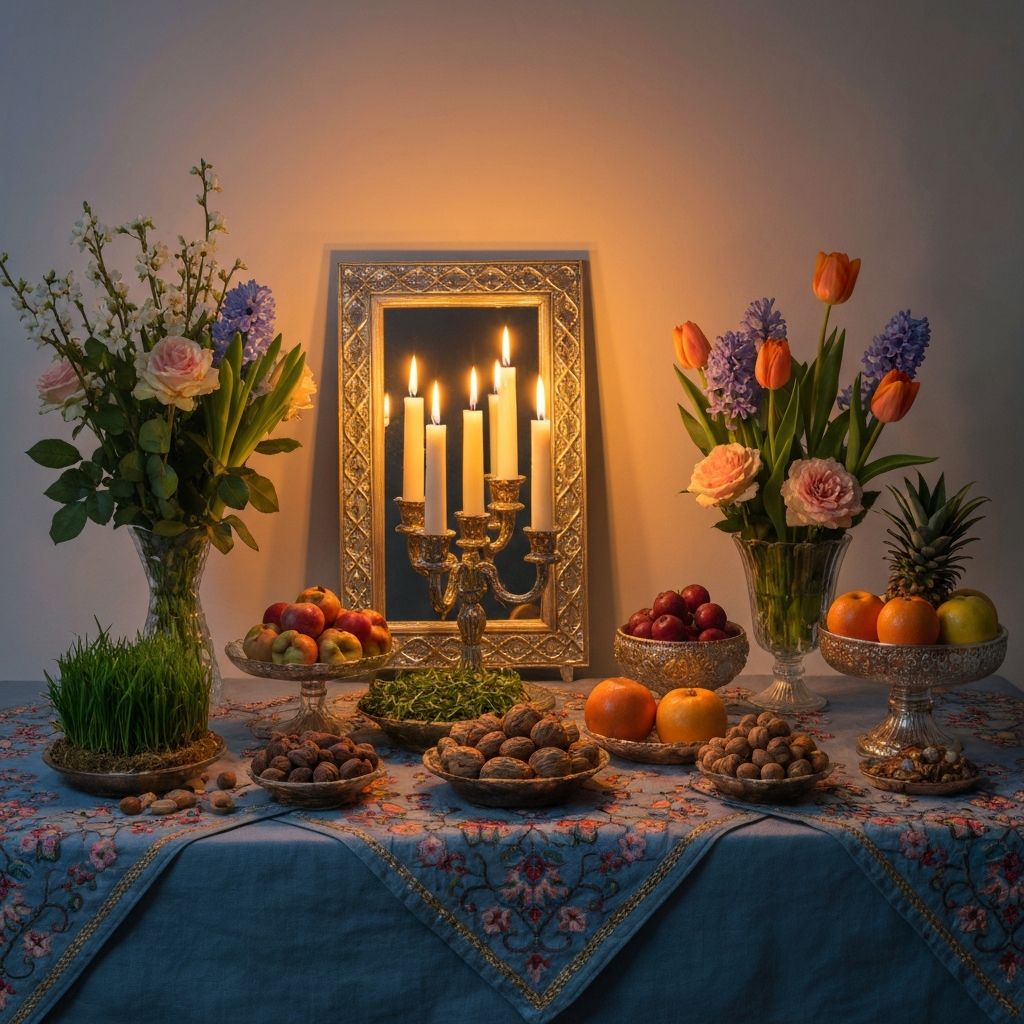
Nowruz
The ancient Persian New Year celebrated at the spring equinox, marking renewal, rebirth, and the triumph of light over darkness.
When
March 20-21 (Equinox)
Duration
13 Days
Celebrated In
Parsi & Persian Communities
Significance
Spring Renewal
Traditions
The Seven S's of Haft-sin
Wheat or Lentil Sprouts
SabzehSymbolizes rebirth and renewal of nature in spring.
Sweet Wheat Pudding
SamanuRepresents affluence and the sweetness of life.
Dried Oleaster Fruit
SenjedSymbolizes love and affection in relationships.
Garlic
SirRepresents medicine and good health.
Apple
SibSymbolizes beauty and health.
Sumac Berries
SomaqRepresents the sunrise and triumph of good over evil.
Vinegar
SerkehSymbolizes age, patience, and wisdom.
Celebrating Communities in India
Parsi Community
Major celebration with Jashan prayers, community meals, and cultural programs.
Kashmiri Muslims
Celebrated as Navreh, the Kashmiri New Year with special food and customs.
Iranian Diaspora
Grand celebrations in Mumbai, Delhi, and Pune with traditional festivities.
Central Asian Communities
Celebrated by Afghan and Uzbek communities with traditional dance and music.
The History of Nowruz
Nowruz, meaning "new day" in Persian, has been celebrated for over 3,000 years. Its origins lie in Zoroastrianism, the ancient Persian religion, where it marked the creation of the world and the victory of the good spirit Ahura Mazda.
In India, the Parsi community brought Nowruz traditions when they migrated from Persia over a thousand years ago. Today, it is celebrated as both a religious and cultural festival by Parsis, with the Haft-sin table as its centerpiece.
UNESCO recognized Nowruz as an Intangible Cultural Heritage of Humanity in 2009. The festival promotes values of peace, solidarity, and reconciliation between generations and within families, making it a celebration of unity.
Preparing for Nowruz
- Start growing sabzeh two weeks before
- Deep clean the entire house
- Prepare the Haft-sin table
- Buy new clothes for the family
- Prepare traditional sweets and dishes
- Plan visits to elders and relatives
- Prepare gifts for Eidee (new year gifts)
- Organize a Sizdah Bedar picnic spot