Pohela Boishakh
The vibrant Bengali New Year celebration marking the first day of the Bengali calendar with colorful processions, traditional food, and cultural festivities.
When
April 14-15
Duration
1 Day
Celebrated In
Bengal & Bangladesh
Significance
New Beginnings
Traditions
Celebrating Bengali New Year
Sunrise Gatherings
DawnPeople gather at Ramna Park and other open spaces to welcome the first sunrise of the Bengali New Year.
Mangal Shobhajatra
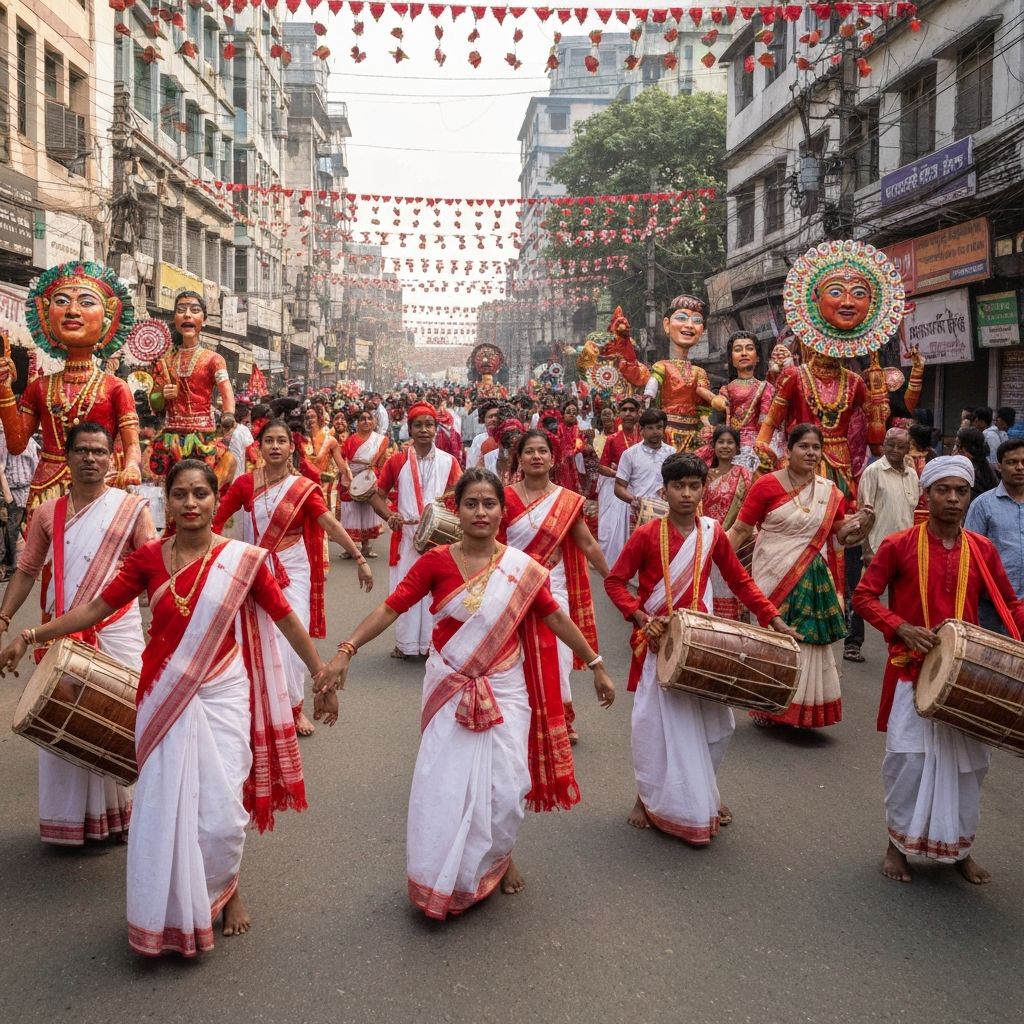
MorningThe grand UNESCO-recognized procession begins, featuring colorful masks and floats representing Bengali culture.
Festive Meals
NoonFamilies gather for the traditional Panta Ilish breakfast, followed by elaborate Bengali feasts.
Cultural Events
EveningMusic concerts, Rabindra Sangeet performances, and drama shows continue into the night.
Regional Celebrations
West Bengal
Grand celebrations in Kolkata with processions, cultural shows, and special Poila Boishakh sales.
Bangladesh
National holiday with Mangal Shobhajatra, the largest new year celebration in the region.
Tripura
Celebrated as a major festival with traditional Bengali customs and tribal influences.
Assam (Bengali Communities)
Bengali diaspora celebrates with traditional food, music, and community gatherings.
The Story of Pohela Boishakh
Pohela Boishakh marks the first day of the Bengali calendar, traditionally associated with the Mughal Emperor Akbar who reformed the Hindu solar calendar to align with the harvest season for easier tax collection. Over time, it evolved into a cultural celebration transcending religious boundaries.
The festival has ancient roots in agrarian traditions, marking the end of harvest and the beginning of a new agricultural cycle. Merchants would settle old accounts and open new ledgers, a practice called Haal Khata that continues today.
In 2016, UNESCO declared the Mangal Shobhajatra procession as an Intangible Cultural Heritage of Humanity, recognizing its significance in promoting Bengali culture, unity, and secular values through art and community celebration.
Preparing for Pohela Boishakh
- Buy new red and white traditional clothes
- Prepare or order Panta Ilish
- Plan to attend Mangal Shobhajatra
- Decorate home with alpana (rangoli)
- Visit local fairs and melas
- Settle accounts and open new ledgers
- Prepare traditional Bengali sweets
- Join community cultural programs