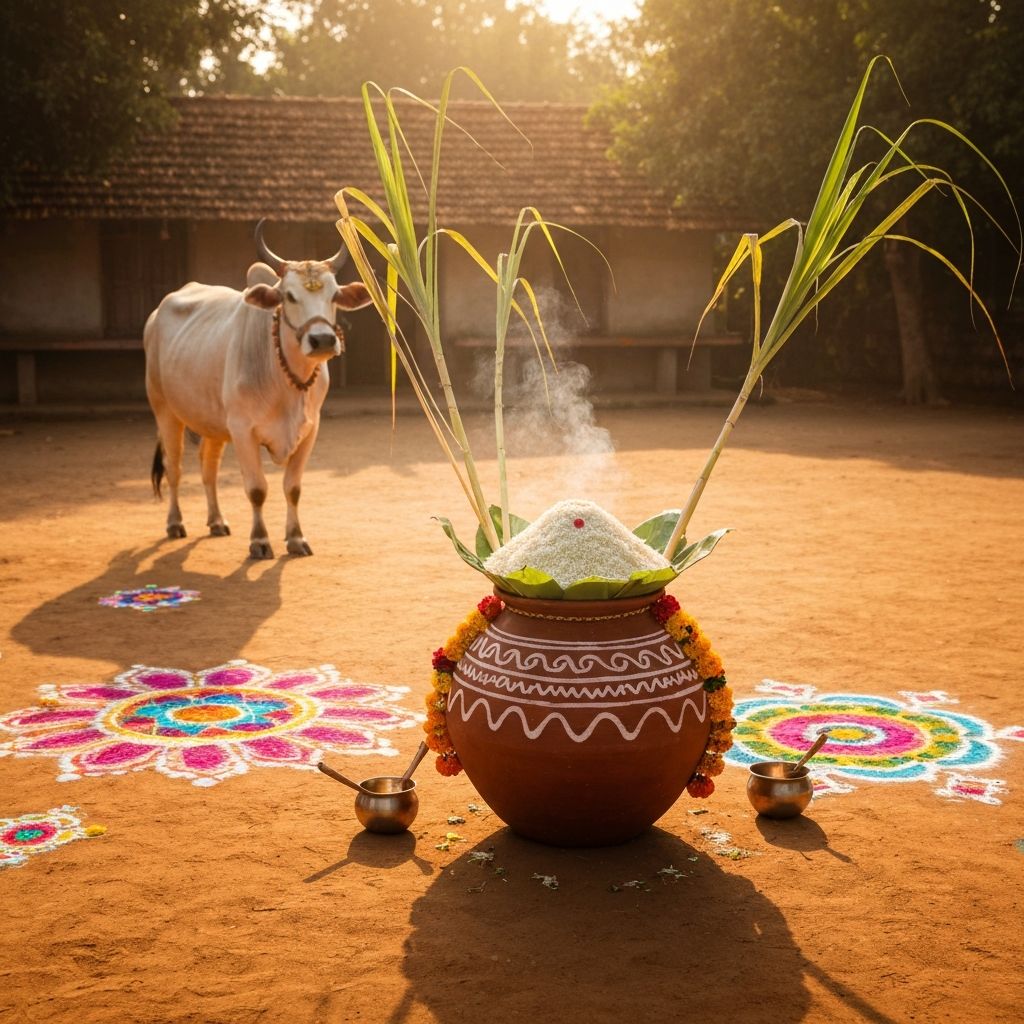
Pongal
A four-day thanksgiving festival dedicated to the Sun God, celebrating the harvest season with overflowing rice pots and joyous traditions.
When
January 14-17
Duration
4 Days
Region
Tamil Nadu
Significance
Sun Worship
Traditions
The Four Days of Pongal
Bhogi
Day 1Old and unwanted items are discarded and burned in a bonfire. Homes are cleaned and decorated. It marks the end of the old and beginning of the new.
Thai Pongal
Day 2The main day when the Pongal dish is prepared outdoors in decorated clay pots. The moment it overflows is celebrated with cries of 'Pongalo Pongal!'
Mattu Pongal
Day 3Dedicated to cattle - cows and bulls are bathed, decorated with paint, garlands, and bells. Jallikattu events are held.
Kaanum Pongal
Day 4Families visit relatives and friends. Young women pray for their brothers' prosperity. Picnics and outings are common.
Traditional Pongal Dishes
Ven Pongal
Savory rice and lentil dish with ghee, pepper, and cashews
Sakkarai Pongal
Sweet rice pudding with jaggery, cardamom, and ghee
Vadai
Deep-fried lentil fritters, crispy and savory
Payasam
Sweet milk pudding with vermicelli or rice
The Meaning of Pongal
The word "Pongal" comes from the Tamil word meaning "to boil over" or "overflow." This refers both to the ceremonial dish that is cooked until it boils over, and the overflowing abundance of the harvest. The festival coincides with the winter solstice and marks the beginning of the sun's six-month journey northward (Uttarayan).
Pongal is primarily a thanksgiving festival where farmers express gratitude to the Sun God for a successful harvest. It's one of the few Indian festivals that follows the solar calendar, always falling on January 14th or 15th.
The celebration of cattle on Mattu Pongal reflects the agrarian roots of Tamil culture, honoring the bulls and cows that play a vital role in farming. Jallikattu, the traditional bull-taming sport, has ancient origins dating back over 2,000 years.
Celebrating Pongal
- Draw kolam designs each morning
- Buy a new clay pot for cooking
- Prepare fresh sugarcane and turmeric
- Cook pongal dish facing the sun
- Decorate your home with mango leaves
- Watch or attend Jallikattu events
- Wear new traditional clothes
- Visit relatives on Kaanum Pongal