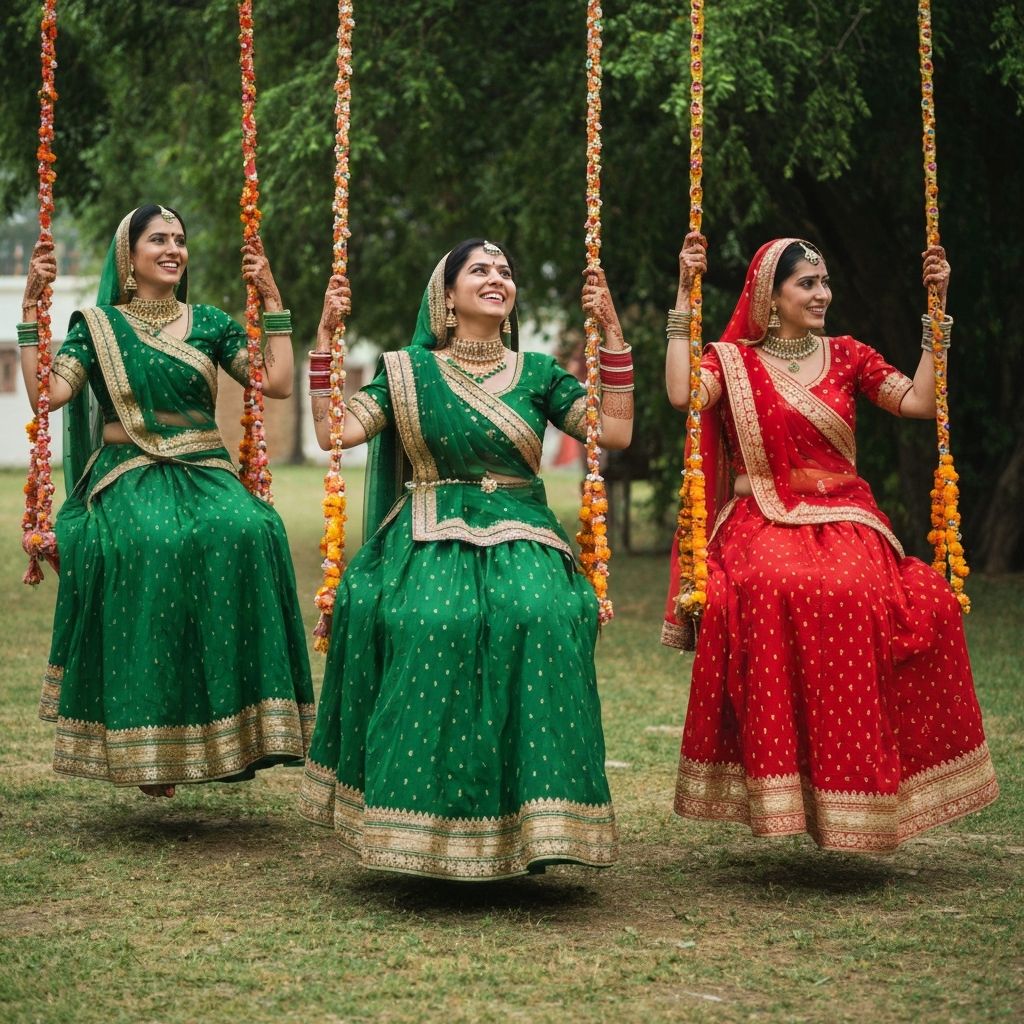
Teej
A joyous monsoon festival celebrating marital bliss, devotion, and the arrival of the green season with swings, songs, and colorful traditions.
When
July - September
Duration
1-3 Days
Celebrated In
North & Central India
Significance
Marital Devotion
Traditions
Three Forms of Teej
Hariyali Teej
July-August (Sawan)Celebrated during monsoon to welcome the green season. Most widely celebrated form.
Celebrates Parvati's reunion with Lord Shiva after her long penance.
Kajari Teej
August (Bhadrapada)Primarily celebrated in northern and central India, focused on crops and farming.
Women pray for good harvest and welfare of their sons and husbands.
Hartalika Teej
August-September (Bhadrapada)Strict fasting observed by unmarried and married women for marital bliss.
Commemorates Parvati's friend helping her avoid unwanted marriage.
The Day's Celebrations
Sargi & Preparations
Pre-dawn meal and ritual bath, women dress in festive attire.
Puja & Offerings
Goddess Parvati worship with flowers, fruits, and sweets.
Swinging & Singing
Women gather under trees to enjoy swings and sing folk songs.
Moon Sighting & Breaking Fast
Fast is broken after sighting the moon and performing aarti.
Regional Celebrations
Rajasthan
Grand Teej processions in Jaipur with ornate Goddess Parvati idol, cultural programs, and fairs.
Haryana & Punjab
Swinging festivals in villages with decorated jhulas, folk dances, and singing competitions.
Uttar Pradesh & Bihar
Kajari Teej celebrations with emphasis on agricultural prosperity and traditional Kajri songs.
Madhya Pradesh
Community gatherings with traditional folk performances and special prasad distribution.
The Legend of Teej
Teej celebrates the reunion of Goddess Parvati with Lord Shiva. According to Hindu mythology, Parvati underwent severe penance for 108 births to win Shiva as her husband. Moved by her devotion, Lord Shiva finally accepted her as his wife.
The festival especially celebrates Hartalika Teej, when Parvati's friends (hartalika means "abduction by friends") helped her escape an unwanted marriage arranged by her father to Lord Vishnu. They took her to a forest where she continued her meditation for Shiva.
Teej also marks the advent of monsoon and the agricultural season. The green color worn during the festival symbolizes fertility, prosperity, and the lush greenery brought by monsoon rains. Swinging on jhulas represents the joy and playfulness of the rainy season.
Preparing for Teej
- Buy or prepare green and red outfits
- Get intricate mehndi designs
- Prepare or buy traditional jewelry
- Make or order ghewar and other sweets
- Decorate swings with flowers and fabrics
- Learn traditional Teej songs
- Prepare sargi meal if fasting
- Plan visit to decorated temples