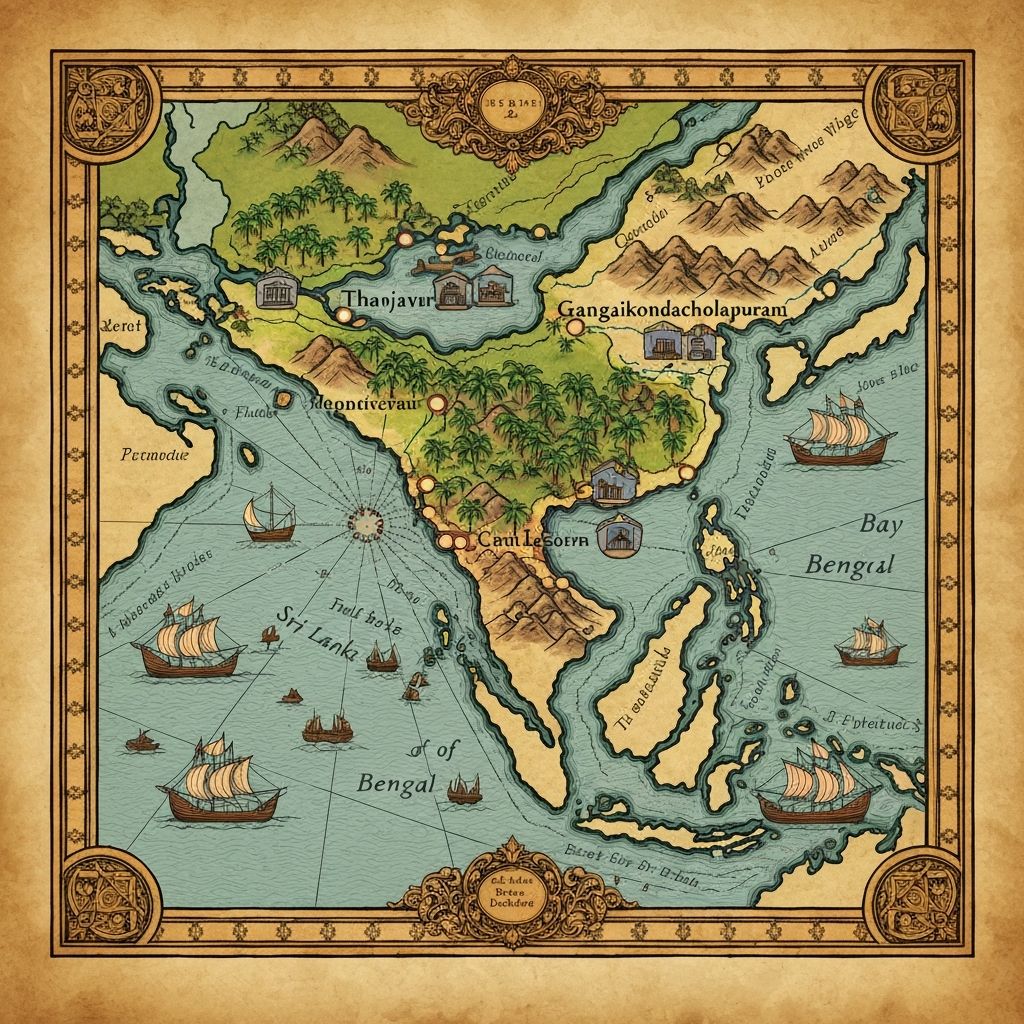
The Chola Dynasty
One of the longest-ruling dynasties in world history, the Cholas transformed South India into a maritime superpower, created architectural marvels, and established trade networks stretching from China to Arabia.
Region
South India & Southeast Asia
Period
300 BCE - 1279 CE
Peak Period
985 - 1044 CE
Capital
Thanjavur
Origins and Early History
The Cholas are among the oldest dynasties in Tamil Nadu, with their origins shrouded in the mists of antiquity. They find mention in the ancient Sangam literature dating back to the 3rd century BCE, where they are celebrated as one of the three crowned kings (Moovendhar) of ancient Tamilakam, alongside the Pandyas and Cheras.
The early Cholas ruled from Uraiyur (near modern Tiruchirappalli) and controlled the fertile Kaveri delta region. Karikala Chola, who lived around the 2nd century CE, was among the most celebrated early rulers, known for his military conquests and the construction of the Grand Anicut (Kallanai) - one of the oldest water-regulatory structures in the world still in use today.
After centuries of decline and obscurity following the rise of the Pallavas and later the Pandyas, the Cholas experienced a remarkable revival in the 9th century CE under Vijayalaya Chola, who captured Thanjavur from the Muttaraiyars around 848 CE, establishing the foundation for what would become one of the greatest empires in Indian history.
Raja Raja Chola I - The Great Emperor
The reign of Raja Raja Chola I (985-1014 CE) marks the beginning of the Chola golden age. Born Arulmozhi Varman, he ascended the throne and transformed the Chola kingdom into a vast empire through military genius, administrative brilliance, and cultural patronage that earned him the title "Raja Raja" - King of Kings.
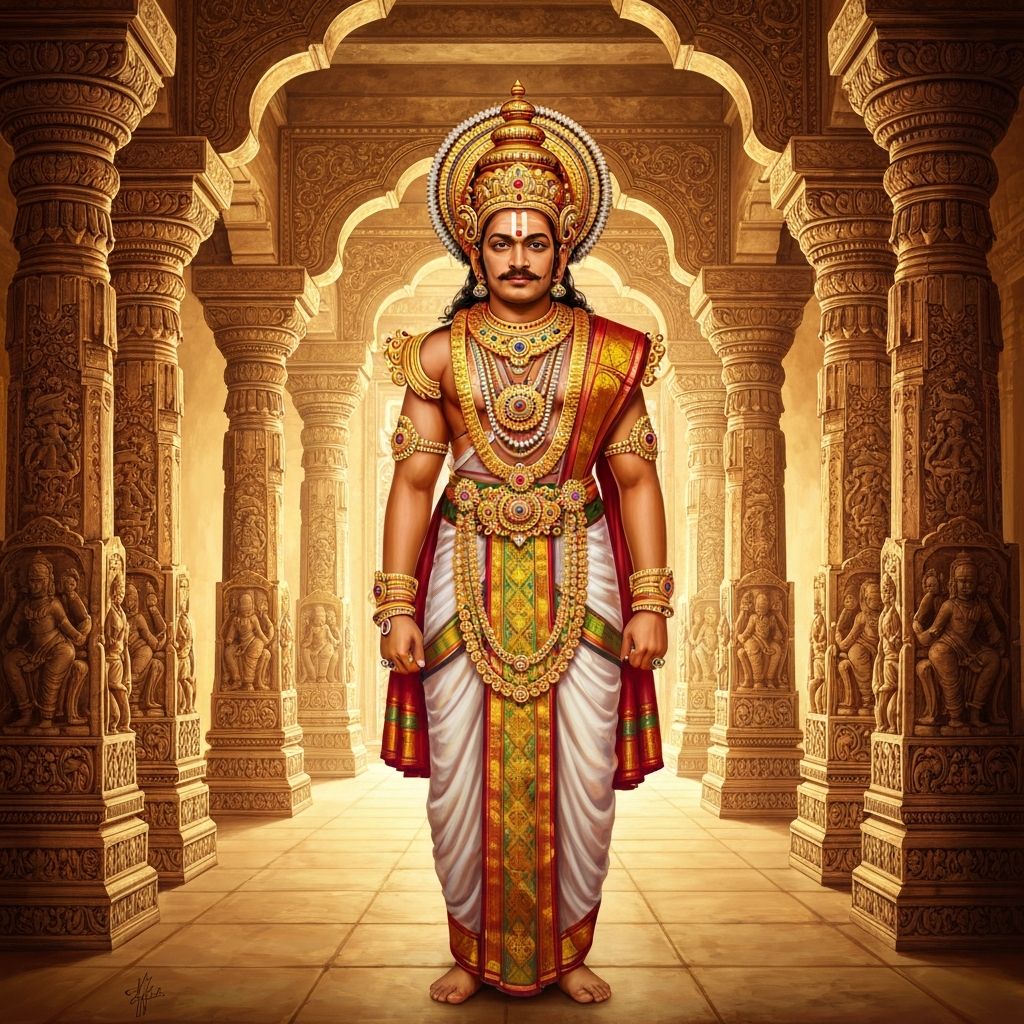
Raja Raja Chola I - architect of the Chola Empire's golden age
His military campaigns were vast and decisive. He conquered the Chera kingdom of Kerala, defeated the Pandyas, annexed northern Sri Lanka (which he renamed Mummudi Cholamandalam), and extended Chola influence to the Maldives. His navy dominated the Indian Ocean, establishing the Cholas as the premier maritime power of medieval Asia.
Raja Raja's Achievements
- Built the Brihadeeswara Temple at Thanjavur - a UNESCO World Heritage Site
- Introduced systematic land survey and revenue administration
- Established diplomatic relations with the Song dynasty of China
- Patronized Tamil literature and codified temple inscriptions
- Created a powerful navy that dominated the Bay of Bengal
Rajendra Chola I - The World Conqueror
Rajendra Chola I (1014-1044 CE), son of Raja Raja, expanded the empire to its greatest territorial extent. His achievements were so remarkable that historians consider his reign the zenith of Chola power and one of the most glorious periods in Indian history.
In a feat unparalleled in Indian history, Rajendra marched his army northward across the subcontinent, defeating the Pala dynasty of Bengal and reaching the banks of the Ganges. He brought back the sacred waters of the Ganga to his new capital, which he named Gangaikondacholapuram - "The City of the Chola Who Conquered the Ganga."
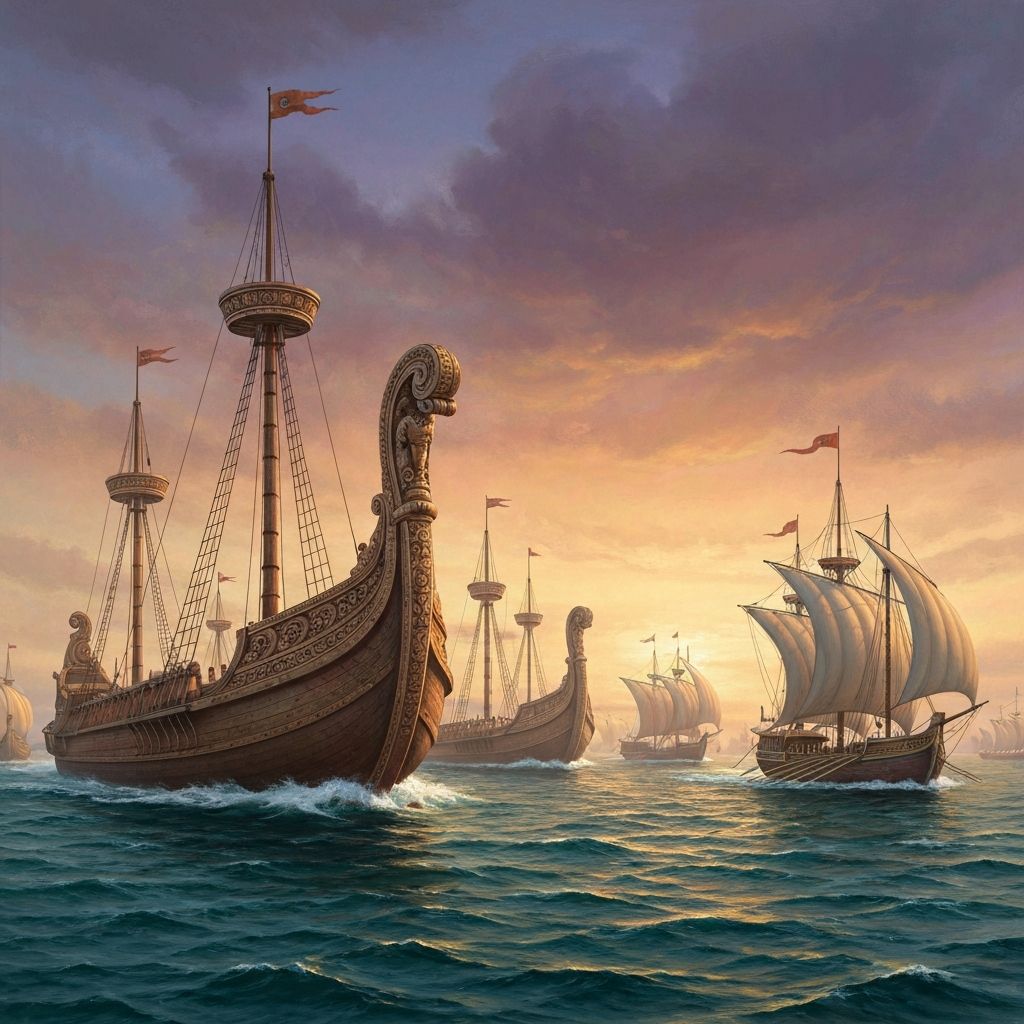
The mighty Chola navy - masters of the Indian Ocean and Bay of Bengal
His naval expeditions were even more extraordinary. In 1025 CE, he launched a massive naval campaign against the Srivijaya Empire of Southeast Asia, conquering the Malay Peninsula, Sumatra, and parts of the Indonesian archipelago. This was history's first major overseas naval expedition by an Indian power, securing Chola dominance over the vital trade routes between India and China.
"Rajendra conquered the Ganges in the North and the seas in the South, bringing glory to the Chola name that would echo through the ages."
— Thiruvalangadu Copper Plates
Maritime Supremacy and Trade
The Chola navy was the most powerful maritime force in Asia during the medieval period. Their fleet consisted of various types of vessels, from small patrol boats to massive warships capable of carrying hundreds of soldiers across the open ocean. The navy protected merchant ships, conducted overseas expeditions, and maintained Chola supremacy over the Indian Ocean trade routes.
Chola merchants, known as the Ainnurruvar and Manigramam guilds, established trading posts throughout Southeast Asia. Tamil inscriptions found in Thailand, Cambodia, Indonesia, and China attest to the vast commercial network. They traded in spices, textiles, precious stones, and manufactured goods, making the Chola ports like Nagapattinam and Poompuhar among the busiest in the medieval world.
Chola Trade Network
Eastern Routes
- • Srivijaya (Indonesia)
- • Kedah (Malaysia)
- • Cambodia and Vietnam
- • Song China
Western Routes
- • Sri Lanka (Lanka)
- • Maldives
- • Arabian Peninsula
- • East Africa
Temple Architecture - Monuments of Devotion
The Cholas elevated Dravidian temple architecture to its pinnacle. Their temples were not merely places of worship but served as centers of art, education, and social activity. The engineering and artistic achievements of Chola temple builders remain unmatched in their scale and sophistication.
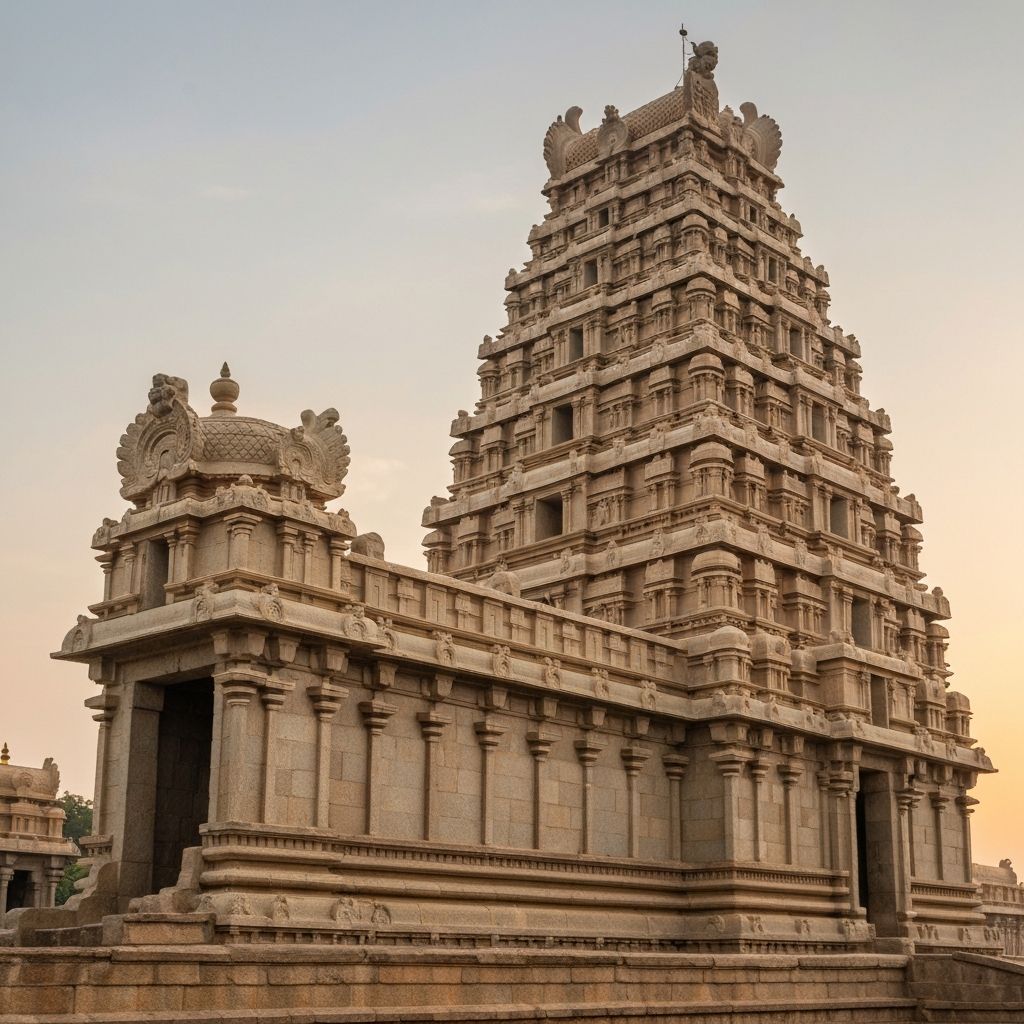
The Brihadeeswara Temple at Thanjavur - crown jewel of Chola architecture
The Brihadeeswara Temple at Thanjavur, built by Raja Raja Chola I, stands as the supreme achievement of Chola architecture. Its vimana (tower) rises to 66 meters, topped by a massive 80-ton monolithic capstone. The temple's construction involved innovative engineering techniques - the capstone was raised using a 6-kilometer inclined ramp, a remarkable feat considering no cranes existed at the time.
Rajendra Chola I built an equally magnificent temple at Gangaikondacholapuram, while later rulers added to the architectural legacy. The Airavatesvara Temple at Darasuram and the Kampaheswarar Temple at Tribhuvanam complete what UNESCO has designated as the "Great Living Chola Temples" - all still active places of worship after a millennium.
Bronze Sculptures - Poetry in Metal
Chola bronze sculptures represent the highest achievement of Indian metalwork. Using the lost-wax (cire perdue) technique, Chola artisans created images of remarkable grace and spiritual power. These bronzes were made for temple processions and remain among the most prized objects in museums worldwide.
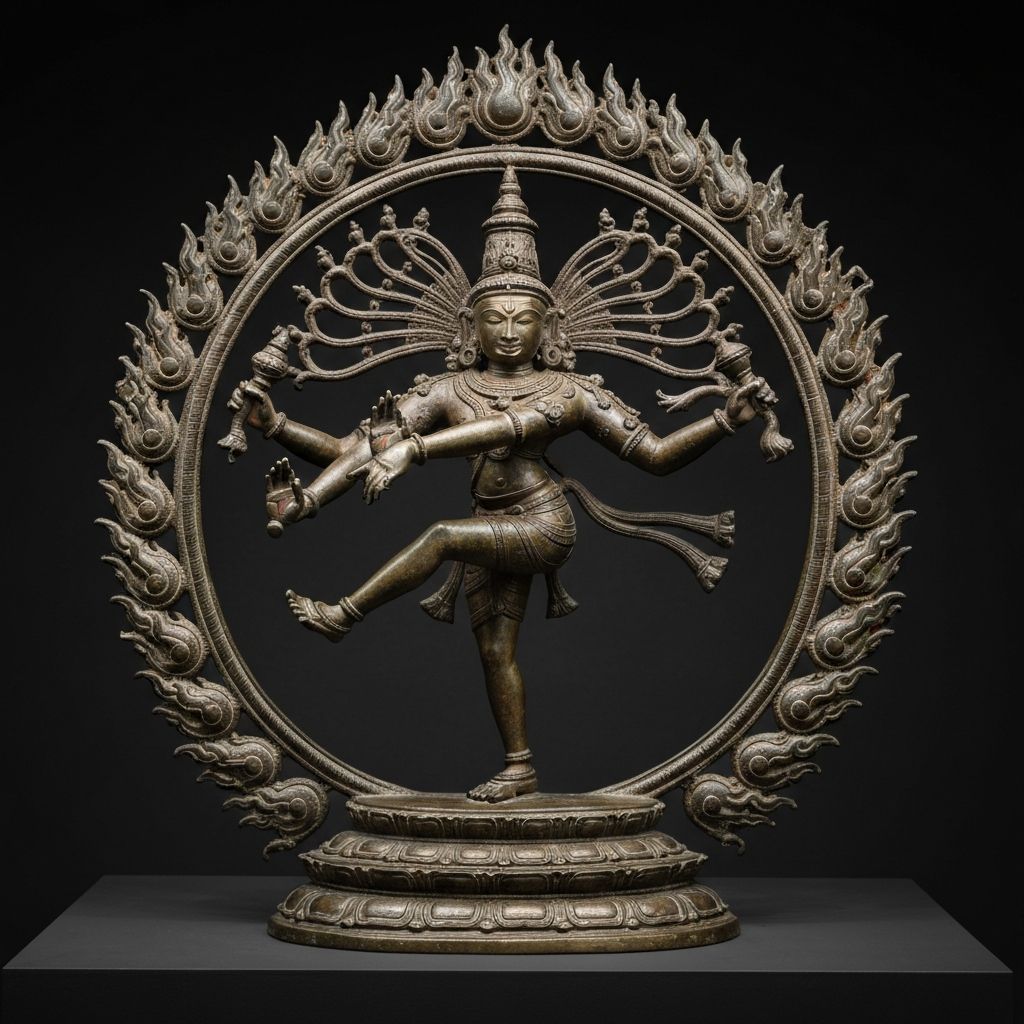
The iconic Nataraja - Chola bronze masterpiece depicting Shiva's cosmic dance
The Nataraja - Shiva as the Lord of Dance - is the most celebrated form of Chola bronze art. This image shows Shiva performing the Ananda Tandava, the dance of bliss that creates, preserves, and destroys the universe. The perfect balance of movement and stillness, the intricate details, and the profound symbolism make the Chola Nataraja an enduring icon of Indian civilization.
"The Chola bronze is not merely a sculpture; it is a prayer frozen in metal, capturing the infinite in finite form."
— Ananda K. Coomaraswamy, Art Historian
Administration and Local Self-Government
The Cholas developed one of the most sophisticated administrative systems of the medieval world. The empire was divided into mandalams (provinces), nadus (districts), and kurrams (villages), each with clearly defined responsibilities and officials.
Most remarkably, the Cholas established a system of local self-governance that has fascinated historians. The Uttaramerur inscriptions (dating to the reign of Parantaka I, around 920 CE) describe an elaborate system of village assemblies (sabhas) with democratic procedures for electing representatives, disqualification criteria for candidates, and term limits - principles that would not become widespread in the West for another millennium.
Uttaramerur Election Rules (920 CE)
- Candidates must own property and have a house built on legally owned land
- Must be between 35 and 70 years of age
- Must have knowledge of the Vedas or mantras
- Disqualified if they or family members held office in the past 3 years
- Disqualified for corruption, theft, or failure to submit accounts
- Selection by lot from qualified candidates to prevent manipulation
Decline and Legacy
After the reigns of Raja Raja I and Rajendra I, the Chola empire remained powerful but gradually declined. Kulottunga I (1070-1120 CE) briefly restored Chola glory, but subsequent rulers faced increasing pressure from the Hoysalas to the west and the resurgent Pandyas to the south.
The final blow came in 1279 CE when the Pandyas, under Maravarman Kulasekara I, defeated the last Chola ruler, Rajendra III. After nearly 1,500 years of history, the Chola dynasty came to an end. However, their legacy endures in the temples that still stand, the bronzes that still inspire, and the cultural traditions that continue in Tamil Nadu.
Key Moments
Timeline of Major Events
Milestones of the Chola Dynasty
Sangam Era
Early Cholas mentioned in Sangam literature
Kallanai Dam
Karikala Chola builds the famous dam
Imperial Cholas Founded
Vijayalaya captures Thanjavur
Raja Raja Chola I
Brihadeeswara Temple built; empire expands
Rajendra Chola I
Gangetic campaign and Srivijaya expedition
Kulottunga I
Revival of Chola power
Dynasty Falls
Fall of the Chola dynasty to the Pandyas
Enduring Contributions
The Chola dynasty's contributions to Indian and world civilization are immense and enduring. They perfected Dravidian temple architecture, creating structures that still inspire awe. Their bronze sculptures set standards that influenced art across Asia. Their administrative innovations, particularly in local self-governance, were centuries ahead of their time.
The Chola maritime tradition transformed the Bay of Bengal into a "Chola Lake," spreading Tamil culture, Hinduism, and Buddhism throughout Southeast Asia. The Tamil diaspora in Malaysia, Singapore, and Indonesia traces its origins to Chola traders and settlers. Indian influence on Cambodian Angkor Wat, Thai Buddhism, and Indonesian culture owes much to Chola-era contacts.
Today, the Brihadeeswara Temple remains an active place of worship, the Nataraja continues to symbolize Indian art and philosophy worldwide, and the Tamil language that the Cholas patronized is spoken by over 80 million people. The dynasty may have ended in 1279, but the Chola legacy lives on.