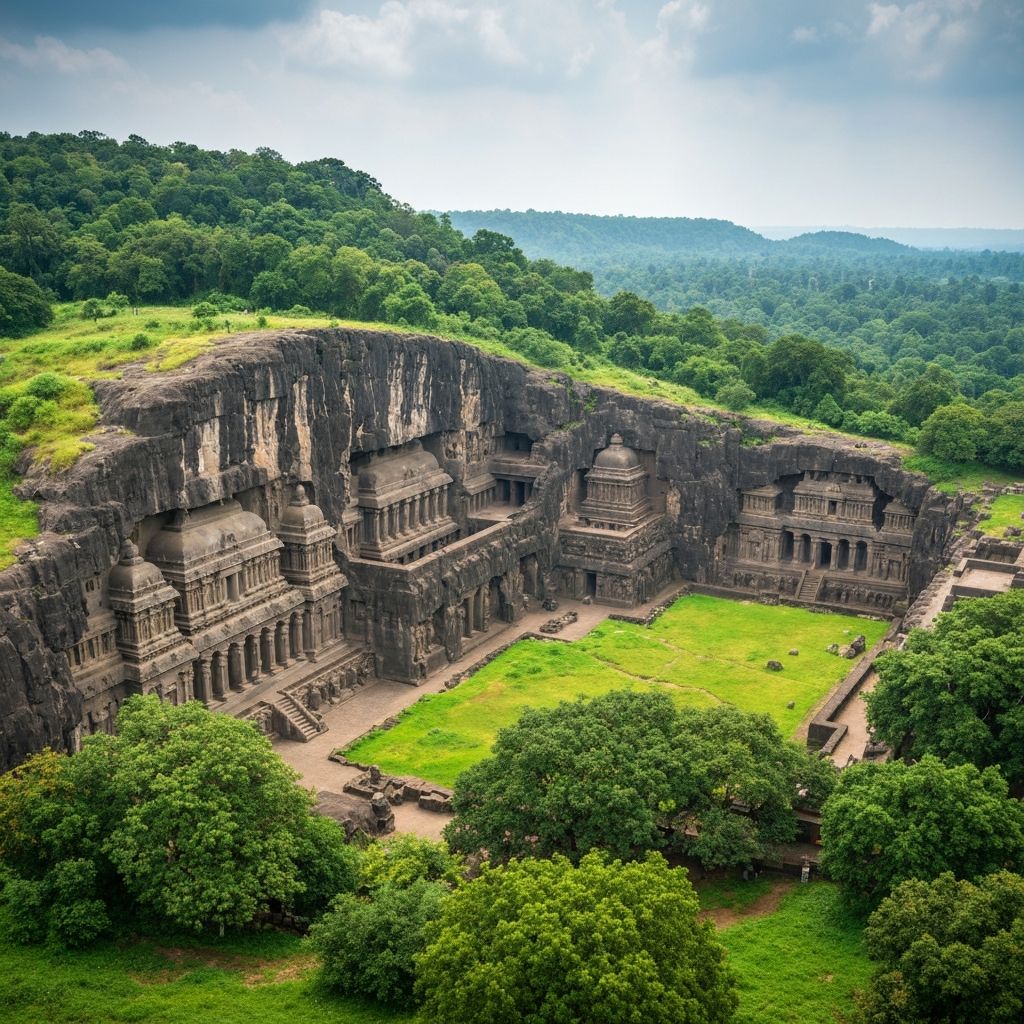
Ellora Caves
A testament to religious harmony and human artistic achievement - 34 magnificent rock-cut caves representing Buddhism, Hinduism, and Jainism, carved over five centuries into the basalt cliffs of the Charanandri hills.
Location
Maharashtra, India
Period
600 - 1000 CE
Total Caves
34 Caves
UNESCO Status
Since 1983
A Monument to Religious Harmony
Located near Aurangabad in Maharashtra, the Ellora Caves represent one of the most remarkable achievements in the history of architecture. Unlike any other heritage site in the world, Ellora showcases the spiritual harmony of ancient India, where Buddhist, Hindu, and Jain communities created sacred spaces side by side over a period of five centuries.
The 34 caves, carved out of the vertical face of the Charanandri hills, demonstrate not only exceptional artistic and technical skill but also the spirit of tolerance and mutual respect that characterized medieval Indian society. This coexistence of three distinct faiths in one complex makes Ellora unique among the world's religious monuments.
Cave Distribution
- •Buddhist Caves (1-12): The earliest group, dating from 600-800 CE
- •Hindu Caves (13-29): The central and most elaborate group, 600-900 CE
- •Jain Caves (30-34): The final group, dating from 800-1000 CE
The Buddhist Caves: Monasteries of Serenity
The twelve Buddhist caves at Ellora, numbered 1 through 12, represent the earliest phase of excavation. These caves primarily served as viharas (monasteries) where Buddhist monks lived, meditated, and studied. The caves range from simple single-story structures to elaborate three-story complexes.
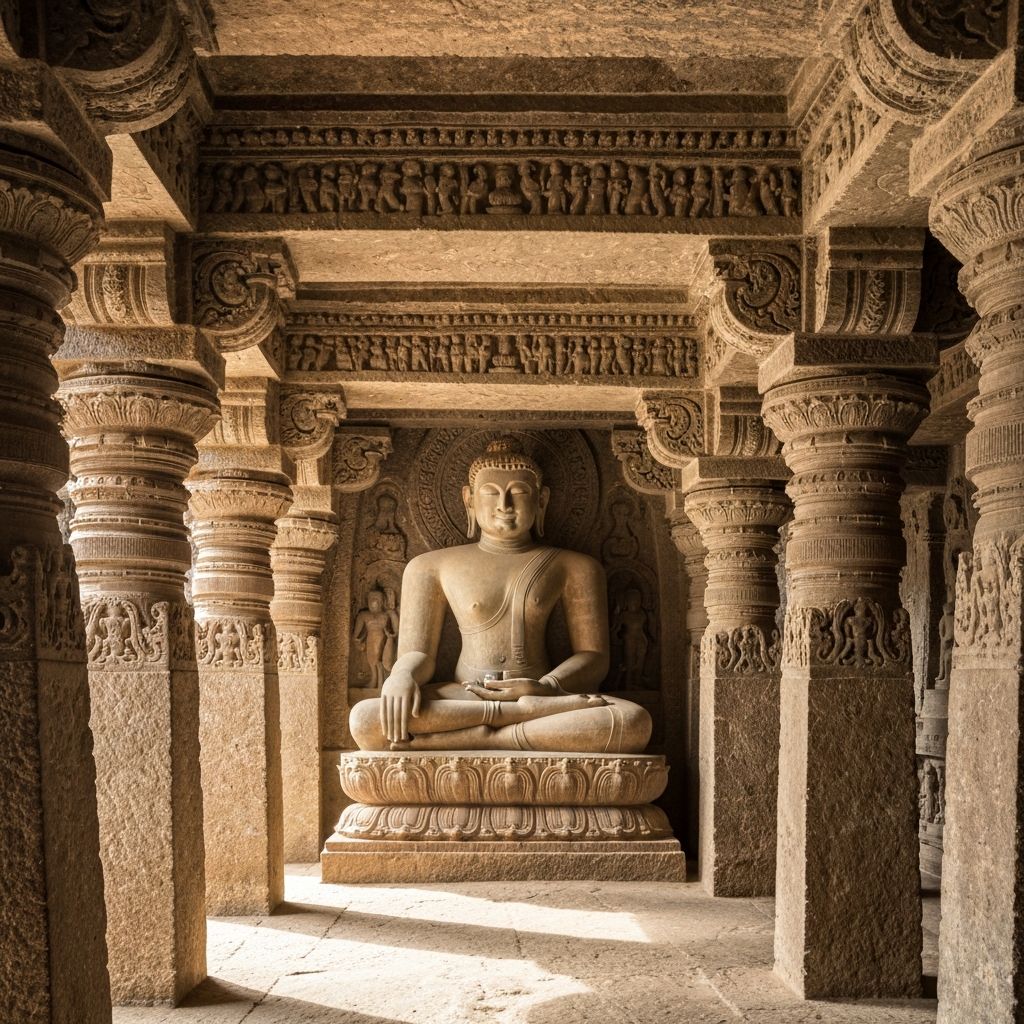
A Buddhist cave interior featuring a serene Buddha in meditation
Cave 10, known as the "Carpenter's Cave" or Vishwakarma Cave, is the only chaitya (prayer hall) in the Buddhist group. Its remarkable feature is the ceiling carved to resemble wooden beams, demonstrating how rock-cut architecture evolved from earlier wooden structures. A 15-foot Buddha statue sits in the apse, with the ribbed ceiling creating an atmosphere of profound tranquility.
Cave 12, called Teen Tal (Three Stories), is the most ambitious Buddhist excavation at Ellora. This massive three-story monastery contains numerous cells for monks, large halls for congregation, and an impressive array of Buddha and Bodhisattva images reflecting the Vajrayana Buddhist tradition that flourished during this period.
The Hindu Caves: Divine Drama in Stone
The seventeen Hindu caves (13-29) represent the most dramatic and elaborate excavations at Ellora. Created primarily during the Rashtrakuta dynasty's rule, these caves showcase the dynamic energy and narrative richness of Hindu mythology through breathtaking sculptural programs.
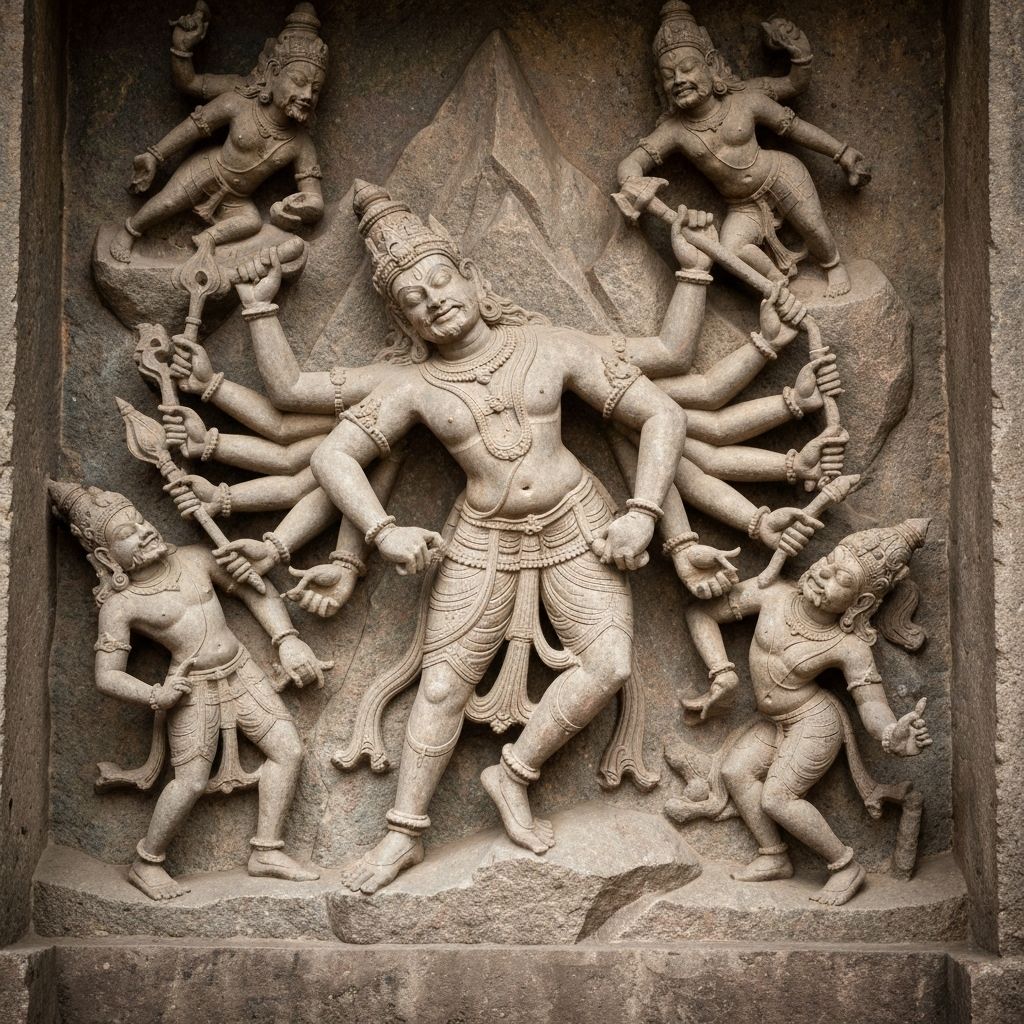
The dramatic relief of Ravana attempting to shake Mount Kailash
The sculptural panels in the Hindu caves depict episodes from the great epics and Puranas with extraordinary vitality. The artists captured divine beings in moments of cosmic significance - Shiva as Nataraja performing the cosmic dance, Vishnu in his various avatars, the goddess Durga slaying the buffalo demon, and countless other scenes rendered with technical mastery and spiritual intensity.
"The sculptures of Ellora are not mere decorations but visual theology - each panel a meditation on the divine, carved by artists who were also devotees."
— Stella Kramrisch, Art Historian
The Kailasa Temple: An Architectural Marvel
Cave 16, the Kailasa Temple, is without question the most extraordinary structure at Ellora and one of the most remarkable monuments ever created by human hands. Commissioned by the Rashtrakuta king Krishna I (756-773 CE), this monolithic temple was carved from the top down out of a single basalt cliff - the largest monolithic rock excavation in the world.
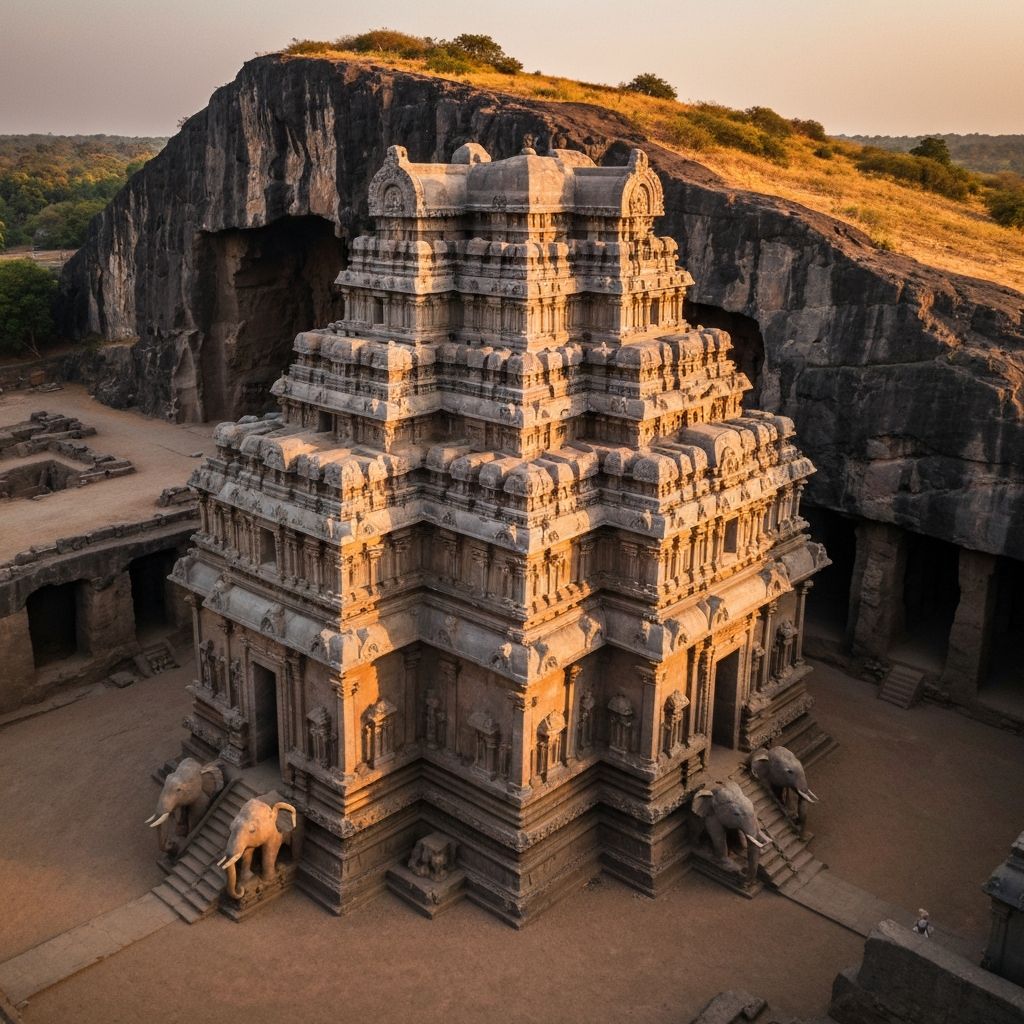
The Kailasa Temple - carved from top to bottom from a single basalt cliff
To create the Kailasa Temple, workers removed an estimated 200,000 tonnes of rock using only hammers, chisels, and pickaxes. Working from the top of the cliff downward, they carved out a U-shaped trench 100 feet deep to isolate the rock that would become the temple, then sculpted this massive block into a complete temple complex with a gateway, courtyard, main temple, subsidiary shrines, and connecting bridges.
Kailasa Temple Facts
- •Dimensions: 164 feet deep, 109 feet wide, 98 feet high
- •Rock Removed: Approximately 200,000 tonnes
- •Construction Time: Estimated 18-20 years
- •Dedicated to: Lord Shiva (represents Mount Kailash)
- •Twice the area of the Parthenon in Athens
The temple is designed to represent Mount Kailash, the celestial abode of Lord Shiva. The main tower rises 98 feet from the courtyard floor, covered with intricate carvings depicting scenes from the Ramayana, Mahabharata, and the legends of Shiva. The courtyard floor is supported by sculptures of elephants and lions, giving the impression that the entire temple is being carried on the backs of these noble creatures.
The Jain Caves: Austere Elegance
The five Jain caves (30-34), excavated between the 9th and 10th centuries, reflect the Digambara Jain tradition. Though smaller in scale than their Hindu neighbors, these caves demonstrate exceptional artistic refinement and attention to detail that embodies the Jain aesthetic of disciplined beauty.
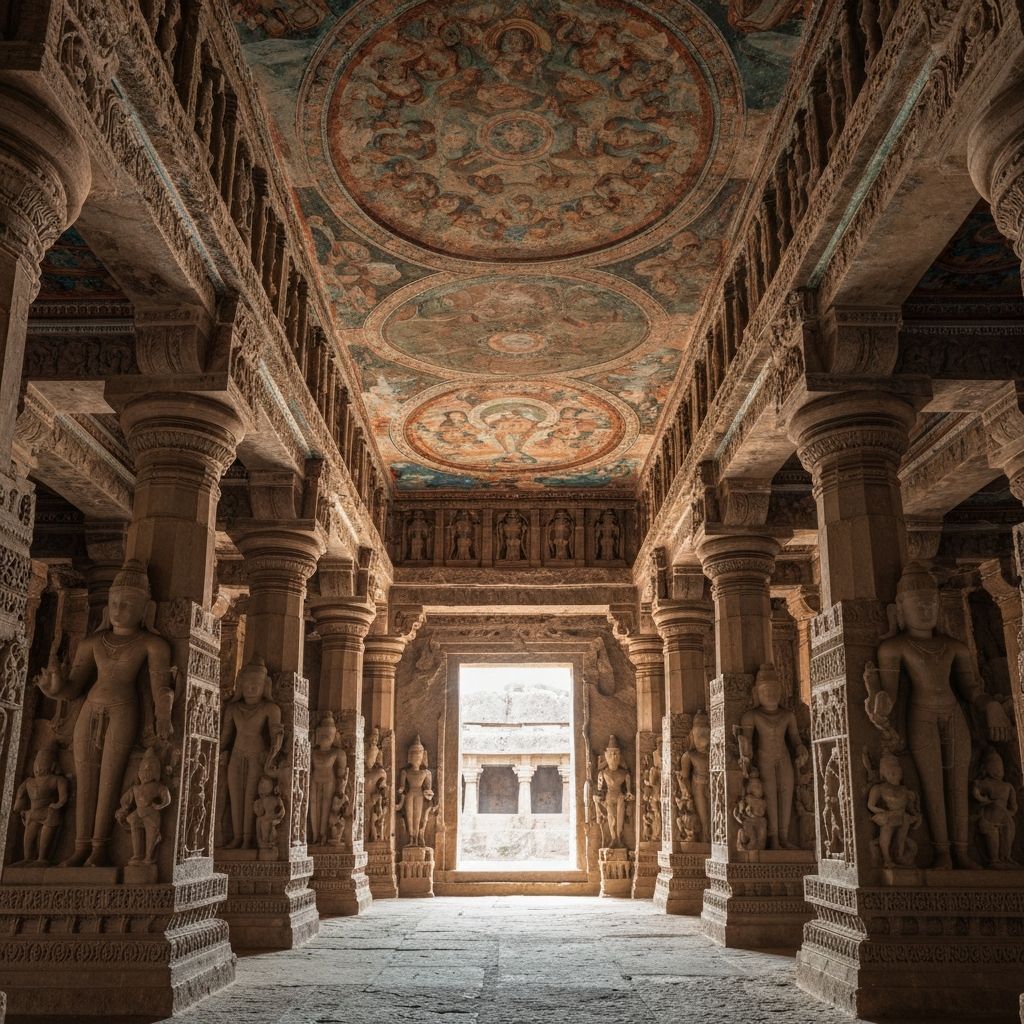
The elegant interior of Indra Sabha, the finest Jain cave at Ellora
Cave 32, known as Indra Sabha, is the finest of the Jain caves. This two-story structure features a monolithic shrine in the courtyard, reminiscent of the Kailasa Temple on a smaller scale. The upper floor contains some of the most refined carvings at Ellora, including beautiful images of Mahavira, Parshvanatha, and other Tirthankaras.
The ceiling of Indra Sabha retains traces of the original paintings that once adorned it, depicting lotus flowers and other auspicious symbols. The walls feature delicate carvings of yaksha and yakshi figures, celestial musicians, and intricate floral patterns that demonstrate the sophisticated aesthetic sensibility of Jain patrons.
Royal Patronage and Master Craftsmen
The creation of Ellora was made possible by the patronage of several powerful dynasties. The Buddhist caves received support from the Kalachuri dynasty, while the Hindu caves flourished under the Rashtrakutas, who ruled the Deccan from the 8th to 10th centuries. The Jain caves were sponsored by wealthy merchants and minor rulers during the later period.
Key Moments
Timeline of Patronage
Centuries of royal and merchant patronage
Buddhist Caves
Kalachuri dynasty sponsors Buddhist caves
Hindu Caves
Chalukyas and early Rashtrakutas create Hindu caves
Kailasa Temple
Krishna I commissions the magnificent Kailasa Temple
Jain Caves
Jain caves created under merchant patronage
The master craftsmen of Ellora, known as shilpins, belonged to hereditary guilds that transmitted techniques across generations. These artists worked according to the shilpa shastras (treatises on art and architecture), which prescribed proportions, iconography, and ritual procedures for creating sacred images. Yet within these traditions, they exercised remarkable creative freedom.
Enduring Legacy
Ellora stands as an enduring symbol of India's tradition of religious tolerance and artistic excellence. The fact that Buddhists, Hindus, and Jains created their sacred spaces side by side, sharing techniques and sometimes even artists, speaks to a civilization where diversity was celebrated rather than feared.
In 1983, UNESCO designated Ellora as a World Heritage Site, recognizing it as "an outstanding example of the phenomenon of rock-cut architecture" and "a masterpiece of creative genius." Today, the caves attract scholars, pilgrims, and tourists from around the world, all drawn to witness this extraordinary achievement of human creativity and devotion.
"Ellora demonstrates not only the zenith of rock-cut architecture but also the remarkable spirit of tolerance characteristic of ancient India, where three great religions flourished side by side."
— UNESCO World Heritage Citation
The caves continue to inspire awe in all who visit them. Standing before the Kailasa Temple or within the serene halls of the Buddhist viharas, one cannot help but marvel at the vision, skill, and devotion of the artists who transformed living rock into expressions of the divine - leaving behind a legacy that speaks across centuries to the enduring human capacity for beauty and transcendence.