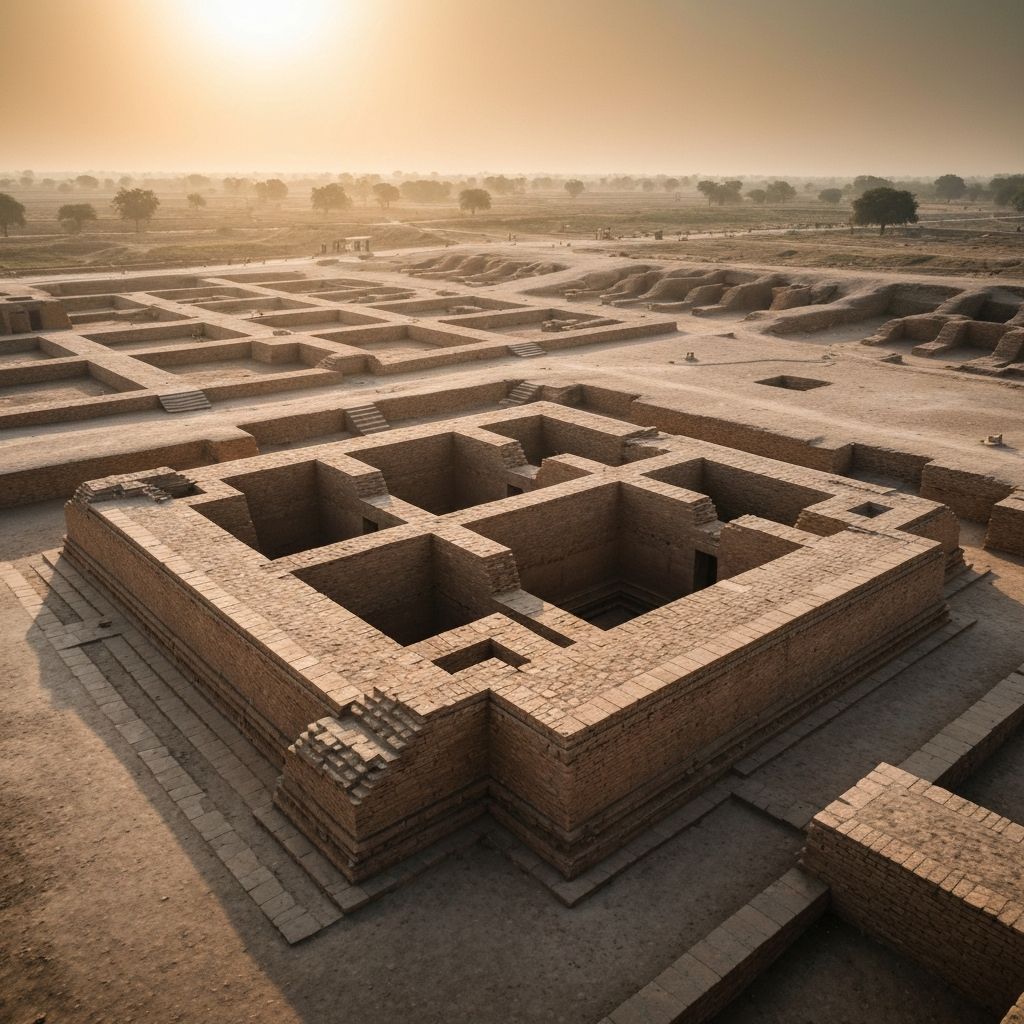
The Indus Valley Civilization
One of the world's oldest urban civilizations, flourishing along the banks of the Indus River over 4,500 years ago.
Region
Northwest South Asia
Period
3300 - 1300 BCE
Peak Period
2600 - 1900 BCE
Also Known As
Harappan Civilization
The Indus Valley Civilization, also known as the Harappan Civilization, was one of the three earliest urban civilizations of the ancient world, alongside Egypt and Mesopotamia. At its peak, it covered an area larger than both combined, spanning over 1.5 million square kilometers across present-day Pakistan, northwest India, and parts of Afghanistan.
Discovery and Significance
The civilization remained unknown to the modern world until 1921, when archaeologist Daya Ram Sahni began excavations at Harappa in Punjab. A year later, R.D. Banerjee discovered another major site at Mohenjo-daro in Sindh. These discoveries revealed a sophisticated urban culture that predated the arrival of the Vedic peoples and challenged existing narratives of Indian history.
Since then, over 1,400 sites have been identified, including major centers like Dholavira, Lothal, Rakhigarhi, and Kalibangan. The civilization is now recognized as one of the most advanced of its time, with achievements in urban planning, architecture, metallurgy, and trade that rival or exceed its contemporaries.
Urban Planning Excellence
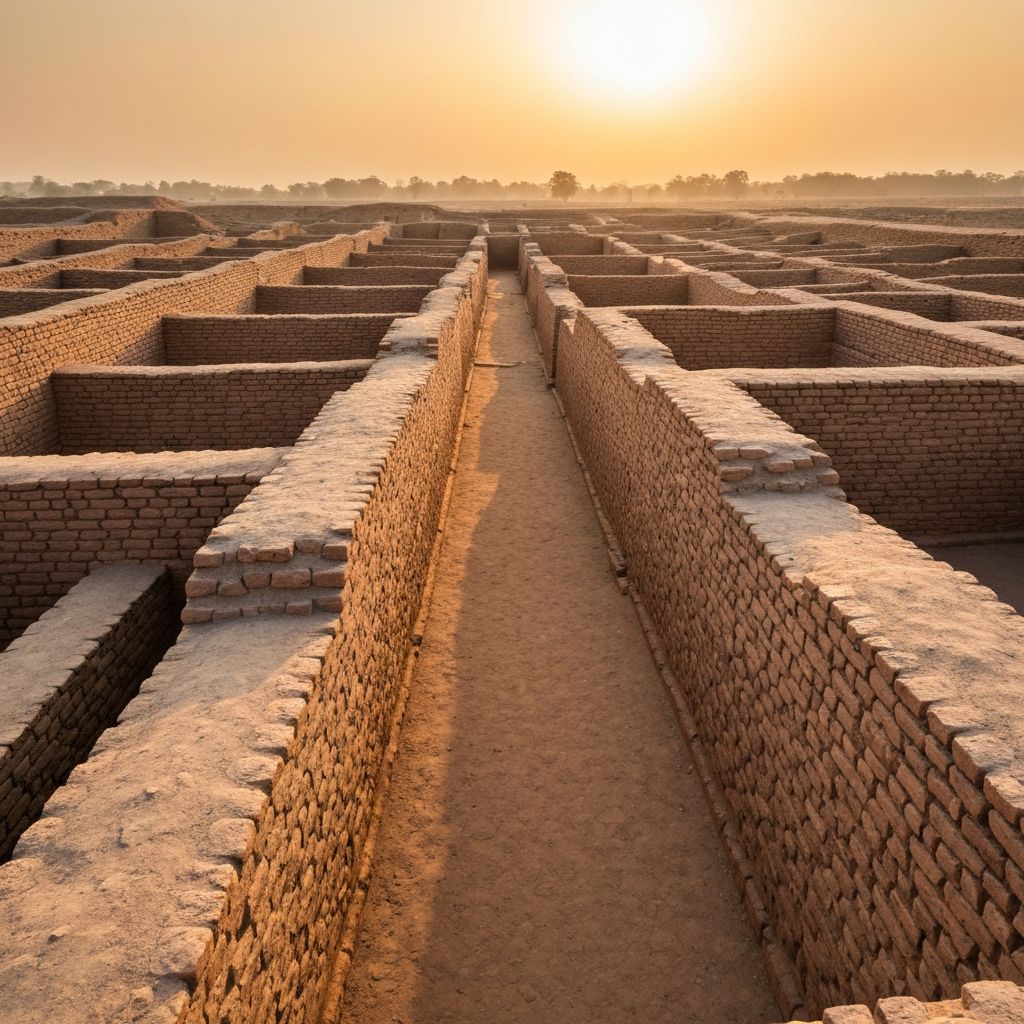
The Harappans were master urban planners. Their cities followed a grid pattern with streets oriented to cardinal directions, intersecting at right angles. Each city was divided into a citadel (upper town) and a lower town, with sophisticated drainage systems that were not matched in the Western world until Roman times, nearly 2,000 years later.
Houses were built of standardized, kiln-fired bricks in a uniform ratio of 4:2:1, suggesting centralized planning and quality control. Most homes had private wells, bathrooms, and were connected to the city's drainage system through covered drains that ran along the streets.
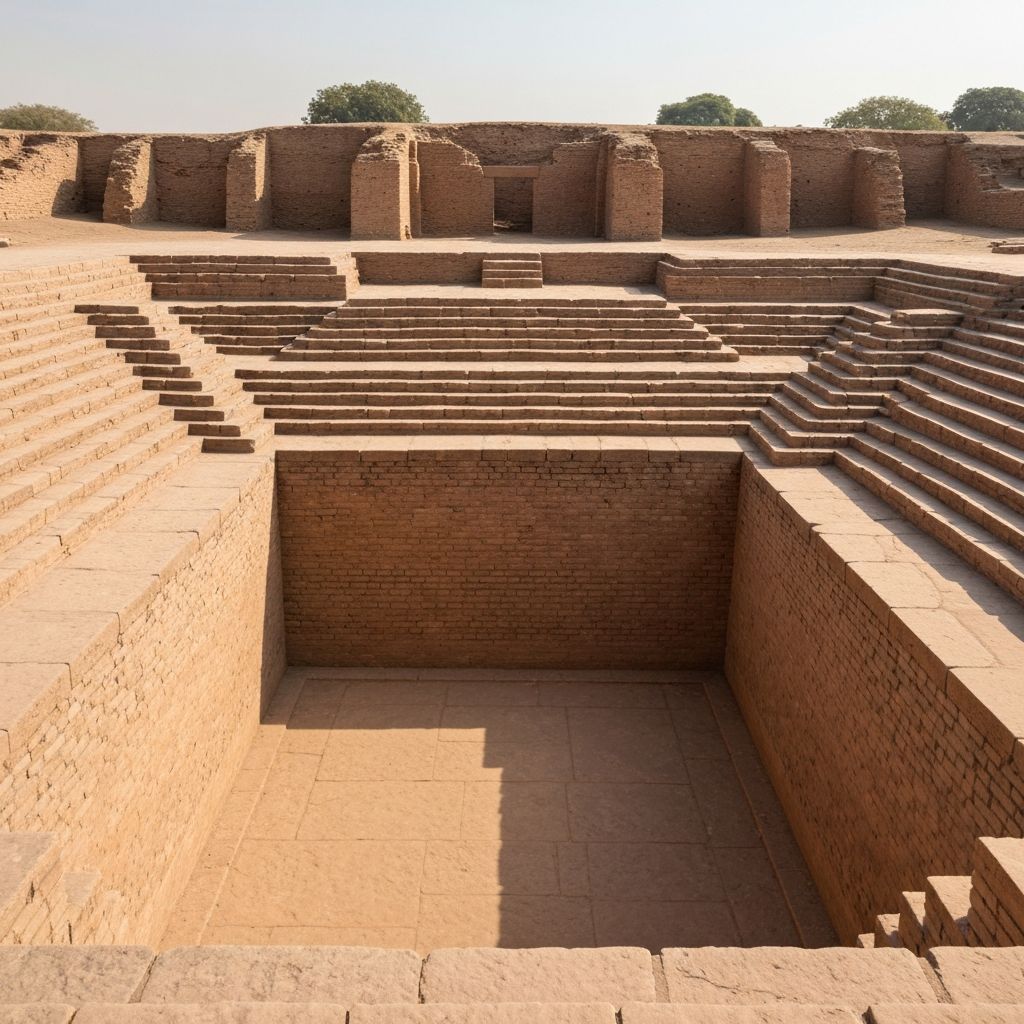
The Great Bath of Mohenjo-daro - perhaps the earliest public water tank
The Great Bath
One of the most iconic structures of the civilization is the Great Bath at Mohenjo-daro. This sophisticated tank, measuring approximately 12 meters long, 7 meters wide, and 2.4 meters deep, was made watertight with a layer of bitumen. Surrounded by a corridor and rooms, it is believed to have served ritual purification purposes, foreshadowing the importance of water in later Indian religious practices.
Art and Craftsmanship
The Harappans were skilled artisans. They produced exquisite jewelry, terracotta figurines, and bronze sculptures. The famous bronze "Dancing Girl" of Mohenjo-daro, with her confident pose and adorned arms, speaks to a society that valued aesthetics and personal adornment.
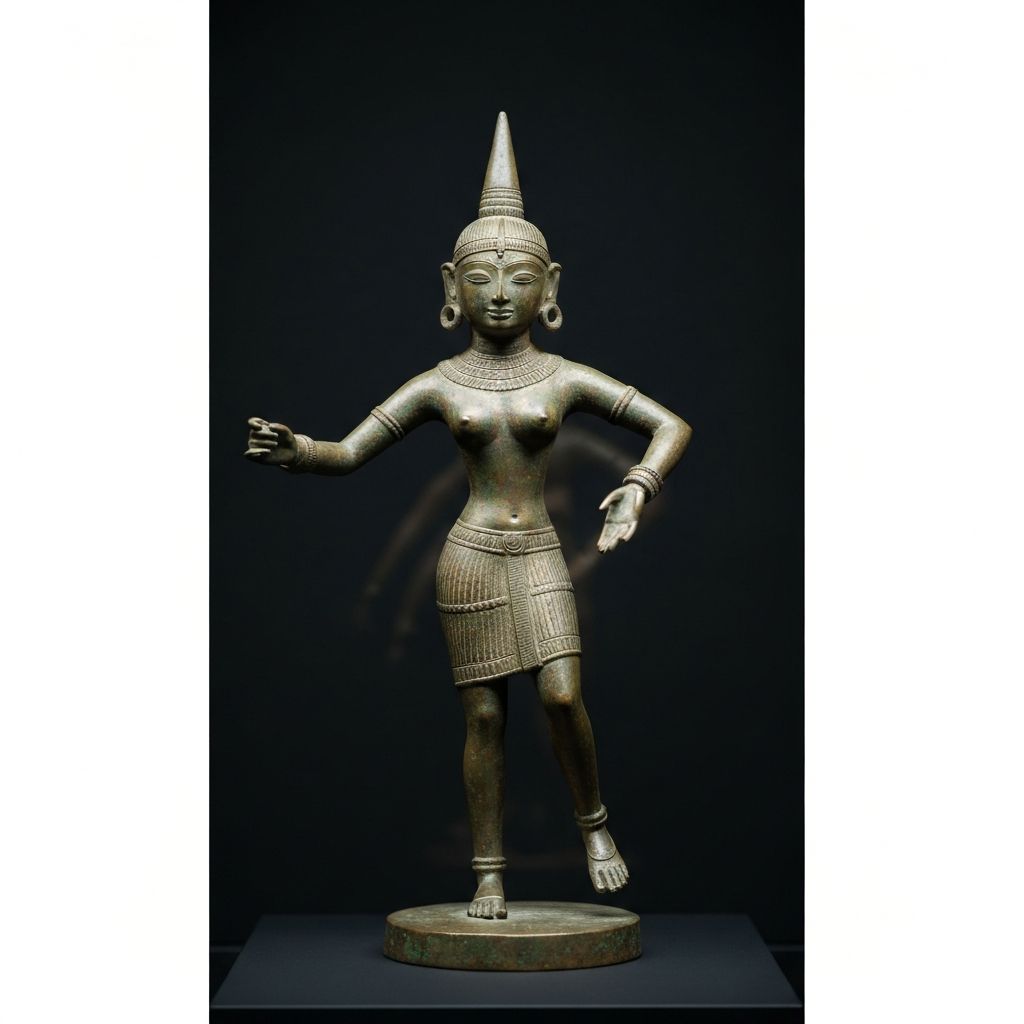
The Dancing Girl - a masterpiece of bronze casting from Mohenjo-daro
The Mysterious Script
One of the enduring mysteries of the Indus Valley Civilization is its undeciphered script. Found on thousands of seals, tablets, and pottery fragments, the script consists of approximately 400-600 distinct signs. Despite over a century of attempts, scholars have not been able to crack the code, leaving the language and much of the civilization's history shrouded in mystery.
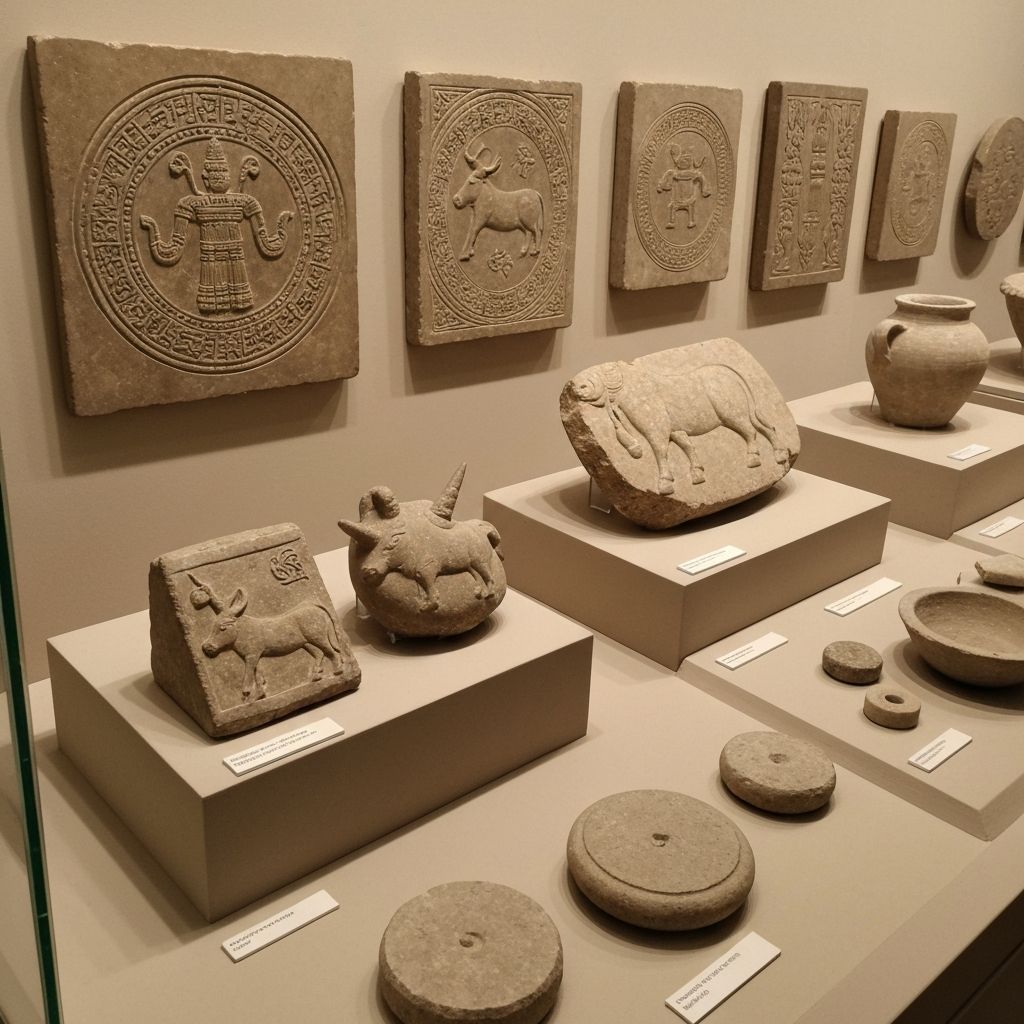
Indus seals featuring the unicorn bull and the undeciphered script
Trade and Economy
The Harappans were prolific traders. Archaeological evidence shows trade connections with Mesopotamia, the Persian Gulf, and Central Asia. The port city of Lothal in Gujarat featured one of the world's earliest known docks. Standardized weights and measures suggest a well-organized economy and sophisticated commercial practices.
Major Sites
- Mohenjo-daro - "Mound of the Dead"
- Harappa - The first discovered site
- Dholavira - Sophisticated water management
- Lothal - Ancient port city
- Rakhigarhi - Largest IVC site
- Kalibangan - Fire altars discovered
Key Achievements
- Grid-based urban planning
- Advanced drainage systems
- Standardized weights and measures
- Bronze and copper metallurgy
- Maritime trade networks
- Sophisticated craft production
The Decline
Around 1900 BCE, the great cities began to decline. Theories for the civilization's end include climate change (shifting monsoon patterns and river course changes), tectonic events, overexploitation of resources, and possible epidemic diseases. The decline was gradual rather than sudden, with populations dispersing to smaller settlements and eventually assimilating with new cultural groups.
Legacy and Continuity
Though the civilization declined, its influence persisted. Many scholars believe that elements of Harappan culture - such as the emphasis on ritual bathing, certain religious symbols, and craft traditions - were absorbed into later Indian civilization. The Pashupati seal, depicting a seated figure surrounded by animals, is often cited as a possible precursor to the Hindu god Shiva.
The Indus Valley Civilization reminds us that sophisticated urban culture in the Indian subcontinent is not a recent development but stretches back nearly five millennia - a testament to the ingenuity and organizational capabilities of our ancestors.
As archaeological work continues and new technologies aid in analysis, our understanding of this remarkable civilization deepens. Each discovery adds another piece to the puzzle of these ancient people who built cities of brick, traded across oceans, and left behind a script we still cannot read. The Indus Valley Civilization stands as a humbling reminder of how much of human history remains to be uncovered and understood.