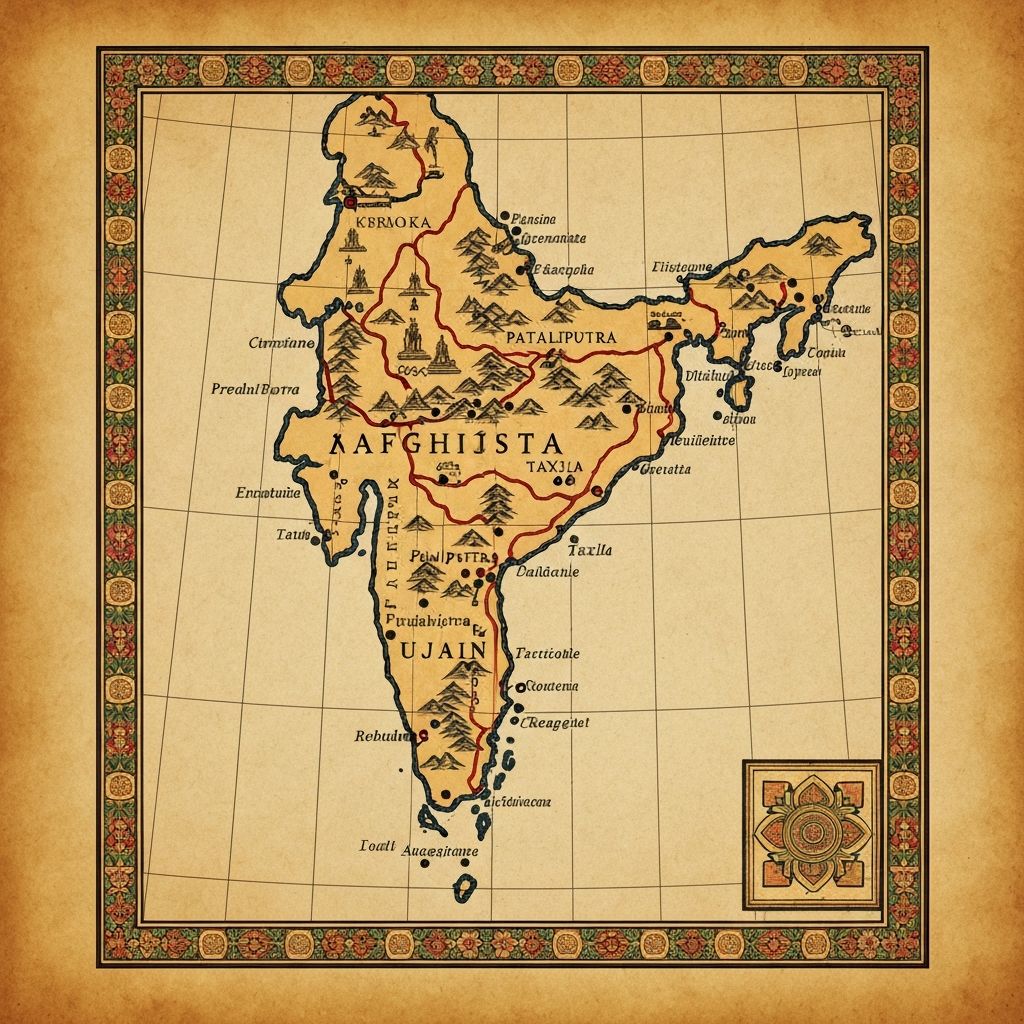
The Mauryan Empire
The first empire to unite most of the Indian subcontinent, renowned for its sophisticated administration, flourishing trade, and the transformative reign of Ashoka the Great.
Region
Indian Subcontinent
Period
322 - 185 BCE
Peak Period
268 - 232 BCE
Founded By
Chandragupta Maurya
The Mauryan Empire (322-185 BCE) was the first pan-Indian empire, stretching from the Hindu Kush mountains in the west to Bengal in the east, and from the Himalayas in the north to the Deccan plateau in the south. At its greatest extent under Ashoka, it encompassed approximately 5 million square kilometers, making it one of the largest empires of the ancient world.
Founded by Chandragupta Maurya with the strategic guidance of his mentor Kautilya (also known as Chanakya), the empire represented a quantum leap in political organization, administrative sophistication, and economic integration for the Indian subcontinent.
Rise of Chandragupta Maurya
In 322 BCE, a young warrior named Chandragupta Maurya, aided by the brilliant political strategist Kautilya, overthrew the Nanda dynasty and established the Mauryan Empire at Pataliputra (modern-day Patna). His rise coincided with Alexander the Great's withdrawal from India, and Chandragupta capitalized on the power vacuum left behind.
Chandragupta commanded a formidable army estimated at 600,000 infantry, 30,000 cavalry, and 9,000 war elephants. He successfully defeated Seleucus Nicator, one of Alexander's generals, and through a peace treaty in 305 BCE, acquired territories including parts of modern-day Afghanistan, Baluchistan, and Makran.
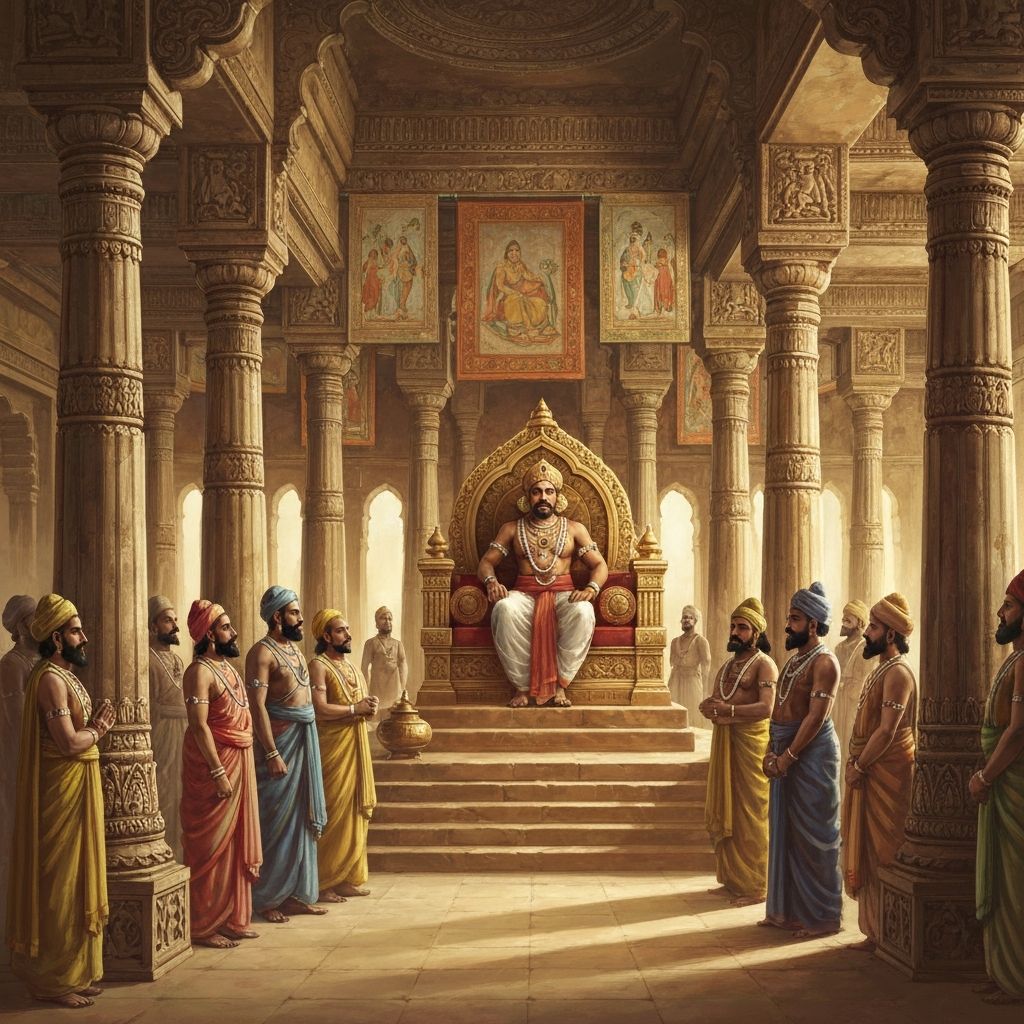
The court of Chandragupta Maurya - center of the first pan-Indian empire
Kautilya's Arthashastra
The intellectual foundation of the Mauryan state was laid by Kautilya in his masterwork, the Arthashastra - an ancient Indian treatise on statecraft, economic policy, and military strategy. Written in Sanskrit, this text predates Machiavelli's "The Prince" by nearly two millennia and remains one of the most comprehensive works on governance ever produced.
The Arthashastra covers topics ranging from taxation and treasury management to espionage, diplomacy, law enforcement, and warfare. It advocates for a strong, centralized state with an elaborate bureaucracy and intelligence network - principles that the Mauryan administration put into practice.
"The king shall consider as good, not what pleases himself but what pleases his subjects."
— Kautilya, Arthashastra
Administrative Excellence
The Mauryan Empire was divided into provinces, districts, and villages, each with designated officials responsible for tax collection, justice, and public welfare. The capital Pataliputra was governed by a city council of 30 members divided into six boards, each overseeing different aspects of urban administration.
Art and Craftsmanship
The Harappans were skilled artisans. They produced exquisite jewelry, terracotta figurines, and bronze sculptures. The famous bronze "Dancing Girl" of Mohenjo-daro, with her confident pose and adorned arms, speaks to a society that valued aesthetics and personal adornment.
A sophisticated spy network permeated society, keeping the emperor informed about public sentiment, potential threats, and the conduct of officials. The road system was extensive, with the Uttarapatha (Northern Road) connecting Pataliputra to Taxila over 1,500 kilometers away.
Key Officials
- Mahamatras - Senior administrators
- Rajukas - Revenue officers
- Yuktas - Subordinate officials
- Pradesika - District officers
Economic Features
- Standardized weights and measures
- Silver punch-marked coins
- State-controlled industries
- Extensive trade networks
Ashoka the Great
The Mauryan Empire reached its zenith under Emperor Ashoka (268-232 BCE), the grandson of Chandragupta. After a bloody conquest of Kalinga (modern Odisha) in 261 BCE, which resulted in over 100,000 deaths and 150,000 deportations, Ashoka experienced a profound transformation and embraced Buddhism.
This conversion marked a pivotal moment in Indian history. Ashoka renounced war and dedicated himself to Dhamma (righteous conduct), promoting non-violence, religious tolerance, and ethical governance. His transformation from "Chandashoka" (Ashoka the Fierce) to "Dharmashoka" (Ashoka the Righteous) remains one of history's most remarkable moral conversions.
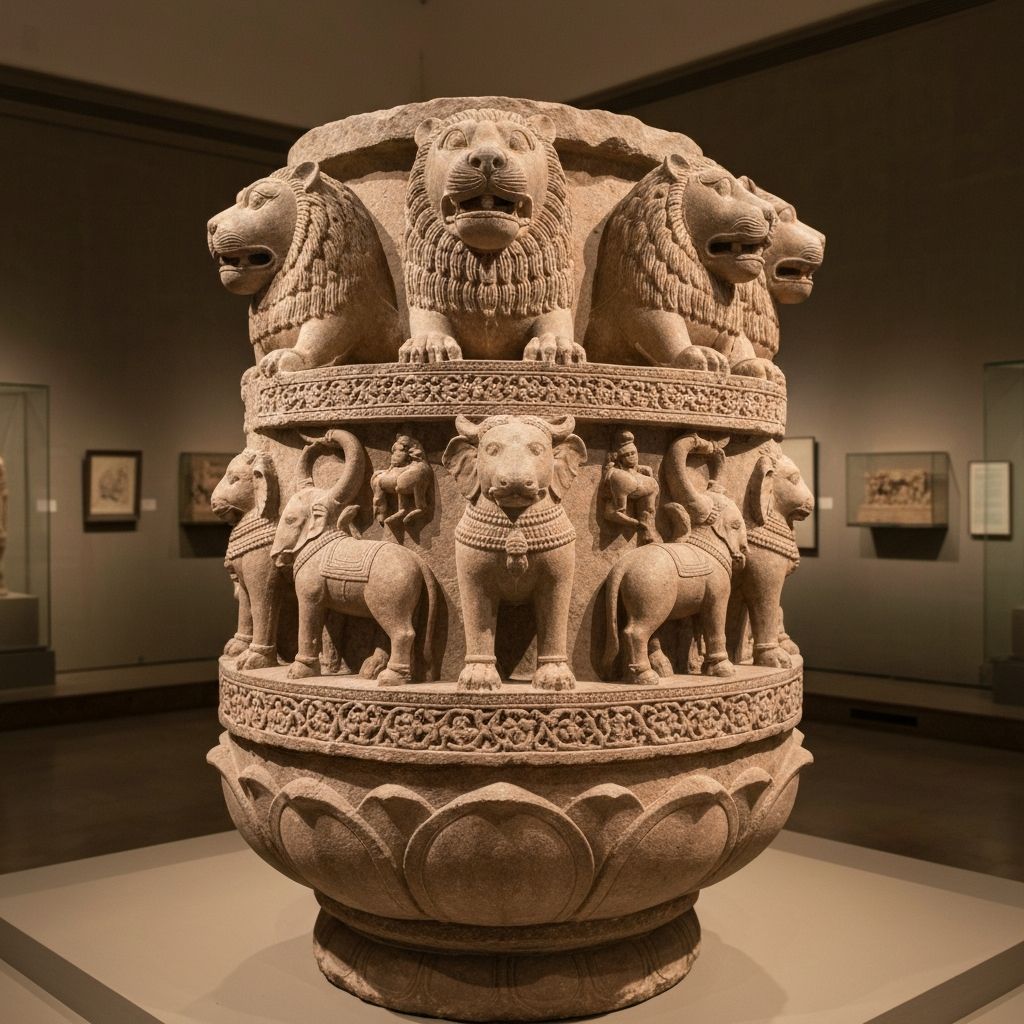
The Lion Capital of Ashoka - symbol of India's heritage adopted as the national emblem
The Edicts of Ashoka
Ashoka communicated his policies and moral teachings through a series of edicts inscribed on rocks and pillars throughout his empire - the first tangible evidence of written communication by an Indian ruler to his subjects. Over 30 of these inscriptions have been discovered, written in Prakrit, Greek, and Aramaic.
These edicts speak of respect for all religions, kindness to animals, honesty, and truthfulness. They established the world's first animal welfare laws, appointed officials called Dhamma Mahamatras to spread ethical teachings, and created rest houses and hospitals for both humans and animals along major routes.
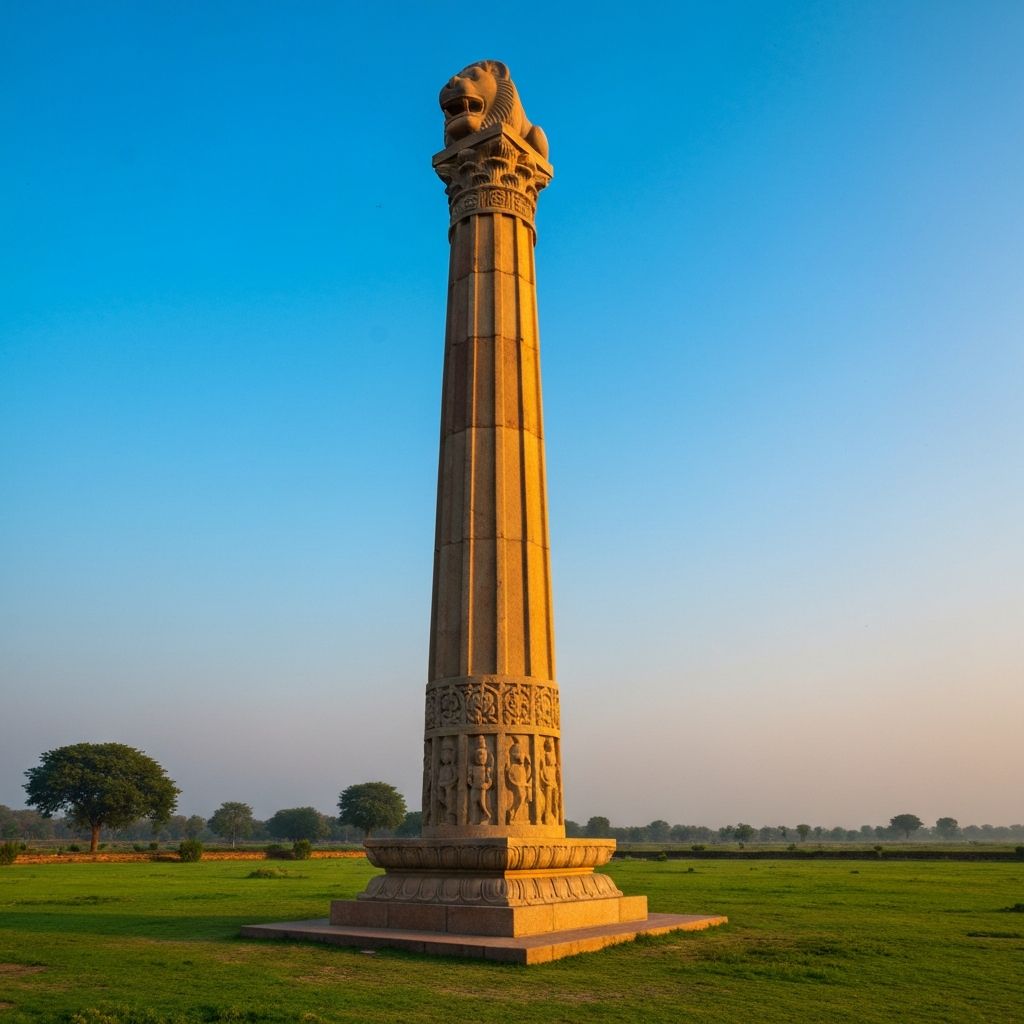
An Ashoka Pillar - these inscribed monuments spread the emperor's teachings across the subcontinent
"All men are my children. As for my own children I desire that they may be provided with all the welfare and happiness of this world and of the next, so do I desire for all men as well."
— Ashoka, Rock Edict VI
Major Pillar Locations
Spread of Buddhism
Ashoka played a crucial role in transforming Buddhism from a regional Indian sect into a world religion. He convened the Third Buddhist Council at Pataliputra and sent missionaries to Sri Lanka, Central Asia, Southeast Asia, and even to the Hellenistic kingdoms of the Mediterranean.
His son Mahinda and daughter Sanghamitta carried Buddhism to Sri Lanka, where it took deep root and flourishes to this day. The great stupas at Sanchi, Bharhut, and Amaravati were either built or expanded during his reign, becoming centers of Buddhist learning and pilgrimage.
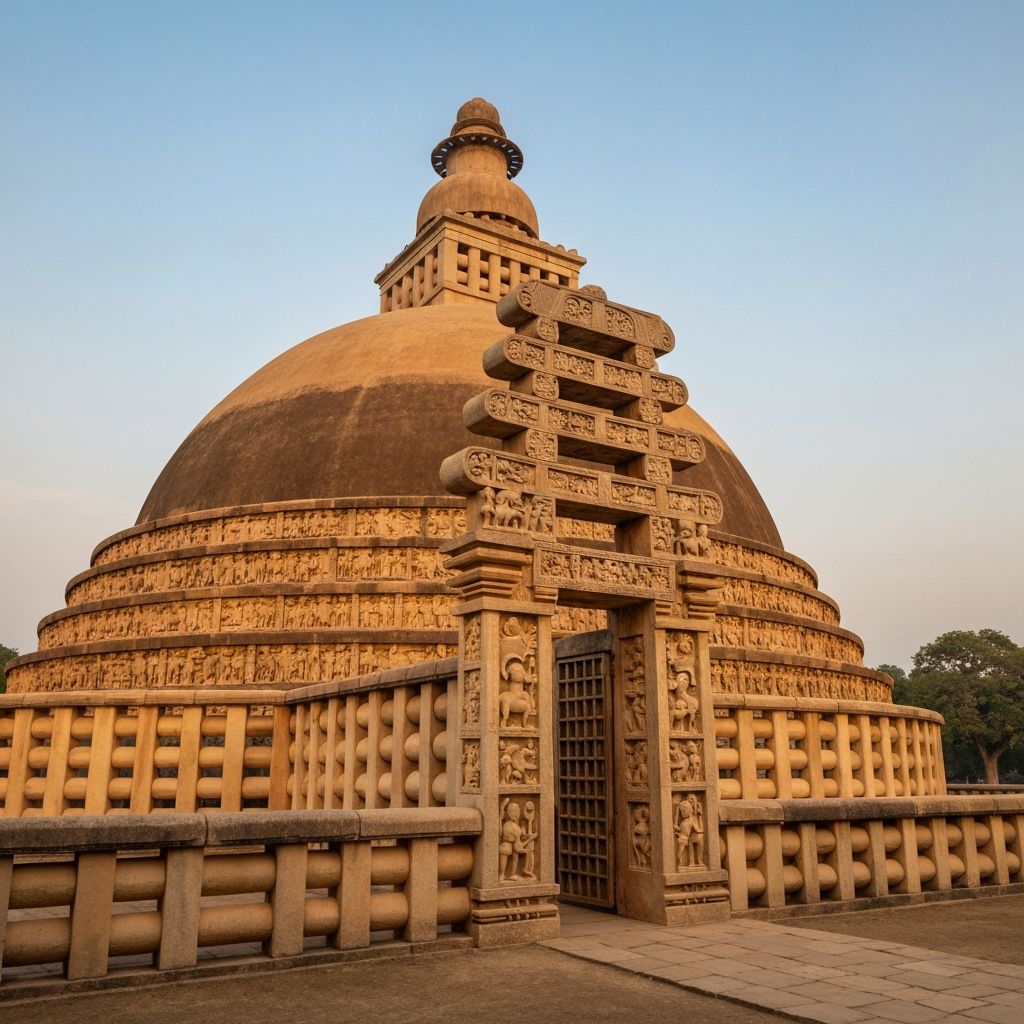
The Great Stupa at Sanchi - a UNESCO World Heritage Site built during the Mauryan era
The Decline
After Ashoka's death in 232 BCE, the empire gradually weakened under his successors. The vast territories proved difficult to administer, and regional governors began asserting independence. The last Mauryan emperor, Brihadratha, was assassinated in 185 BCE by his commander-in-chief Pushyamitra Shunga, who founded the Shunga dynasty.
Various factors contributed to the decline: the financial strain of Ashoka's welfare programs, the weakening of military traditions due to the emphasis on non-violence, administrative overextension, and the rise of regional powers. However, the administrative framework and cultural achievements of the Mauryas continued to influence Indian governance for centuries.
Legacy and Continuity
The Mauryan Empire left an indelible mark on Indian civilization. The Lion Capital of Ashoka at Sarnath was adopted as the national emblem of independent India, and the Ashoka Chakra (wheel) adorns the Indian flag. The ideals of Dhamma - religious tolerance, non-violence, and ethical governance - continue to resonate in Indian political thought.
The administrative structures established by the Mauryas influenced subsequent Indian empires, including the Guptas and the Mughals. The spread of Buddhism initiated by Ashoka shaped the cultural landscape of Asia, from Afghanistan to Japan. The Mauryan Empire remains a source of pride and inspiration, demonstrating that India was once home to one of the world's most sophisticated and humane civilizations.
Key Moments
Timeline
Milestones of the Mauryan Empire
Empire Founded
Chandragupta Maurya establishes the Mauryan Empire
Peace with Seleucids
Peace treaty with Seleucus Nicator
Bindusara's Reign
Bindusara succeeds Chandragupta
Ashoka Ascends
Ashoka ascends to the throne
Kalinga War
Ashoka's conversion to Buddhism after the war
Third Buddhist Council
Buddhist Council held at Pataliputra
Death of Ashoka
The great emperor passes away
Empire Ends
End of the Mauryan Empire