Indian Philosophy
The six orthodox schools, heterodox traditions, and millennia of inquiry into consciousness, reality, liberation, and the nature of existence.
Tradition
3,000+ Years
Orthodox Schools
6 Darshanas
Heterodox
Buddhism, Jainism, Charvaka
Global Influence
Worldwide Study
Indian philosophy ('Darshana' — that which is seen or realised) is among the world's oldest and most diverse philosophical traditions. Unlike Western philosophy's emphasis on abstract speculation, Indian thought is deeply concerned with liberation (moksha) from suffering and the cycle of rebirth. Philosophy is not merely intellectual; it is a path to be lived and realised.
The six orthodox (astika) schools accept the authority of the Vedas; heterodox (nastika) schools like Buddhism, Jainism, and Charvaka do not. Yet all engage with fundamental questions: What is real? What is the self? How do we know? What is right action? How is liberation attained?
Major Traditions
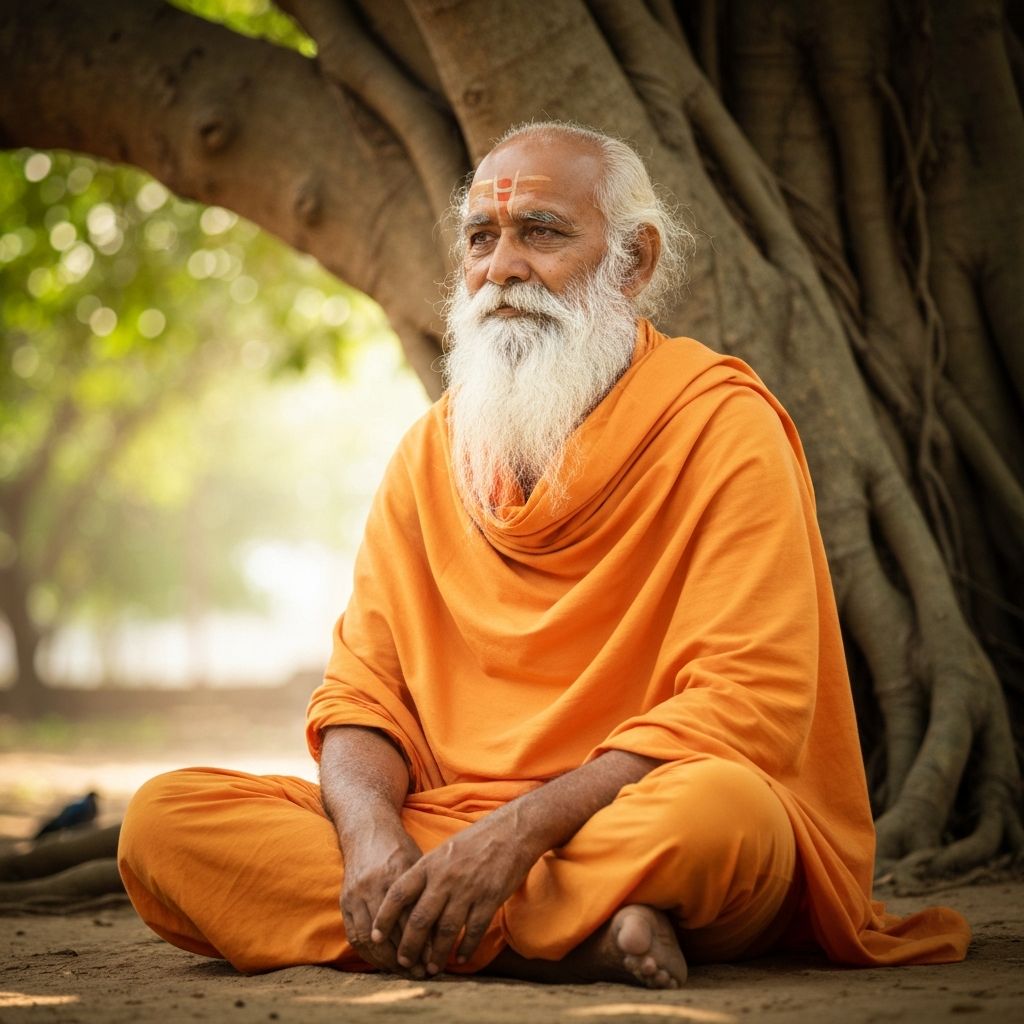
Vedanta
वेदान्त
Badarayana (Brahma Sutras); Adi Shankaracharya, Ramanuja, Madhva
Vedanta ('end of the Vedas') is the most influential school of Indian philosophy, exploring the nature of Brahman (ultimate reality) and its relationship to Atman (the self). Three major sub-schools exist: Advaita (non-dualism) of Shankaracharya teaches that Brahman alone is real and the individual self is identical with it; Vishishtadvaita (qualified non-dualism) of Ramanuja sees souls as distinct but inseparable from Brahman; Dvaita (dualism) of Madhva maintains eternal distinction between God and souls.
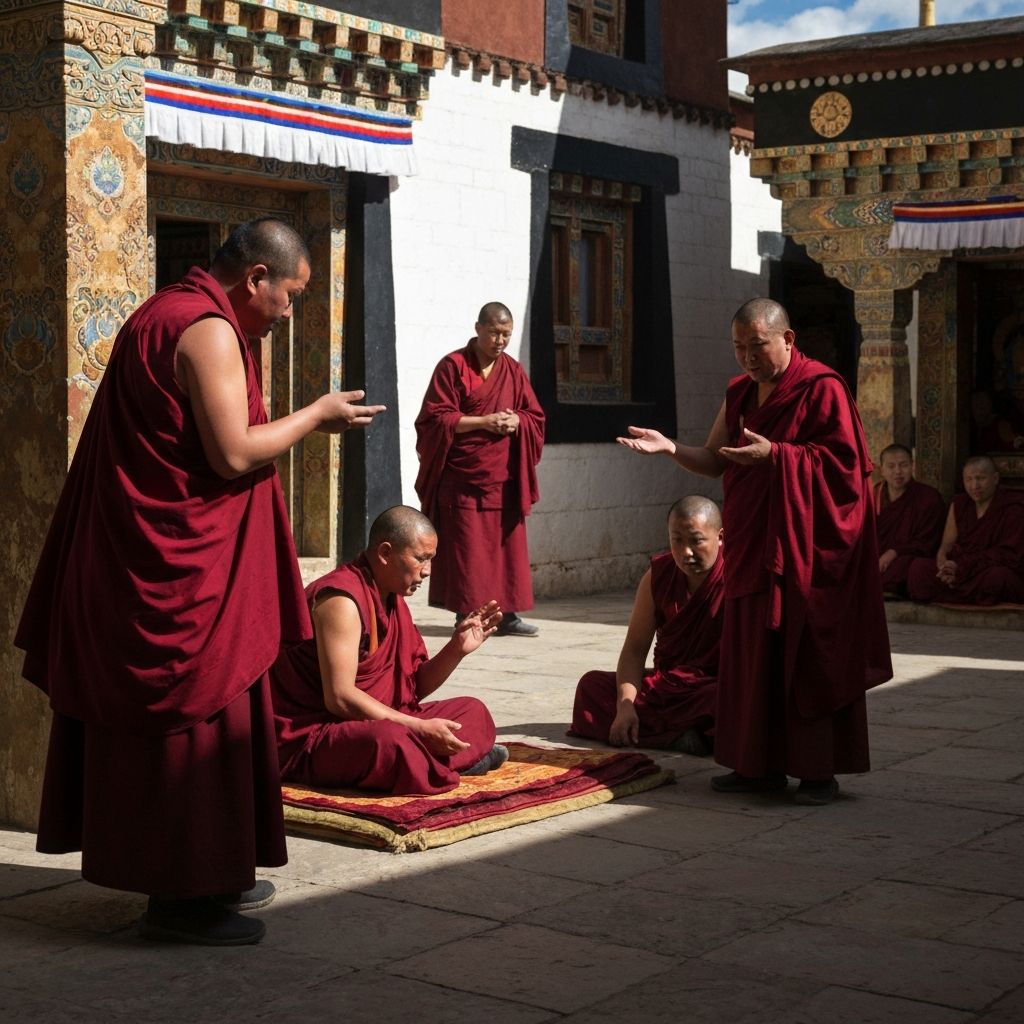
Samkhya & Yoga
सांख्य & योग
Kapila (Samkhya); Patanjali (Yoga)
Samkhya is one of the oldest philosophical systems, presenting a dualistic metaphysics of Purusha (consciousness) and Prakriti (matter). Liberation comes through discriminative knowledge (viveka) that separates the eternal witness from the evolving natural world. Yoga, systematised by Patanjali, accepts Samkhya's metaphysics but adds practical disciplines — the eight-limbed path — to still the mind and realise the distinction between Purusha and Prakriti.
Six Orthodox Schools
The Shad Darshanas accept the authority of the Vedas and form the backbone of classical Hindu philosophy.
Samkhya
Founder: Kapila
Text: Samkhya Karika
Dualism of Purusha (consciousness) and Prakriti (matter); enumeration of 25 tattvas
Yoga
Founder: Patanjali
Text: Yoga Sutras
Eight-limbed path to still the mind and realise the true self
Nyaya
Founder: Gautama
Text: Nyaya Sutras
Logic, epistemology, valid means of knowledge (pramanas)
Vaisheshika
Founder: Kanada
Text: Vaisheshika Sutras
Atomism, categories of reality (padarthas), natural philosophy
Purva Mimamsa
Founder: Jaimini
Text: Mimamsa Sutras
Vedic ritual interpretation, dharma, and karmic action
Vedanta
Founder: Badarayana
Text: Brahma Sutras
Nature of Brahman, Atman, and moksha; Upanishadic philosophy
Heterodox Schools
Buddhism
Founder: Siddhartha Gautama (Buddha)
Four Noble Truths, Eightfold Path, Anatta (no-self), Pratityasamutpada (dependent origination)
Jainism
Founder: Mahavira (24th Tirthankara)
Ahimsa, Anekantavada (many-sidedness), Karma as material substance, Kevala Jnana
Charvaka (Lokayata)
Founder: Brihaspati
Materialism, rejection of afterlife and Vedic authority, perception as only pramana
Ajivika
Founder: Makkhali Gosala
Strict determinism (niyati), denial of free will, ascetic practices
Key Philosophers
Adi Shankaracharya
788–820 CE — Advaita Vedanta
Systematised non-dualism; commentaries on Upanishads, Gita, Brahma Sutras
Ramanuja
1017–1137 CE — Vishishtadvaita
Qualified non-dualism; devotion (bhakti) as path to Vishnu
Madhvacharya
1238–1317 CE — Dvaita
Strict dualism; eternal distinction between God and souls
Nagarjuna
~150–250 CE — Madhyamaka Buddhism
Sunyata (emptiness); two truths doctrine
Patanjali
~200 BCE — Yoga
Yoga Sutras; eight-limbed path to samadhi
Kapila
~6th century BCE — Samkhya
Enumeration of 25 tattvas; Purusha-Prakriti dualism
Core Concepts
Brahman
The ultimate, infinite, formless reality underlying all existence (Vedanta)
Atman
The eternal self or soul, considered identical to Brahman in Advaita
Maya
The power of illusion that veils the true nature of reality
Karma
The law of cause and effect binding actions to consequences across lives
Moksha
Liberation from the cycle of birth and death (samsara)
Dharma
Cosmic order, moral law, duty, and righteous conduct
Samsara
The cycle of birth, death, and rebirth driven by karma
Pramana
Valid means of knowledge — perception, inference, testimony, etc.
Pramanas — Valid Means of Knowledge
Pratyaksha
Perception
Accepted by: All schools
Anumana
Inference
Accepted by: All except Charvaka
Shabda
Verbal testimony
Accepted by: Most orthodox schools
Upamana
Comparison/Analogy
Accepted by: Nyaya, Mimamsa, Vedanta
Arthapatti
Postulation
Accepted by: Mimamsa, Advaita Vedanta
Anupalabdhi
Non-perception
Accepted by: Kumarila's Mimamsa, Advaita