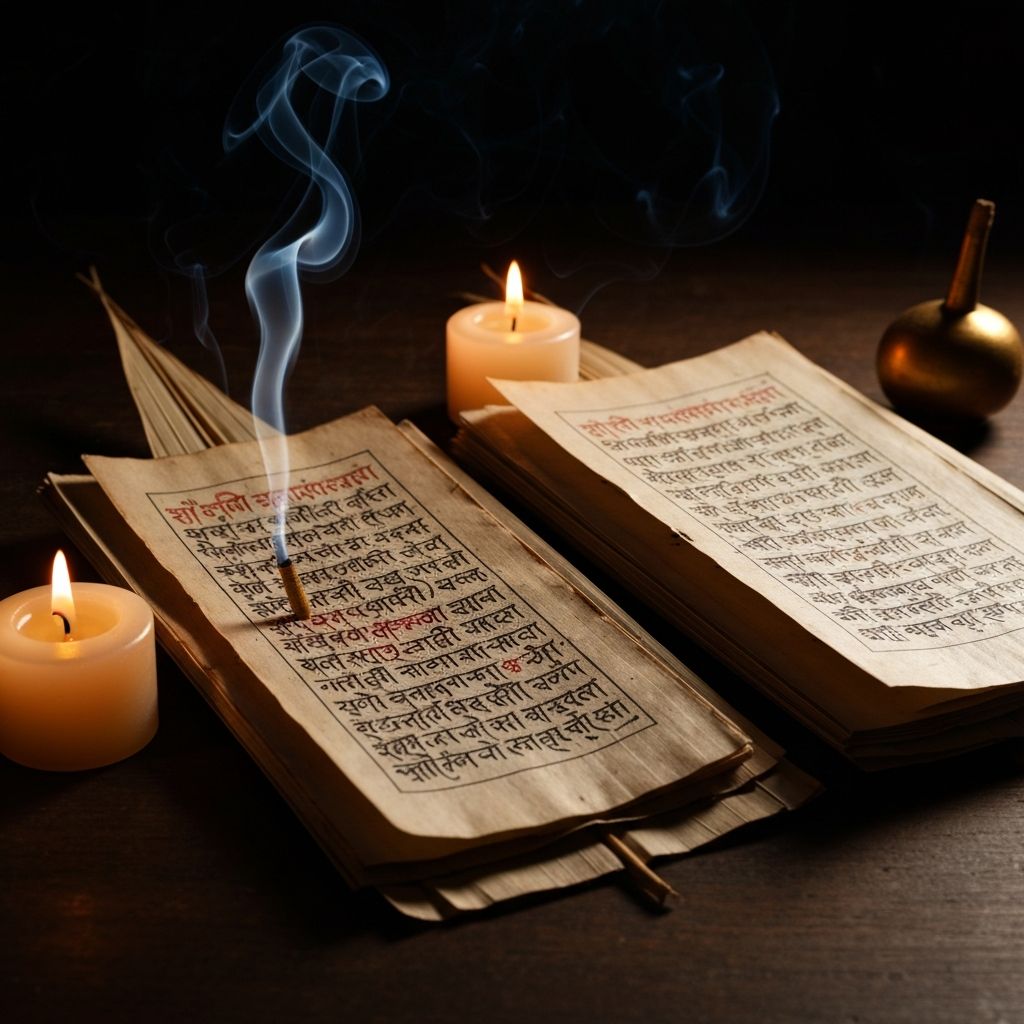
Vedic Scriptures
The sacred texts that have guided seekers for millennia — from the cosmic hymns of the Vedas to the philosophical depths of the Upanishads.
Age
3,500+ Years
Language
Sanskrit
Vedas
4 Principal Texts
Upanishads
200+ Texts
India's sacred literature is among the most ancient and voluminous in the world. The Vedic corpus — transmitted orally for centuries before being written down — forms the bedrock of Hindu philosophy, ritual, and spiritual practice. These texts are classified into Shruti ("that which is heard" — revealed scripture) and Smriti ("that which is remembered" — traditional texts composed by sages).
From the cosmic hymns of the Rigveda to the philosophical inquiries of the Upanishads, from the epic narratives of the Mahabharata and Ramayana to the devotional poetry of the Puranas, these scriptures offer guidance on every aspect of human existence — from ritual and law to metaphysics and liberation.
The Revealed Scriptures
~1500–1200 BCE
The Four Vedas
चतुर्वेद
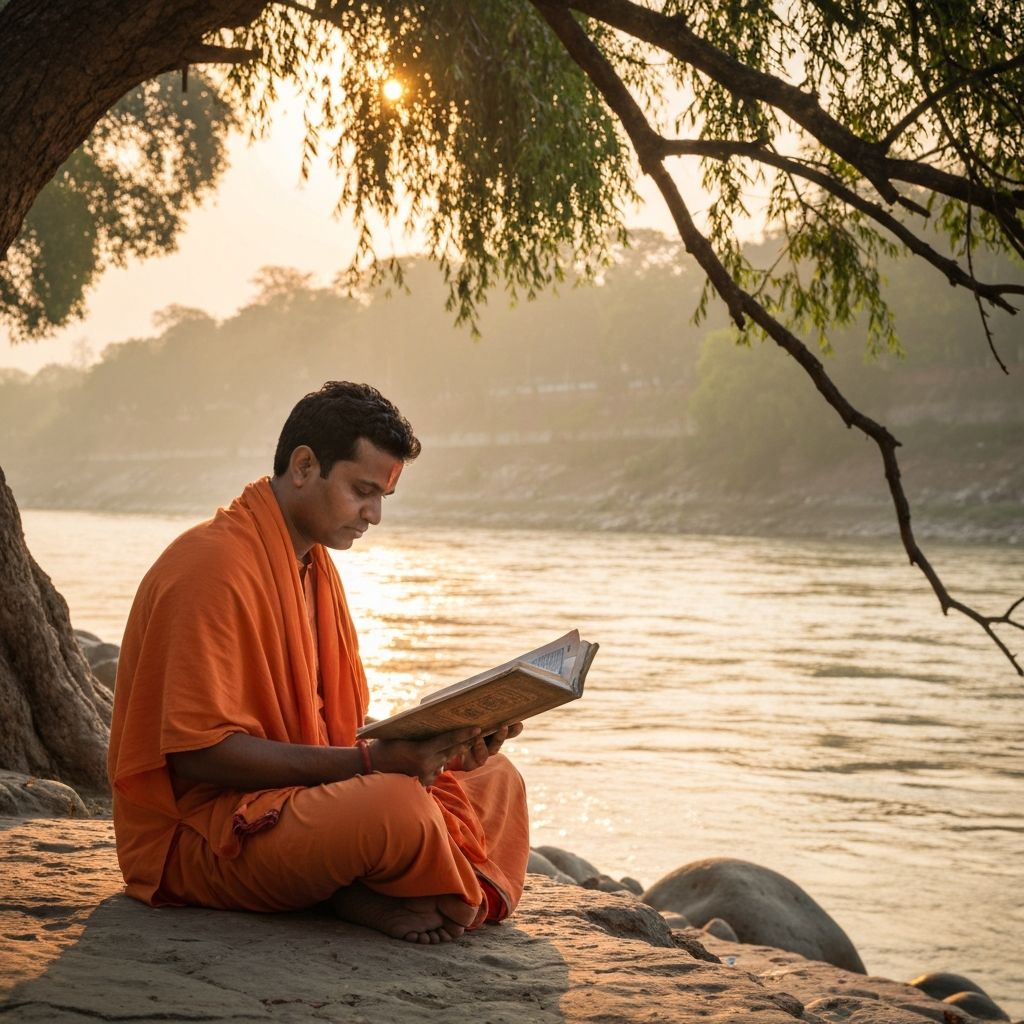
The Vedas are the oldest scriptures of Hinduism, considered 'apaurusheya' (not of human origin). The Rigveda contains hymns to deities; the Yajurveda holds sacrificial formulas; the Samaveda comprises melodies for rituals; and the Atharvaveda includes spells, charms, and philosophical hymns. Together they form the Shruti — that which is heard — the most authoritative class of Hindu scripture.
~800–200 BCE
The Upanishads
उपनिषद्
The Upanishads are the philosophical conclusion of the Vedas, known as Vedanta ('end of the Vedas'). Over 200 Upanishads exist, with 13 considered principal. They explore the nature of Brahman (ultimate reality), Atman (the self), karma, moksha, and the relationship between the individual soul and the cosmos. Their inquiry 'Who am I?' remains central to Indian spiritual thought.
Four Divisions of Each Veda
Samhitas
Hymn Collections
Mantras, prayers, and hymns to deities
Brahmanas
Ritual Texts
Prose explanations of Vedic rituals and ceremonies
Aranyakas
Forest Treatises
Mystical interpretations for forest-dwelling hermits
Upanishads
Philosophical Dialogues
Metaphysical discussions on Brahman and Atman
Major Scriptures
Bhagavad Gita
The 'Song of God' — Krishna's counsel to Arjuna on duty, devotion, and self-realisation, set within the Mahabharata.
Mahabharata
The world's longest epic poem, containing the Gita, the Shanti Parva on governance, and countless moral tales.
Ramayana
Valmiki's epic of Rama's life, embodying dharma, devotion, and the ideal of righteous kingship.
Puranas
Encyclopaedic texts on cosmology, genealogy, legends of gods, kings, and sages — including the Bhagavata, Vishnu, and Shiva Puranas.
Manusmriti
Ancient legal text on dharma, social conduct, and duties — historically influential though debated in modern times.
Yoga Sutras
Patanjali's foundational text on yoga philosophy, outlining the eight-limbed path to liberation.
Principal Upanishads
The 10–13 principal Upanishads commented upon by Adi Shankaracharya form the philosophical foundation of Vedanta.
Isha
Shukla Yajurveda
The Lord pervades all; renunciation and action
Kena
Samaveda
The power behind the senses; nature of Brahman
Katha
Krishna Yajurveda
Nachiketa's dialogue with Yama on death and immortality
Prashna
Atharvaveda
Six questions on prana, creation, and meditation
Mundaka
Atharvaveda
Higher vs lower knowledge; Brahman as the imperishable
Mandukya
Atharvaveda
Analysis of OM and the four states of consciousness
Taittiriya
Krishna Yajurveda
Five sheaths (koshas); Brahman as bliss
Aitareya
Rigveda
Creation; consciousness as Brahman
Chandogya
Samaveda
'Tat tvam asi' — That thou art; Uddalaka and Shvetaketu
Brihadaranyaka
Shukla Yajurveda
Largest Upanishad; Yajnavalkya's teachings on Atman
Key Teachings
Brahman
The ultimate, formless, infinite reality underlying all existence
Atman
The eternal self or soul, identical in essence to Brahman
Maya
The illusory nature of the phenomenal world
Karma
The law of cause and effect governing actions and their consequences
Dharma
Cosmic order, moral law, duty, and righteous conduct
Moksha
Liberation from the cycle of birth and death; union with Brahman