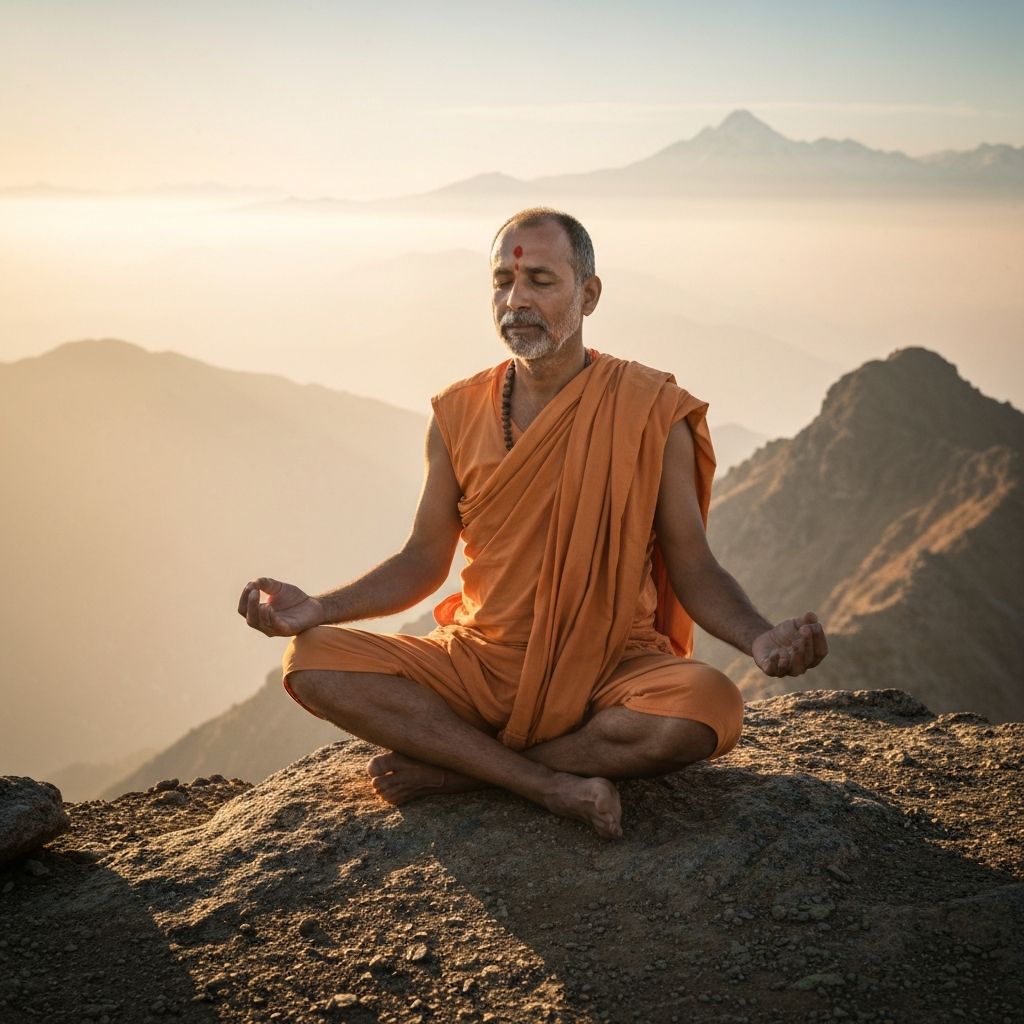
Yoga & Meditation
India's most profound gift to humanity — a science of the self spanning five thousand years of unbroken practice and inquiry.
Origins
5,000+ Years Ago
Key Text
Yoga Sutras of Patanjali
Global Practitioners
300+ Million Worldwide
International Day
21st June — UN Recognised
The word 'yoga' comes from the Sanskrit root 'yuj' — to yoke, to unite. At its heart, yoga is the science of integrating body, mind, and spirit into a state of complete harmony. Far older than its modern gym-studio incarnation, yoga is referenced in the Rigveda (~1500 BCE) and systematised by the sage Patanjali in the Yoga Sutras (~200 BCE) into an eight-limbed path toward liberation.
India is also the birthplace of the world's most diverse meditation traditions — from the Buddhist Vipassana technique that travels inward to observe sensation, to the devotional ecstasy of Bhakti meditation, the silent inquiry of Advaita Vedanta, and the energy-awakening practices of Tantra. On 11 December 2014, the United Nations proclaimed 21 June as the International Day of Yoga, recognising India's contribution to global well-being.
Core Traditions
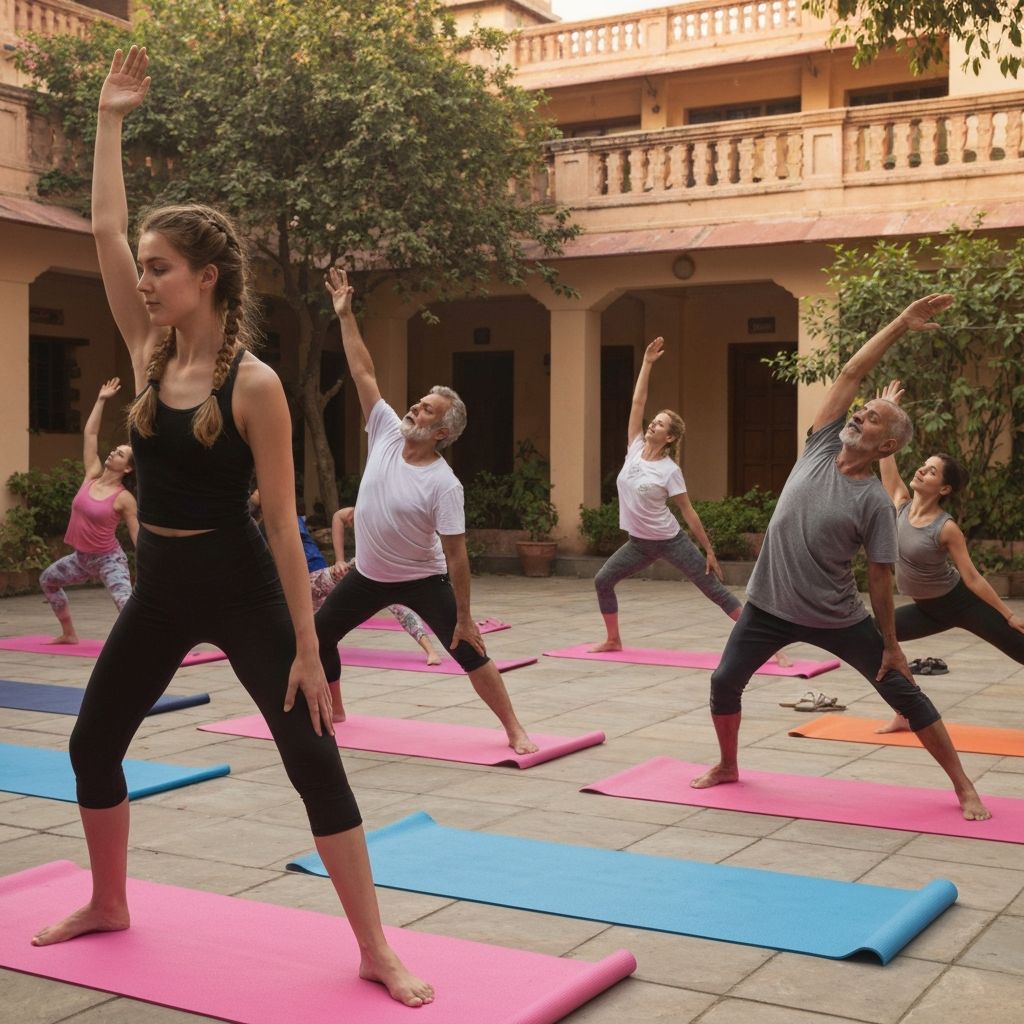
Medieval India, 15th century
Hatha Yoga
हठ योग
Hatha Yoga is the foundation of most modern yoga practice, emphasising physical postures (asanas), breath control (pranayama), and purification techniques (shatkarmas). The 15th-century text Hatha Yoga Pradipika by Swatmarama codified its practices. Today, almost all popular yoga styles — Iyengar, Ashtanga, Vinyasa — are rooted in Hatha.
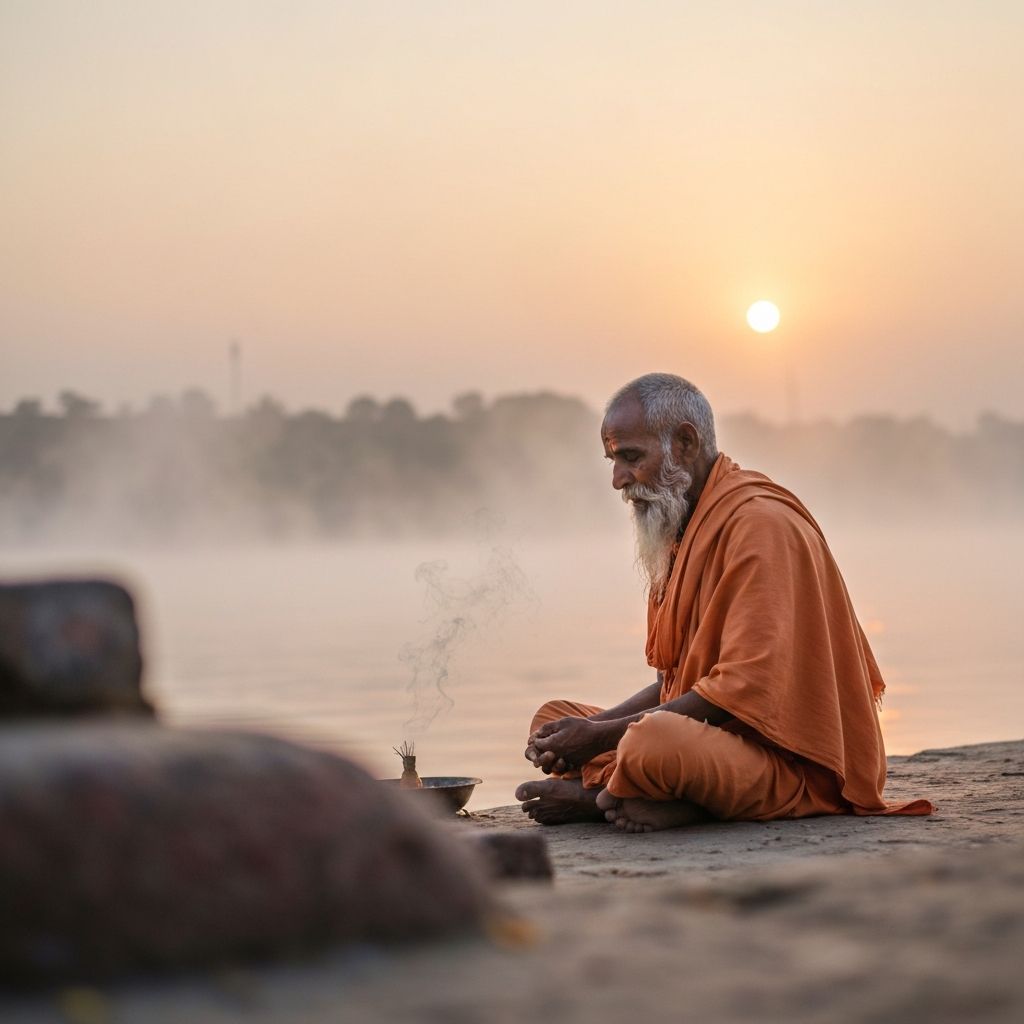
Vedic India, 1500 BCE
Meditation & Dhyana
ध्यान
Dhyana, the Sanskrit root of the word 'Zen', is the seventh of Patanjali's eight limbs of yoga. Indian meditation traditions span from Vedic contemplative practices and Buddhist Vipassana to Sufi dhikr and Jain samadhi. The practice of turning inward to witness the nature of mind is one of India's greatest contributions to human civilisation.
Ashtanga — The Eight Limbs of Yoga
Patanjali's Yoga Sutras describe an eight-fold path toward the cessation of mental fluctuations and liberation of consciousness.
Yama
Ethical restraints
Non-violence, truthfulness, non-stealing
Niyama
Personal observances
Purity, contentment, self-study, surrender
Asana
Physical postures
Padmasana, Tadasana, Sirsasana
Pranayama
Breath regulation
Nadi Shodhana, Kapalabhati, Bhramari
Pratyahara
Withdrawal of senses
Turning attention inward
Dharana
Concentration
Single-pointed focus
Dhyana
Meditation
Sustained awareness, flow state
Samadhi
Absorption / Liberation
Union with the absolute
Schools of Yoga
Mysore, Karnataka
Ashtanga Yoga
Dynamic sequence of postures synchronised with breath, popularised by K. Pattabhi Jois of Mysore.
Pune, Maharashtra
Iyengar Yoga
Precision-based practice using props and alignment, developed by B.K.S. Iyengar of Pune.
Punjab / Rajasthan
Kundalini Yoga
Awakening of dormant pranic energy through kriyas, mantras, and breathwork.
Rishikesh, Uttarakhand
Sivananda Yoga
Classical five-point approach: exercise, breathing, relaxation, diet, and meditation.
Igatpuri, Maharashtra
Vipassana
Insight meditation technique from the Theravada Buddhist tradition, popularised by S.N. Goenka.
Bengal / Puri, Odisha
Kriya Yoga
Advanced meditation technique of breath and energy control taught by Paramahansa Yogananda.
Great Yoga Masters
Patanjali
~200 BCE
Compiled the Yoga Sutras — 196 aphorisms defining the theory and practice of yoga.
Swami Vivekananda
1863 – 1902
Introduced yoga to the Western world at the 1893 Parliament of Religions in Chicago.
Paramahansa Yogananda
1893 – 1952
Brought Kriya Yoga to the West through his seminal work Autobiography of a Yogi.
B.K.S. Iyengar
1918 – 2014
Developed Iyengar Yoga, author of Light on Yoga, teacher to millions worldwide.
T. Krishnamacharya
1888 – 1989
Known as the father of modern yoga, teacher of Iyengar, Jois, and Desikachar.
Swami Sivananda
1887 – 1963
Founded the Divine Life Society; wrote over 200 books on yoga, Vedanta, and health.
Yoga & Meditation Centres
Rishikesh
Uttarakhand
Yoga Capital of the World
Mysuru
Karnataka
Home of Ashtanga Yoga
Pune
Maharashtra
Iyengar Yoga Centre
Igatpuri
Maharashtra
Vipassana International Academy
Auroville
Tamil Nadu
Integral Yoga & Sri Aurobindo
Varanasi
Uttar Pradesh
Ancient Tantric & Shaivite Yoga