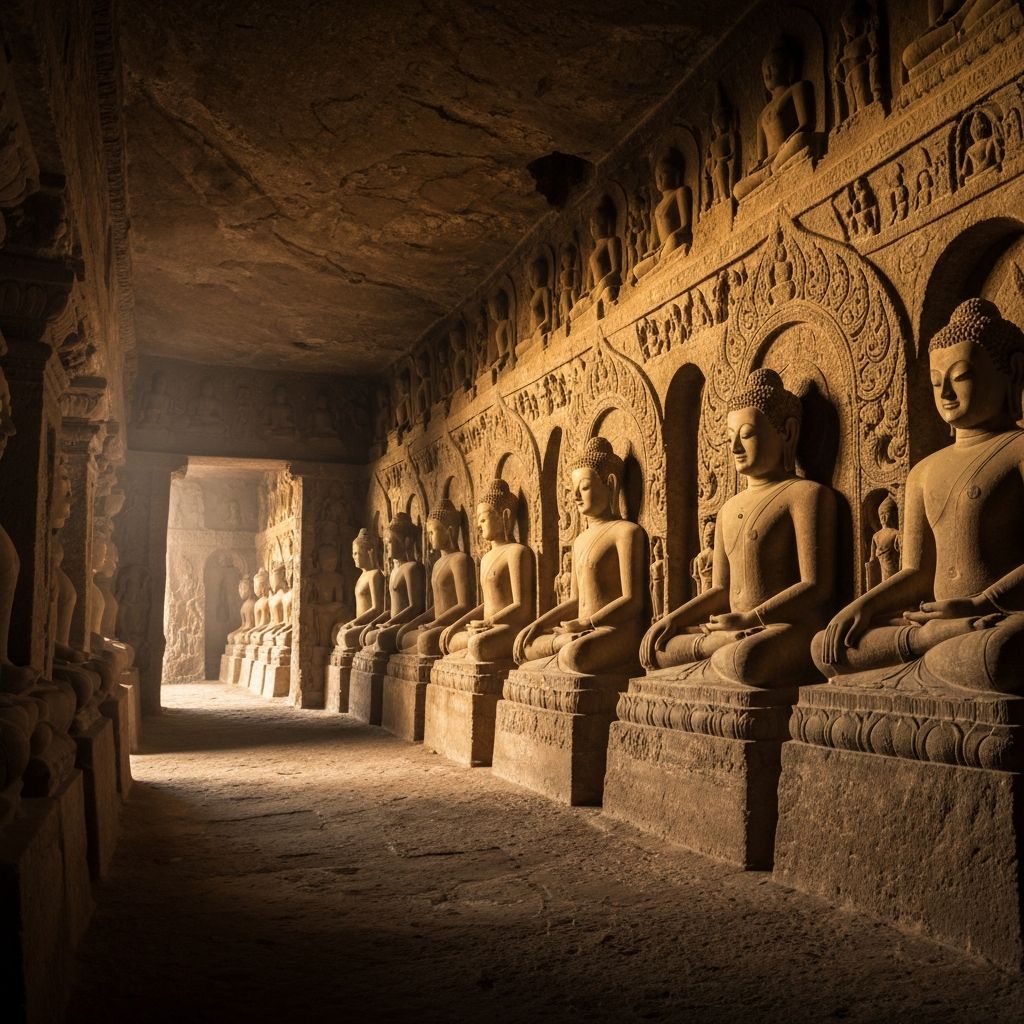
The Sacred Caves of Ellora
A masterpiece of ancient Indian architecture carved into volcanic basalt, where Buddhist, Hindu, and Jain temples coexist in harmony.
Location
Maharashtra, India
Period
600-1000 CE
Visiting Time
Sunrise to Sunset
UNESCO Site
Since 1983
Nestled in the Charanandri hills of Maharashtra, the Ellora Caves stand as one of the most remarkable achievements in the history of rock-cut architecture. This UNESCO World Heritage Site comprises 34 caves that were carved out of basalt cliffs over a period of four centuries, representing the epitome of Indian rock-cut architecture.
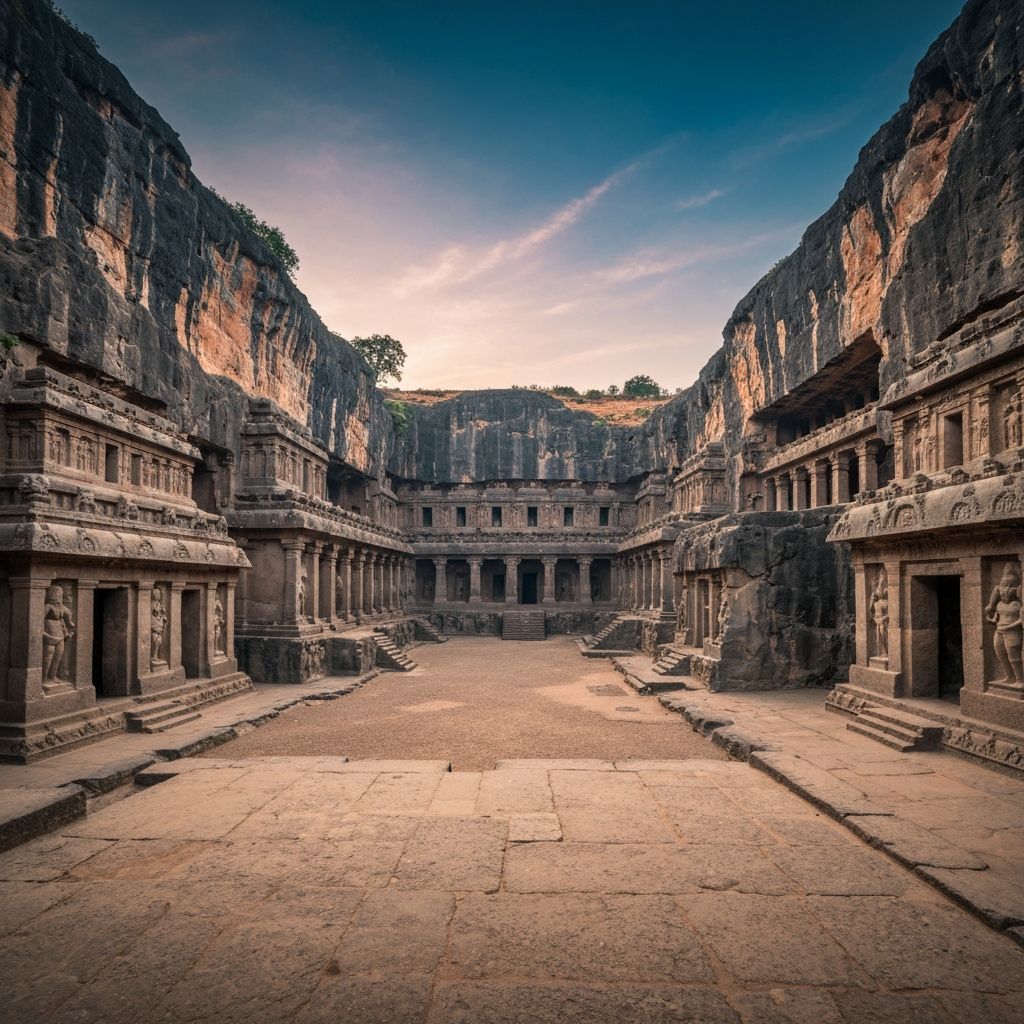
A Monument to Religious Harmony
What makes Ellora truly unique is its representation of three religions side by side. The caves include 12 Buddhist caves (Caves 1-12), 17 Hindu caves (Caves 13-29), and 5 Jain caves (Caves 30-34). This remarkable coexistence reflects the religious tolerance that prevailed in ancient India, where different faiths could flourish in harmony.
The Buddhist Caves (1-12)
The Buddhist caves, primarily monasteries (viharas), were carved between 500-750 CE during the decline of Buddhism in India. Cave 10, known as the Vishwakarma or Carpenter's Cave, is a magnificent chaitya (prayer hall) with a soaring vaulted ceiling and a stunning 15-foot Buddha statue. Cave 12, a three-storied monastery, features rows of seated Buddha statues in meditative poses that line its walls.
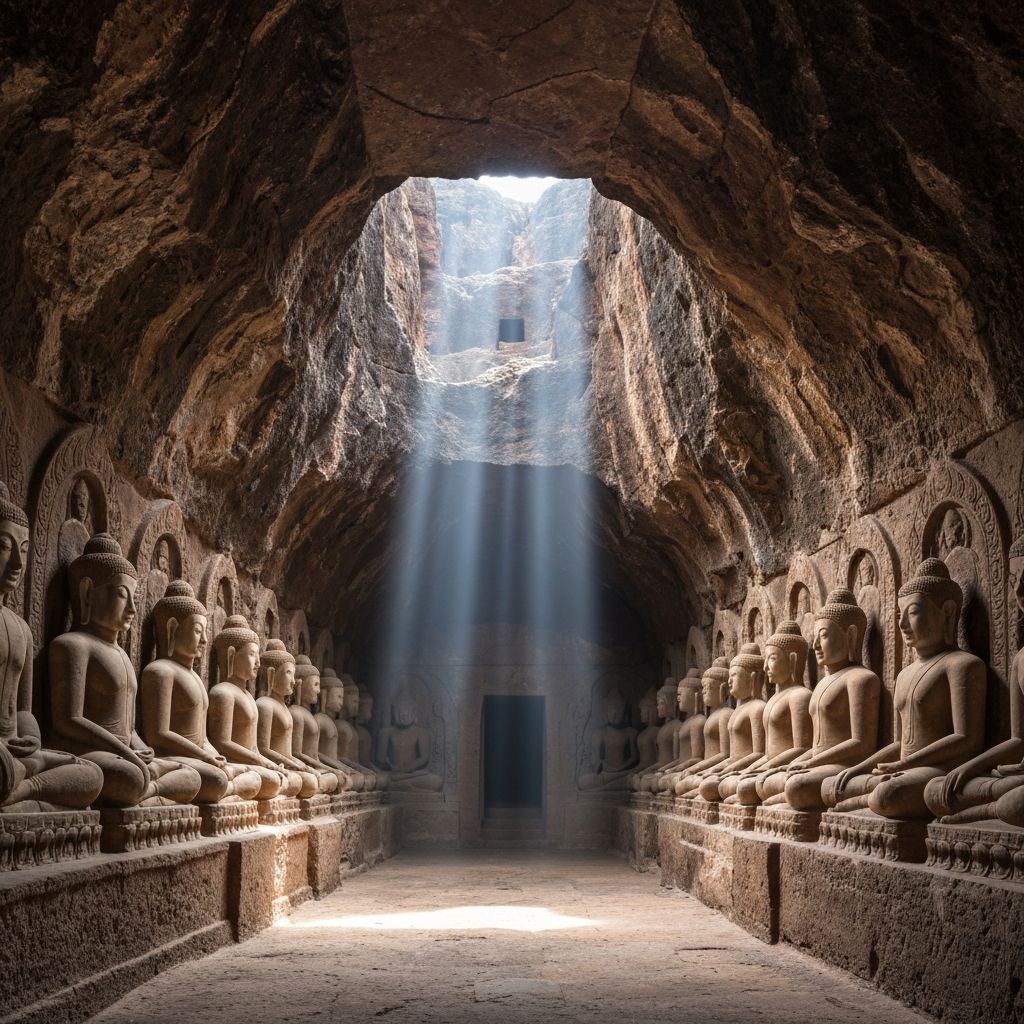
Rows of seated Buddha statues in Cave 12
The Hindu Caves (13-29)
The Hindu caves represent the zenith of rock-cut architecture. The crown jewel is Cave 16, the Kailasa Temple - a massive structure carved from a single rock, designed to recall Mount Kailash, the abode of Lord Shiva. This architectural marvel required the removal of approximately 200,000 tonnes of rock, carved from top to bottom over a period of 18 years.
The Kailasa Temple is twice the area of the Parthenon in Athens and 1.5 times as high. Its elaborate carvings depict scenes from the Ramayana, Mahabharata, and the adventures of Lord Krishna. The temple's proportions, sculptural decoration, and sheer ambition make it one of the most remarkable constructions in the world.
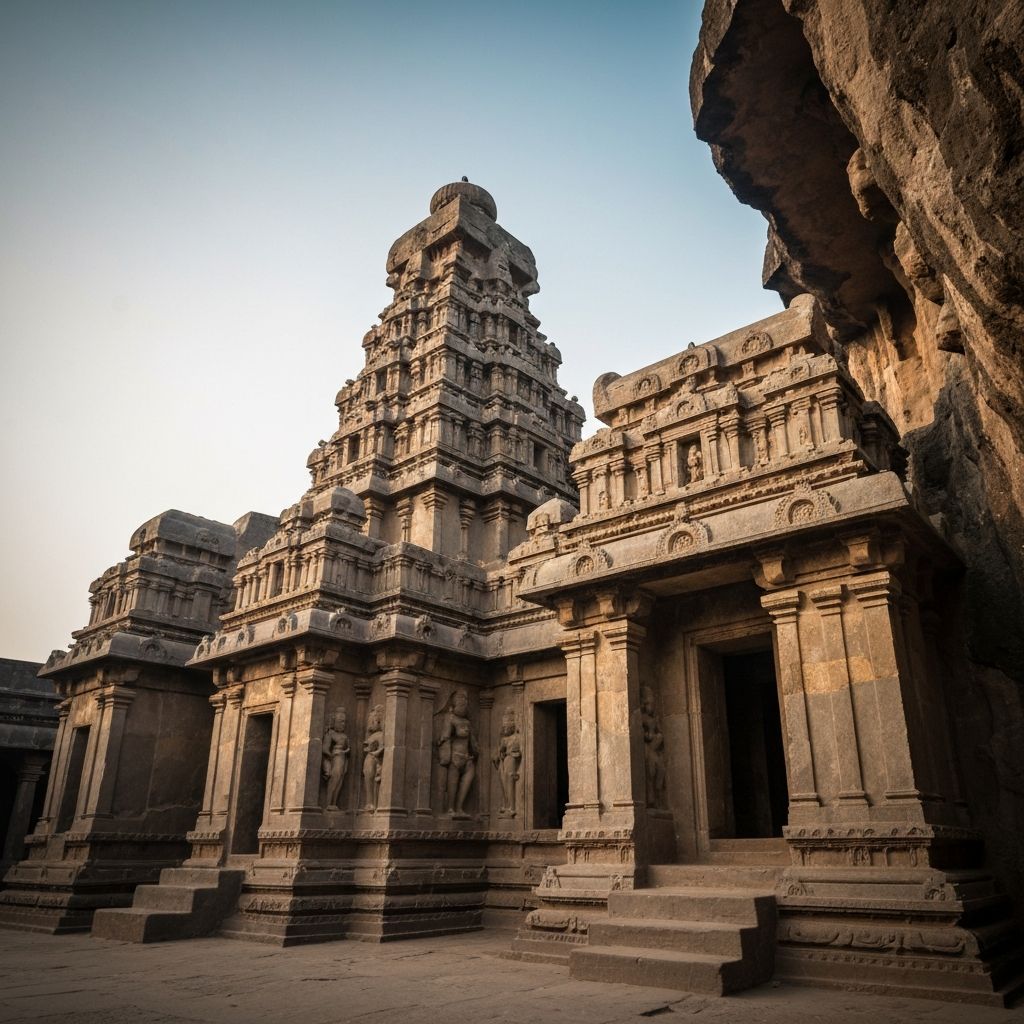
The Kailasa Temple - carved from a single rock over 18 years
The Jain Caves (30-34)
The Jain caves, though smaller in scale, are notable for their detailed artwork and intricate carvings. Cave 32, the Indra Sabha, is a miniature version of the Kailasa Temple and features exquisite paintings on its ceilings. The Jain caves reflect the strict ascetic ideals of Jainism through their simpler forms and the serene images of Jain Tirthankaras.
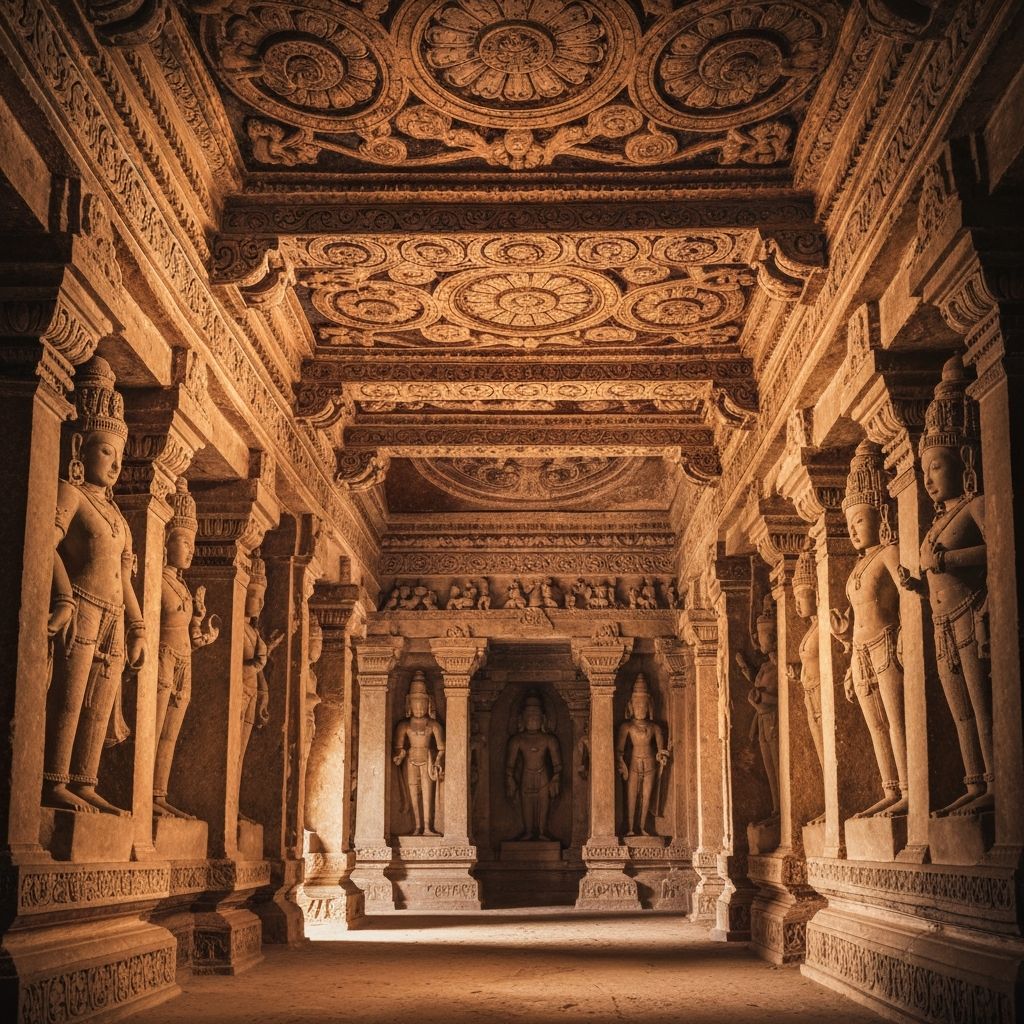
Intricate carvings in the Jain caves of Ellora
Architectural Brilliance
The construction technique at Ellora involved a vertical excavation method, where artisans cut straight down into the basalt rock before hollowing out the cave interiors. This top-down approach, particularly evident in the Kailasa Temple, required extraordinary planning and precision - any miscalculation would have been catastrophic and irreversible.
Visiting Information
- Best time to visit: October to March
- Nearest city: Aurangabad (30 km)
- Closed on Tuesdays
- Allow at least half a day for a complete visit
- Wear comfortable walking shoes
The Ellora Caves continue to inspire awe in visitors from around the world. Standing before these ancient monuments, one cannot help but marvel at the vision, dedication, and skill of the artisans who created them over a millennium ago. They remain a powerful testament to India's rich spiritual heritage and the artistic genius of its ancient civilizations.