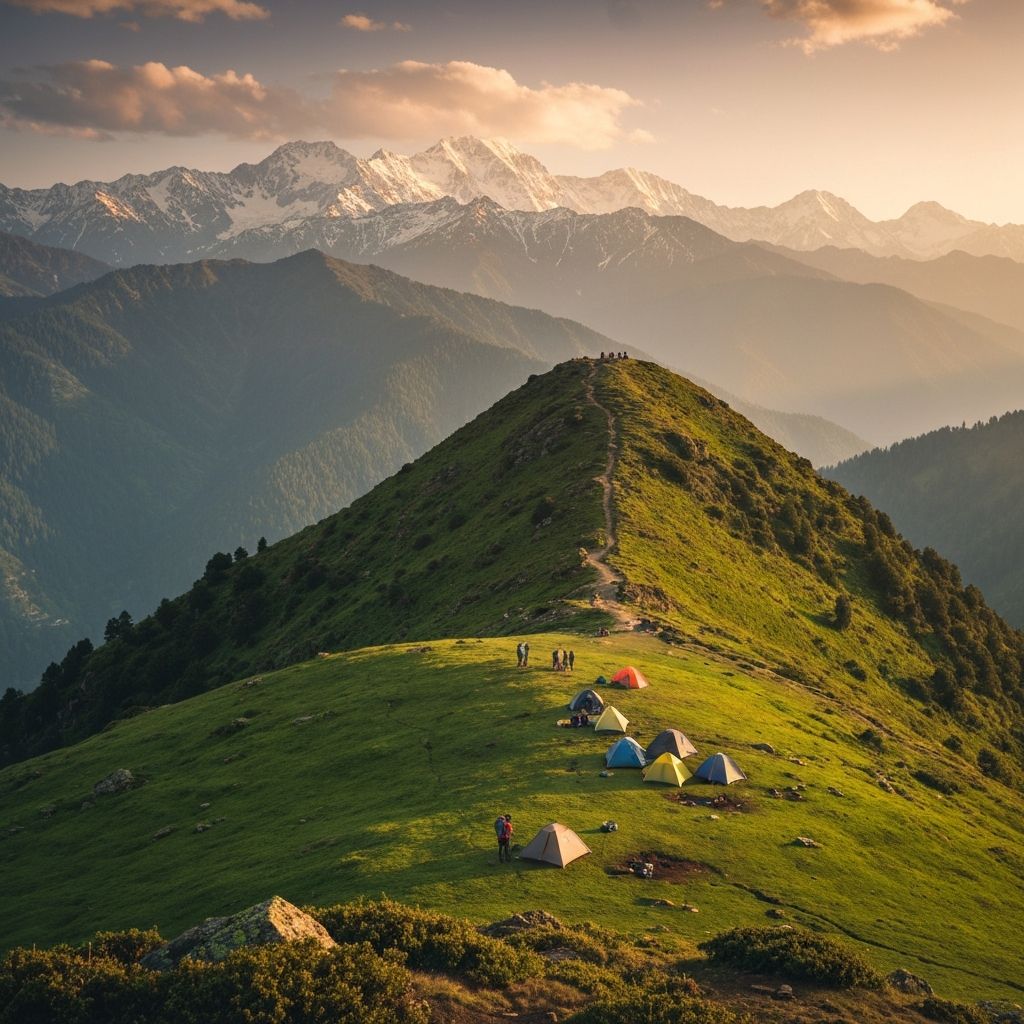
The Triund Trek Experience
A journey through pine forests and alpine meadows to one of the most rewarding viewpoints in the Indian Himalayas.
Location
Dharamshala, Himachal Pradesh
Summit Altitude
2,875 metres (9,432 ft)
Trek Distance
9 km one way
Duration
4–5 hours ascent
There is a particular kind of silence at 2,875 metres. Not the silence of absence — but one thick with wind, birdsong, and the distant percussion of cowbells carried up from the valley below. Triund, perched above Dharamshala in the Kangra district of Himachal Pradesh, offers this silence freely to anyone willing to earn it with their legs.
The trek to Triund is one of the most popular day hikes in the Indian Himalayas — and one of the most honest. It does not ask more of you than you can give, yet it returns more than you expect. The path rises through cedar and rhododendron forests, past chai stalls and grazing Gaddi shepherds, before breaking suddenly onto the wide alpine meadow that unfolds against the jagged wall of the Dhauladhar range. Few moments in Indian trekking are as quietly spectacular.
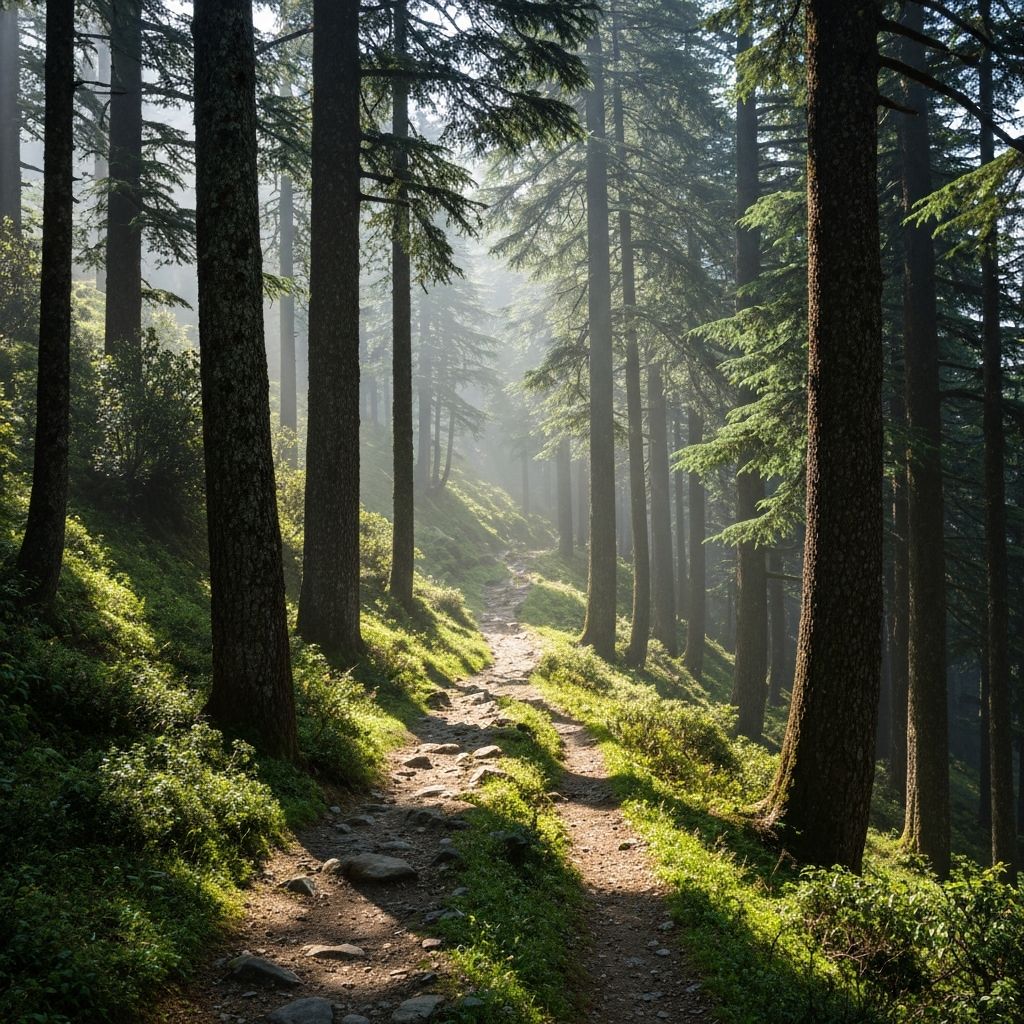
The Trail: Three Acts
The standard trailhead begins at Galu Devi Temple, a short drive from McLeod Ganj. From here the path climbs steadily through a forest that smells of pine resin and cold water. This first section — roughly three kilometres — is the most verdant: oak trees draped in moss, rhododendrons that blaze red in spring, and the occasional langur watching from the branches above with studied indifference.
The second act opens as the tree line thins. Rocky switchbacks replace the forest floor; the valley behind you deepens. On clear days you can see Dharamshala far below — the cricket ground, the white dome of HPCA stadium, the silver thread of Baner khad. The Kangra valley stretches south in a green-gold patchwork. This section is where most trekkers pause, catch their breath, and quietly decide they are glad they came.
Then, at the final ridge, the Dhauladhar appears in full. The range rises almost vertically from the meadow — Indrahar Pass at 4,342 metres, peaks snowbound even in summer. The scale is humbling in the best possible way. Triund's meadow stretches across the ridge, dotted with tents in the evening, quiet in the early morning when the light turns the snow pink.
9 km
One-way distance
1,350 m
Total elevation gain
Easy–Mod
Difficulty level
Spending the Night
The overnight experience transforms Triund entirely. Day-trippers descend and the meadow returns to its older, quieter self. Small tea-and-snack stalls run by local families serve momos and Maggi well into the evening, and rented sleeping bags keep the mountain cold at bay. There are basic tents available for hire, or you can pitch your own.
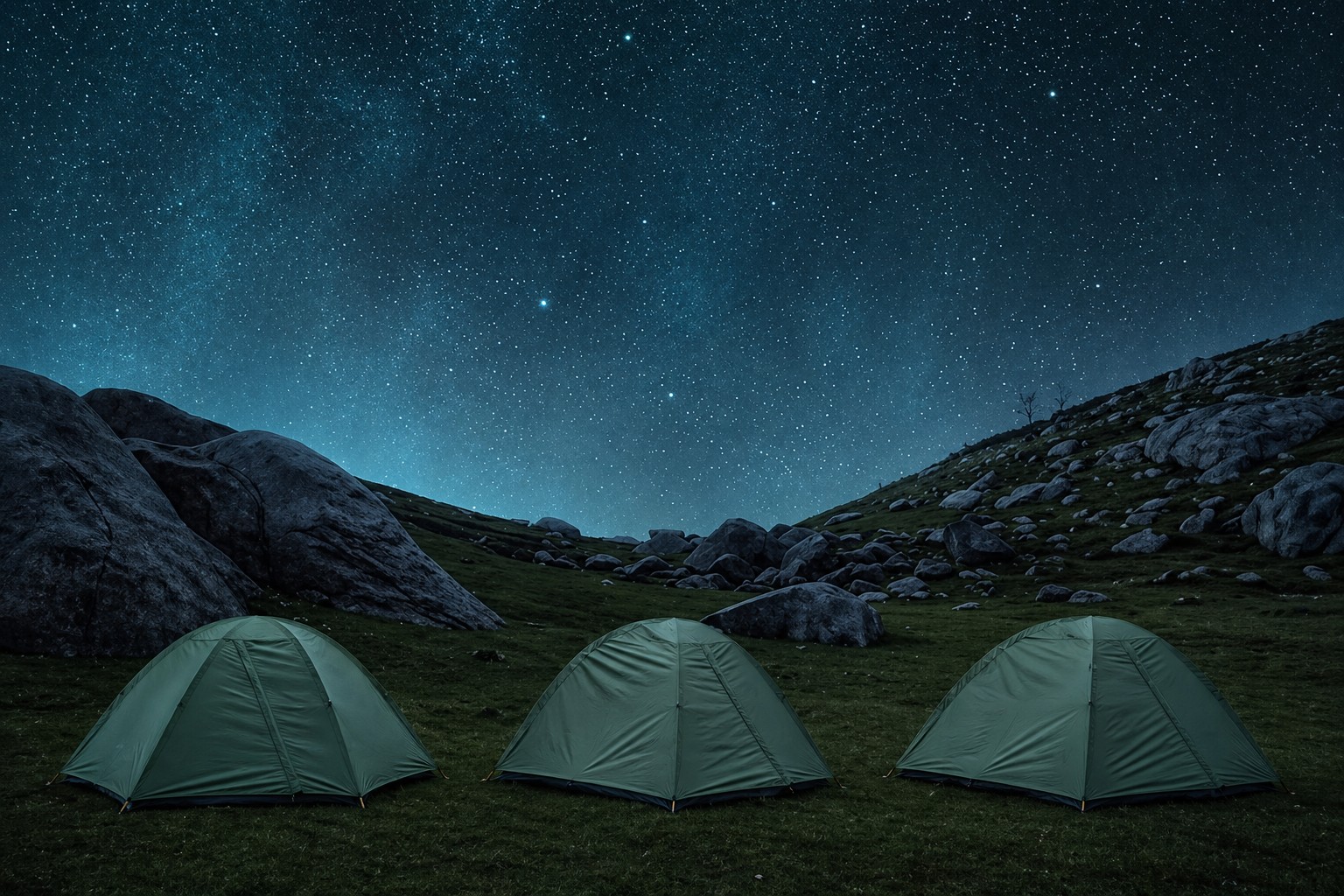
The Triund campsite under the Milky Way — a reward for staying the night
After dark, the sky at Triund is improbable. The Kangra valley lights glow far below like scattered embers; above, the Milky Way arcs unobstructed across a sky with almost no light pollution. In winter, snowfall turns the meadow silent and the Dhauladhar reflects the moonlight. Serious trekkers use Triund as a staging camp for the challenging Indrahar Pass crossing into Chamba — but the meadow itself is a destination complete in its own right.
The People of the Path
Triund sits within the traditional grazing grounds of the Gaddi community — semi-nomadic shepherds who have moved their flocks between the Kangra and Lahaul valleys for centuries. You will meet them on the trail: men in white woollen chola coats carrying crooked staffs, herding flocks of Gaddi sheep and goats with practiced ease. Their presence gives the trek a continuity that reaches far beyond the weekend walker. These mountains are someone's daily life.
McLeod Ganj at the base is home to a large Tibetan exile community, and many of the small dharamshalas and guesthouses along the approach are Tibetan-run. The cultural layering here — Gaddi shepherds, Tibetan monks, Kangra Pahari villagers, and the steady stream of visitors — gives the entire region an unusual and thoroughly Indian plurality.
Planning Your Trek
Best Season
- March – June: Rhododendrons in bloom, clear views
- September – November: Post-monsoon, crystal skies
- December – February: Snow trek, cold camping
What to Carry
- Layered clothing — temperatures drop sharply at the top
- At least 2 litres of water; streams are drinkable higher up
- Trekking poles recommended for the descent
- Headlamp and warm sleeping bag if camping overnight
Triund is not the hardest trek in the Himalayas, nor the highest, nor the most remote. But it may be among the most complete — giving you forest, ridge, meadow, and mountain wall in a single day, and returning you to a hot shower and a plate of thukpa by evening if you choose. It is a trek that earns its reputation honestly, and that is rarer than altitude in the mountains.