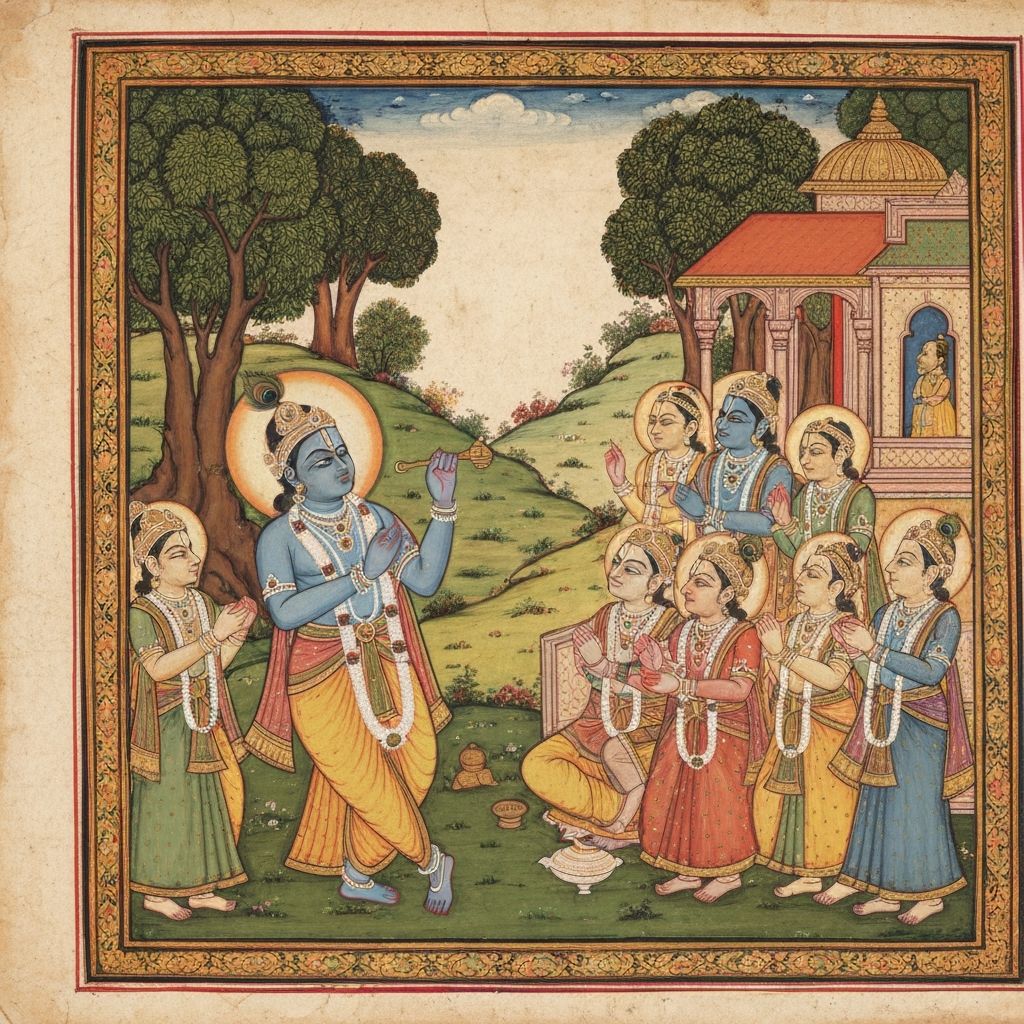
The Art of Vaishnava Paintings
For almost forty years, these artists were aglow with inspiration, creating memorable paintings communicating the spiritual concepts of Vaishnavism.
Art Form
Traditional Painting
Period
16th - 19th Century
Theme
Krishna Leela
Origin
Vrindavan & Nathdwara
Vaishnava paintings represent one of the most spiritually charged and artistically significant traditions in Indian art. Rooted in the devotion to Lord Vishnu and his avatars, particularly Lord Krishna, these paintings served not merely as art but as windows into the divine, helping devotees visualize and connect with the sacred narratives of their faith.
The Spiritual Foundation
Vaishnavism, one of the major traditions within Hinduism, centers on the worship of Vishnu as the Supreme Being. The art that emerged from this tradition was deeply influenced by the Bhakti movement, which emphasized personal devotion and emotional connection with the divine. Artists were not merely craftsmen but devotees who saw their work as a form of worship and spiritual practice.
Schools and Styles
Several distinctive schools of Vaishnava painting emerged across India, each with its unique characteristics while sharing common spiritual themes:
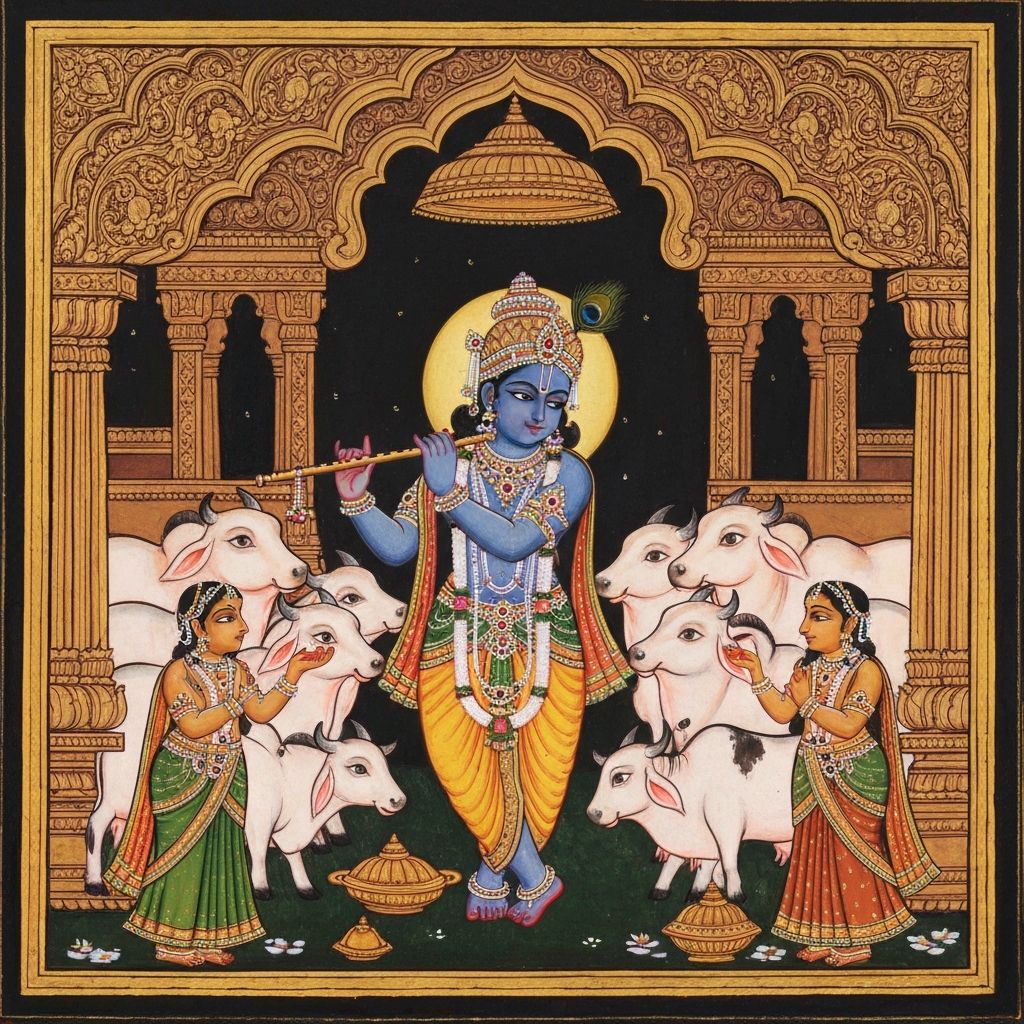
Pichwai Paintings
Large devotional paintings from Nathdwara depicting Lord Krishna, traditionally hung behind the deity in temples. Known for their intricate details and rich symbolism.
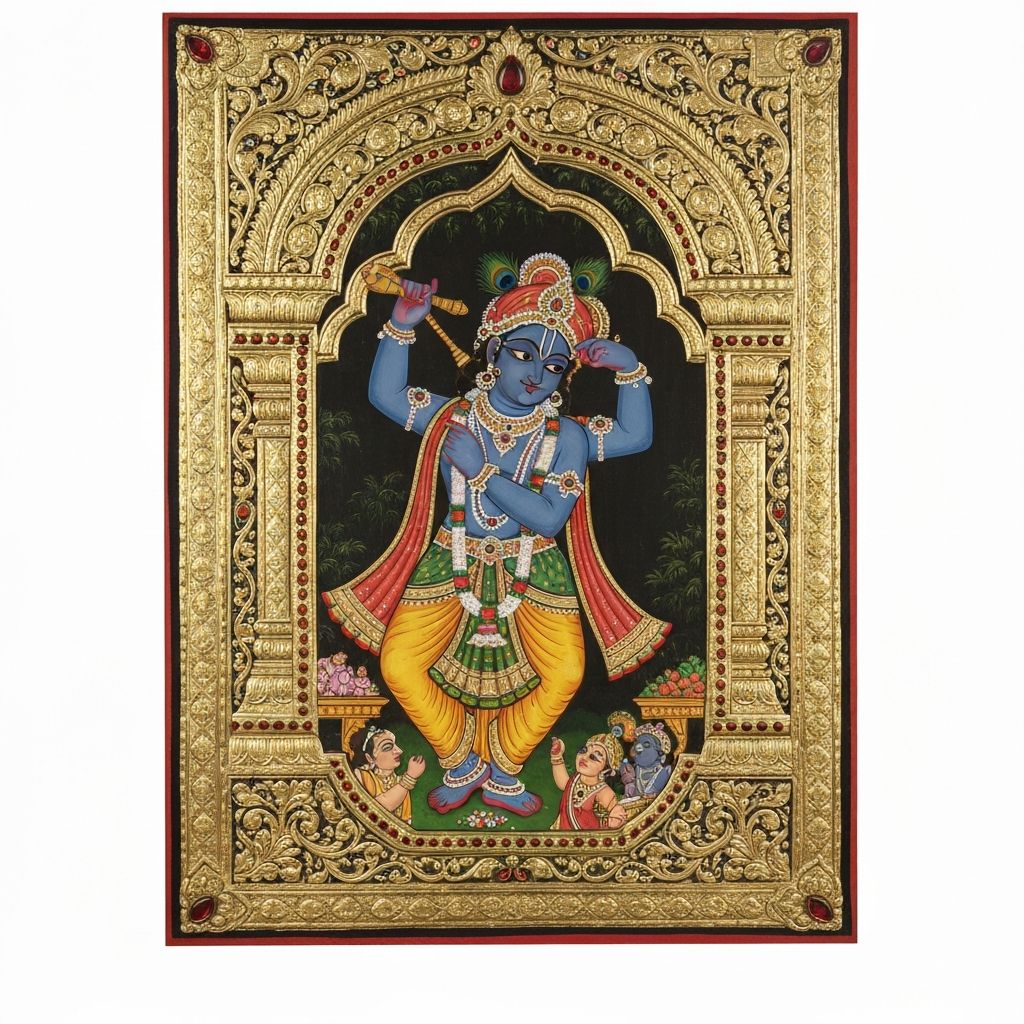
Tanjore Paintings
South Indian style featuring rich colors, surface richness, and compact composition. Known for gold foil overlays and embedded semi-precious stones.
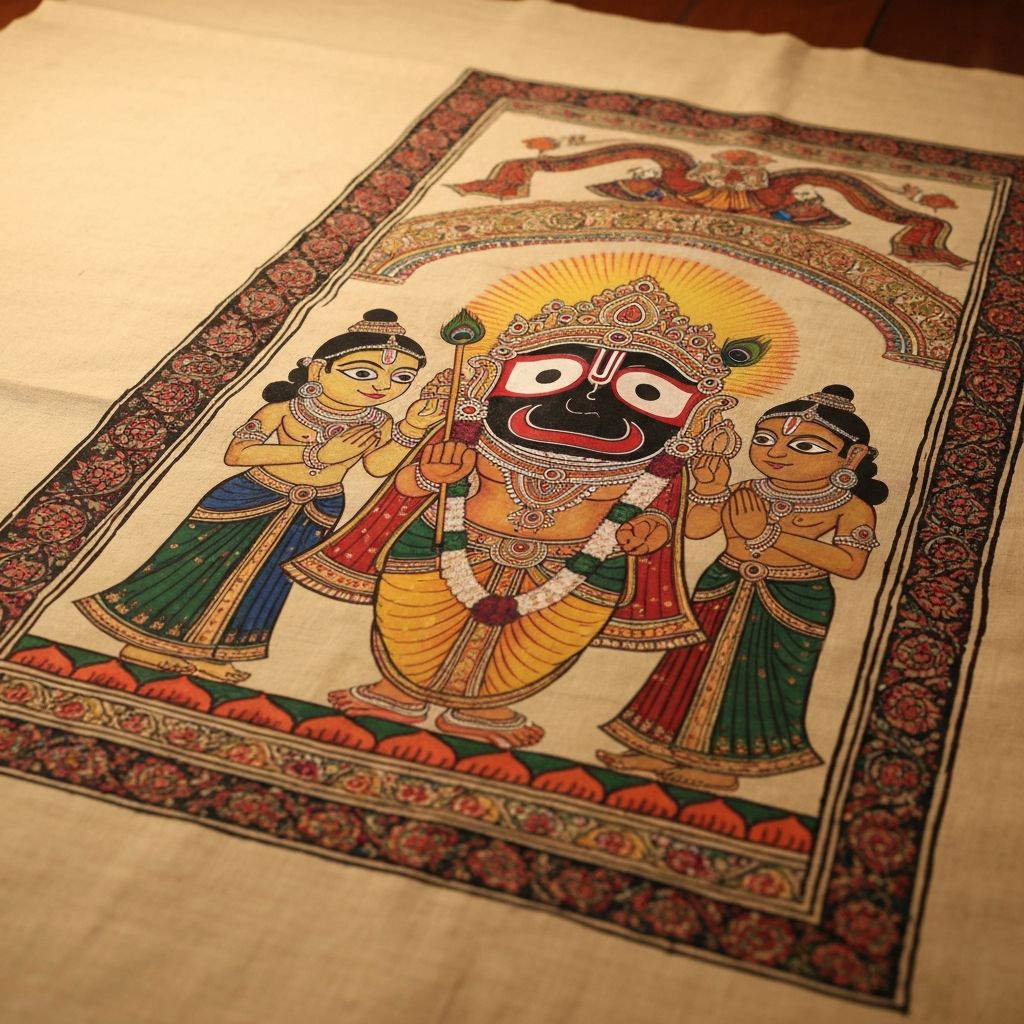
Pattachitra
Traditional cloth-based scroll paintings from Odisha, depicting stories of Lord Jagannath and Krishna's life, using natural colors and fine brushwork.
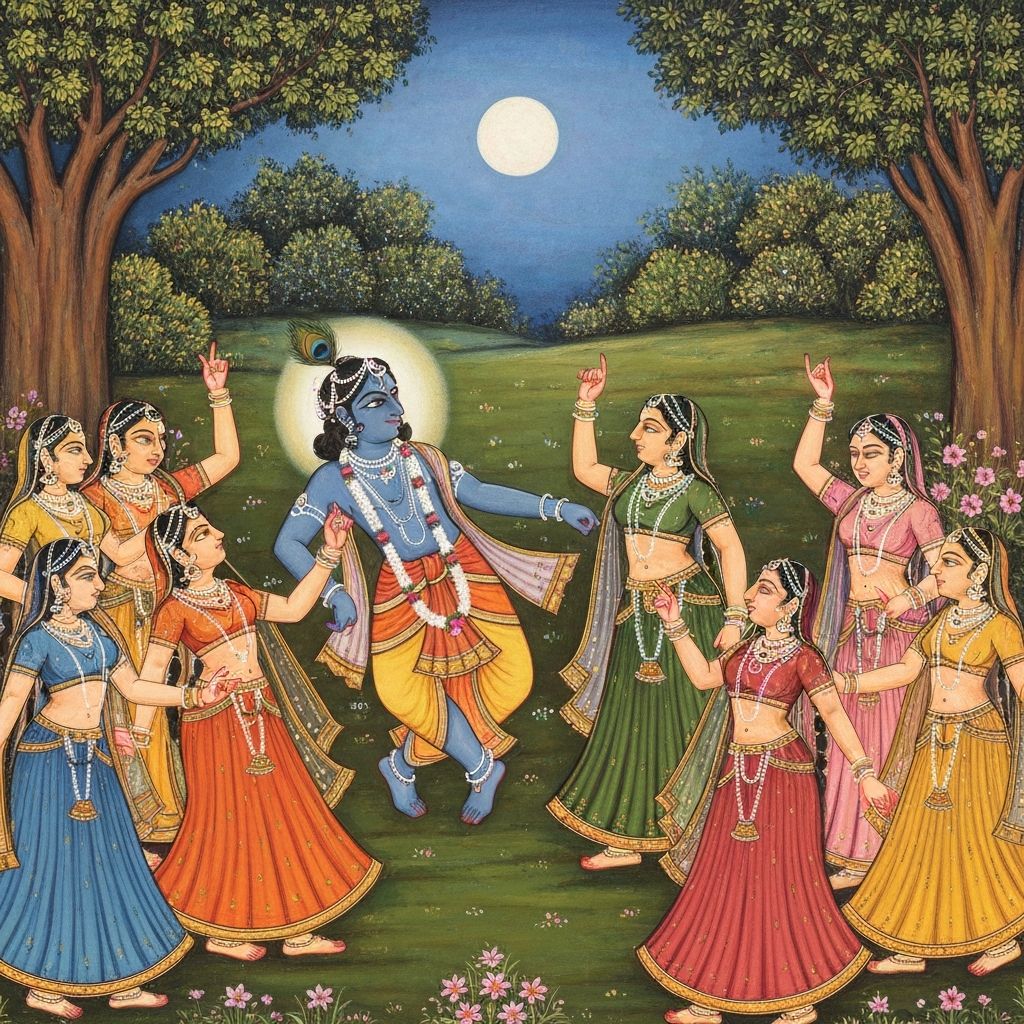
Pahari Paintings
From the Himalayan foothills, these paintings depict Radha-Krishna themes with lyrical beauty, soft colors, and romantic sensibility set against mountainous landscapes.
Krishna Leela: The Divine Play
The most common subject in Vaishnava paintings is Krishna Leela - the divine play of Lord Krishna. From his birth in a prison cell to his childhood pranks stealing butter, from his enchanting flute music to his dance with the gopis (Raas Leela), artists captured every aspect of Krishna's earthly sojourn with loving attention to detail.
The Raas Leela paintings, depicting Krishna's moonlit dance with the gopis of Vrindavan, are particularly celebrated. These images convey complex theological concepts - the soul's longing for the divine, the multiplicity of devotion, and the bliss of union with God - through visual poetry.
Symbolism and Iconography
Every element in Vaishnava paintings carries symbolic meaning. The blue color of Krishna's skin represents the infinite sky and cosmic consciousness. The peacock feather in his crown symbolizes beauty and the cycle of time. The flute represents the call of the divine to the human soul. The lotus flower signifies spiritual awakening and purity.
Key Characteristics
- Use of natural pigments and gold leaf
- Elaborate borders with floral and geometric patterns
- Rich iconographic symbolism in every element
- Narratives from Bhagavata Purana and Gita Govinda
- Devotional intent as the primary motivation
The Artists: Devotees with Brushes
The artists who created these masterpieces were typically from hereditary communities of painters who passed down their knowledge through generations. Before beginning work, they would perform rituals and prayers, viewing their artistic practice as sadhana (spiritual discipline). Many artists remained anonymous, considering themselves merely instruments of the divine.
Legacy and Revival
Today, Vaishnava painting traditions continue to thrive in various forms. While contemporary artists explore new media and styles, the spiritual essence remains unchanged. These paintings continue to serve their original purpose - as aids to meditation, as objects of devotion, and as windows into a world where the divine and human realms intersect in an eternal dance of love.