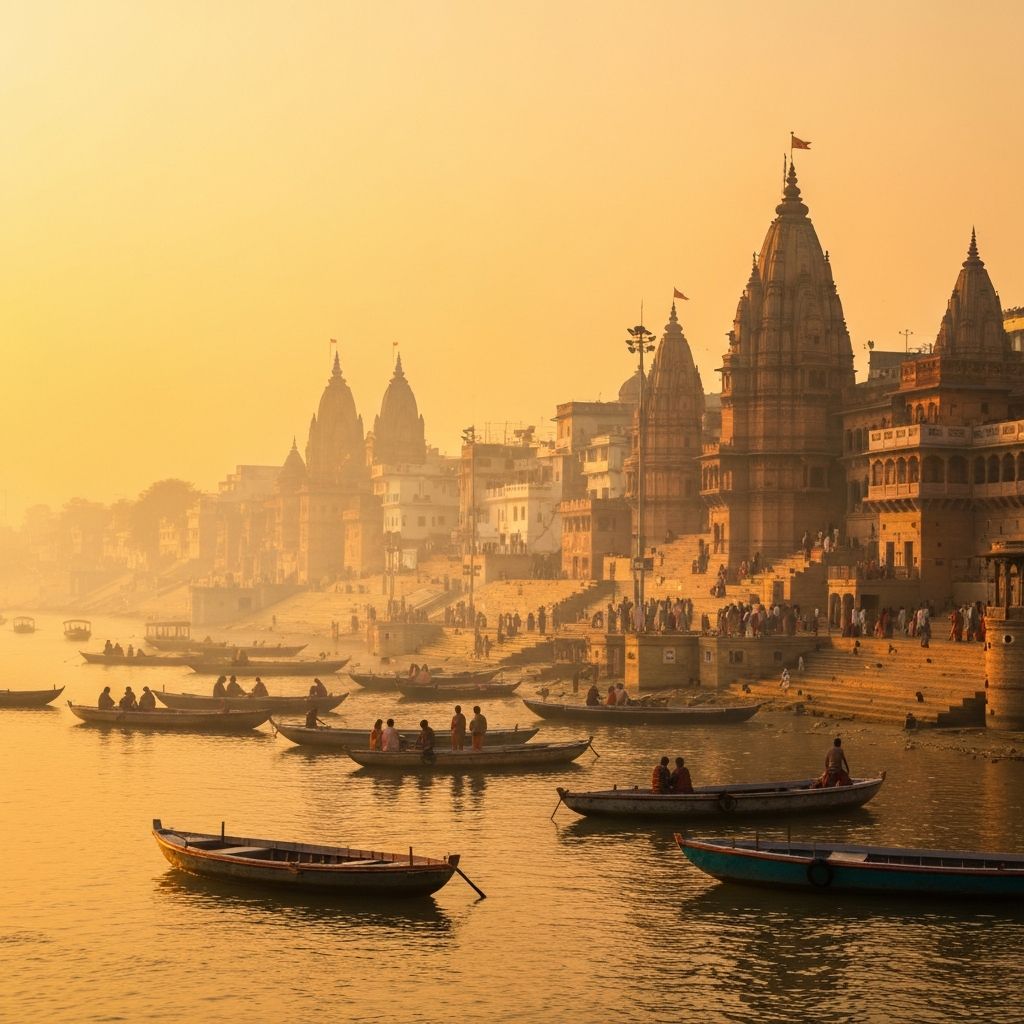
Varanasi: The Eternal City
Where life and death dance on the banks of the Ganges, and ancient traditions flow unbroken for over 3,000 years.
Location
Uttar Pradesh, India
Founded
11th Century BCE
Best Time
October - March
Also Known As
Kashi, Banaras
Varanasi, one of the oldest continuously inhabited cities in the world, sits on the western bank of the sacred Ganges River. Known by many names - Kashi (the City of Light), Banaras, and Benares - this ancient metropolis has been the spiritual capital of India for millennia. Mark Twain wrote that Varanasi is "older than history, older than tradition, older even than legend."
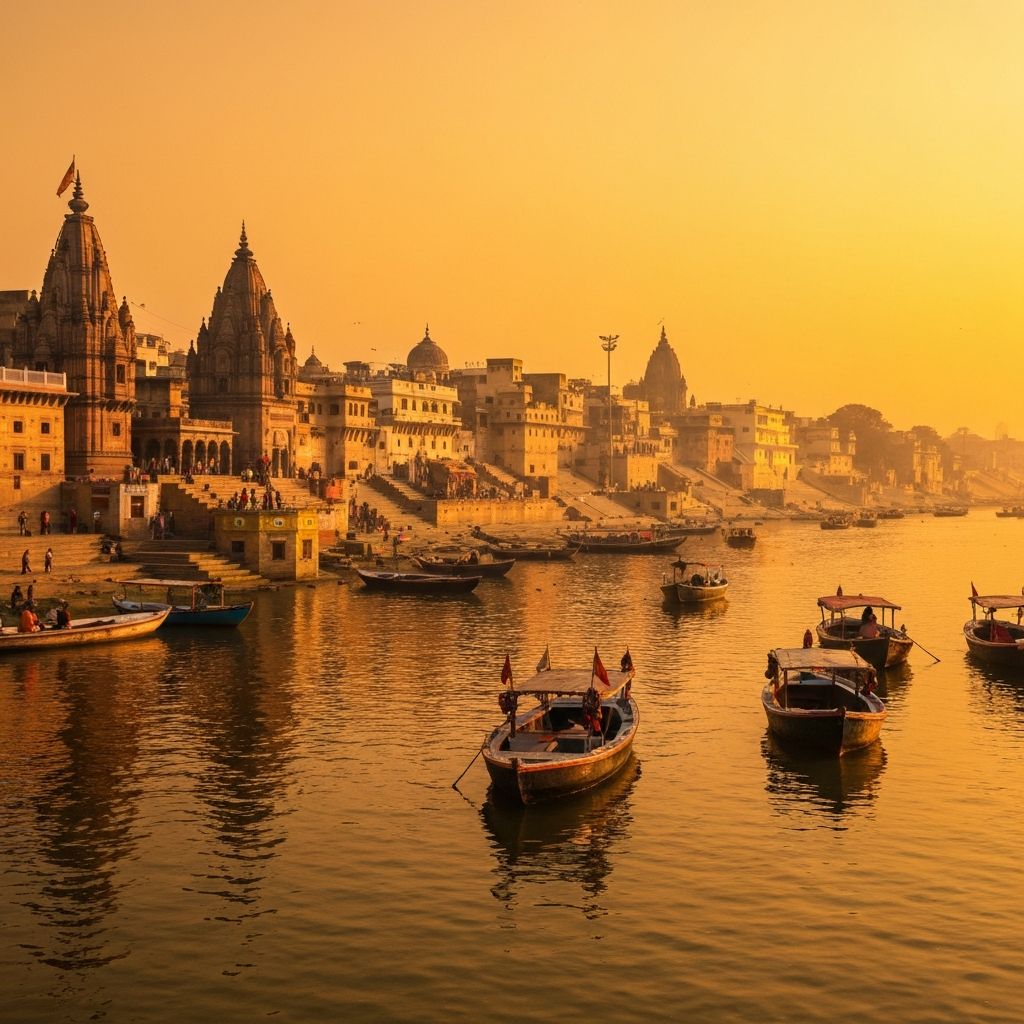
The Sacred Ghats
The city's identity is inseparable from its 88 ghats - stone steps leading down to the Ganges. Each ghat has its own character and purpose. Dashashwamedh Ghat, the most prominent, hosts the spectacular Ganga Aarti every evening. Manikarnika and Harishchandra Ghats are cremation grounds where the funeral pyres burn day and night, representing the Hindu belief that dying in Varanasi grants moksha - liberation from the cycle of rebirth.
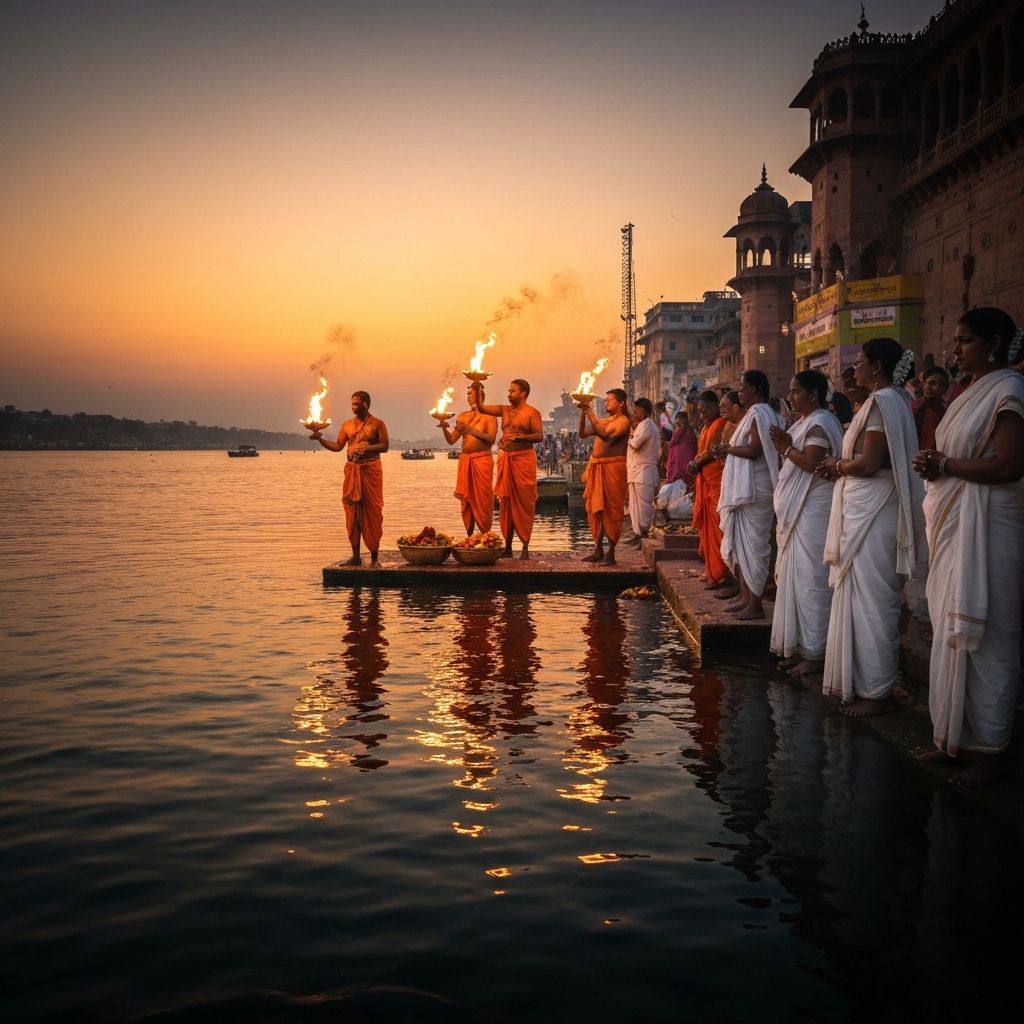
The mesmerizing Ganga Aarti ceremony at Dashashwamedh Ghat
Kashi Vishwanath Temple
At the heart of Varanasi's spiritual landscape stands the Kashi Vishwanath Temple, one of the twelve Jyotirlingas (sacred shrines of Lord Shiva). The temple's golden spire, plated with 800 kg of gold donated by Maharaja Ranjit Singh, gleams above the city's ancient rooftops. Millions of pilgrims visit annually to offer prayers and seek blessings at this holiest of Shiva temples.
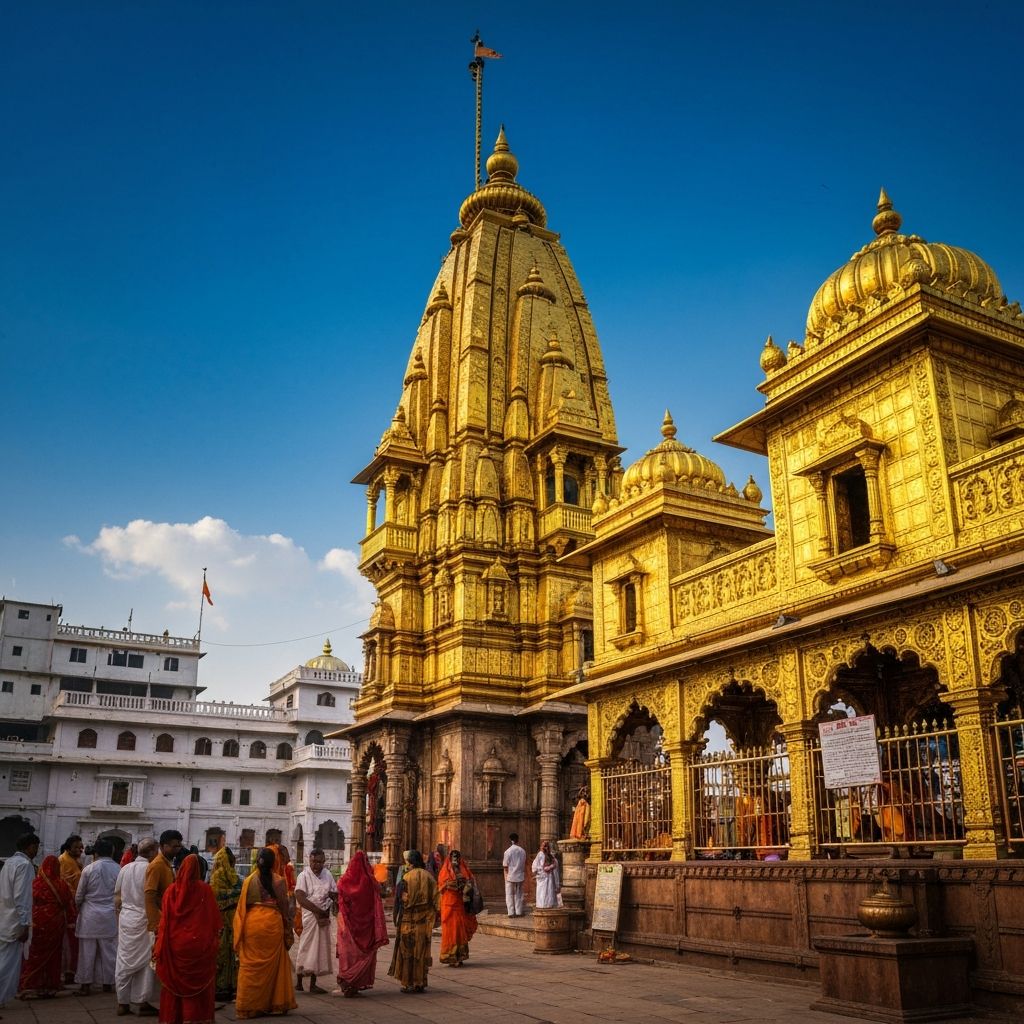
The golden spire of Kashi Vishwanath Temple
The Living Traditions
Varanasi is not merely a museum of the past but a living, breathing testament to continuous tradition. The city is famous for its Banarasi silk sarees, woven with intricate gold and silver brocade. Classical music and dance flourish here, with legendary gharanas (musical lineages) that have produced some of India's greatest musicians. The narrow lanes, called galis, are filled with temples, shops, and ashrams where Sanskrit scholars and Hindu priests continue practices unchanged for centuries.
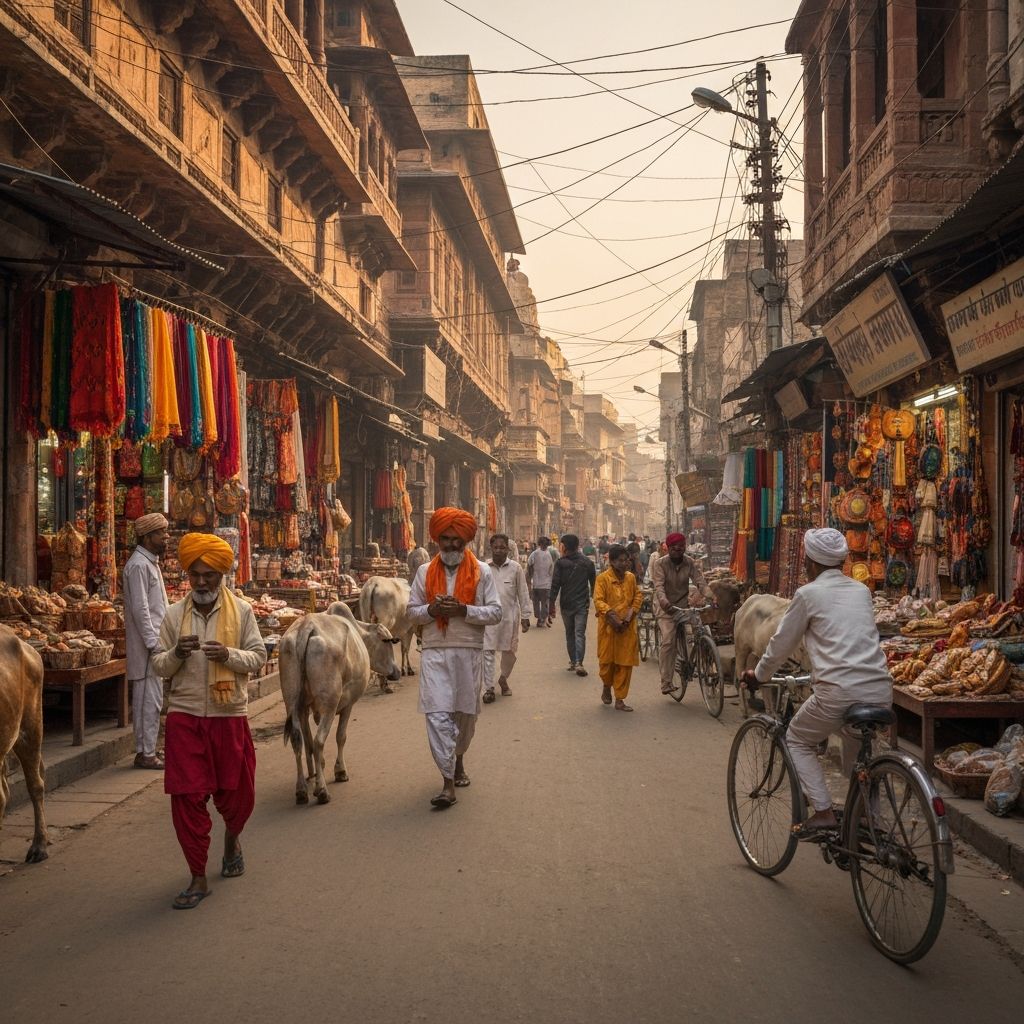
The atmospheric narrow lanes of old Varanasi
A Dawn on the Ganges
To truly experience Varanasi, one must take a boat ride at dawn. As the sun rises over the eastern bank, the ghats come alive with activity. Pilgrims perform ritual ablutions, priests offer prayers, yoga practitioners stretch in the morning light, and cremation pyres send wisps of smoke into the golden sky. It is a scene that has remained essentially unchanged for thousands of years - a powerful reminder of the continuity of human spiritual seeking.
Must-See Ghats
- Dashashwamedh Ghat - Evening Aarti ceremony
- Assi Ghat - Peaceful morning rituals
- Manikarnika Ghat - Ancient cremation ground
- Panchganga Ghat - Five rivers confluence
- Tulsi Ghat - Named after poet Tulsidas
Sacred Sites
- Kashi Vishwanath Temple
- Sankat Mochan Hanuman Temple
- Durga Temple (Monkey Temple)
- Bharat Mata Mandir
- Sarnath (nearby Buddhist site)
Visitor's Guide
- Best time to visit: October to March (pleasant weather)
- Don't miss the sunrise boat ride on the Ganges
- Attend the Ganga Aarti at Dashashwamedh Ghat (7 PM)
- Respect local customs - dress modestly at temples
- Visit Sarnath (10 km away) where Buddha gave his first sermon
Varanasi defies easy description. It is simultaneously a place of life and death, of chaos and profound peace, of ancient tradition and timeless spirituality. To visit is to witness humanity's eternal quest for meaning, played out against the backdrop of a city that has been sacred since before recorded history. As the saying goes: "Kashi ke kankar, Shiva Shankar" - every pebble in Kashi is Shiva himself.